The reviews for West Chester Rehabilitation & Healthcare Center are highly polarized: numerous accounts describe attentive, skilled care and strong rehabilitative outcomes, while a sizable set of accounts raise operational and safety concerns. This creates a pattern of variability where positive experiences (often tied to specific staff, therapy teams, or recently renovated areas) coexist with repeated descriptions of systemic weaknesses such as inconsistent staffing, medication issues, and sanitation concerns.
Care and staff: Many families and residents praised individual nurses, CNAs, and therapists for compassionate, person‑centered care and effective therapy that supported successful discharges. Specific staff members and therapy teams received repeated commendation for clinical skill, encouragement, and measurable mobility gains. At the same time, reviewers described inconsistent staffing levels (particularly at night and during meal periods), long delays in responding to call signals, and episodes of poor responsiveness. There are recurring concerns about medication administration and tracking, including delays, wrong medications, or missed doses; these are presented as patterns that warrant direct inquiry during a tour. A small number of serious allegations (including an alleged staff‑on‑resident incident and concerns following a resident's death) were also mentioned and suggest the need to review regulatory records and facility incident logs when evaluating the facility.
Dining and nutrition: Several reviewers reported good meals and attempts to meet dietary needs; the kitchen and some staff received praise for accommodating restrictions. Conversely, there are repeated descriptions of inconsistent meal supervision, slow meal pacing, and inadequate assistance for residents who require help eating. Those operational gaps were linked by some reviewers to weight loss risk and aspiration concerns. Families should ask about dining‑assist protocols, staffing at mealtimes, and processes for monitoring intake.
Activities and therapy: The rehabilitation program and life‑enrichment offerings are among the facility's stronger areas in many accounts. Physical and occupational therapy staff are frequently credited with helping residents regain strength and mobility. The activity director and programming received repeated positive comment for creativity and resident engagement. However, some reviewers described sparse attendance at activities or limited programming in certain units, indicating variability in the availability and consistency of activities across the building.
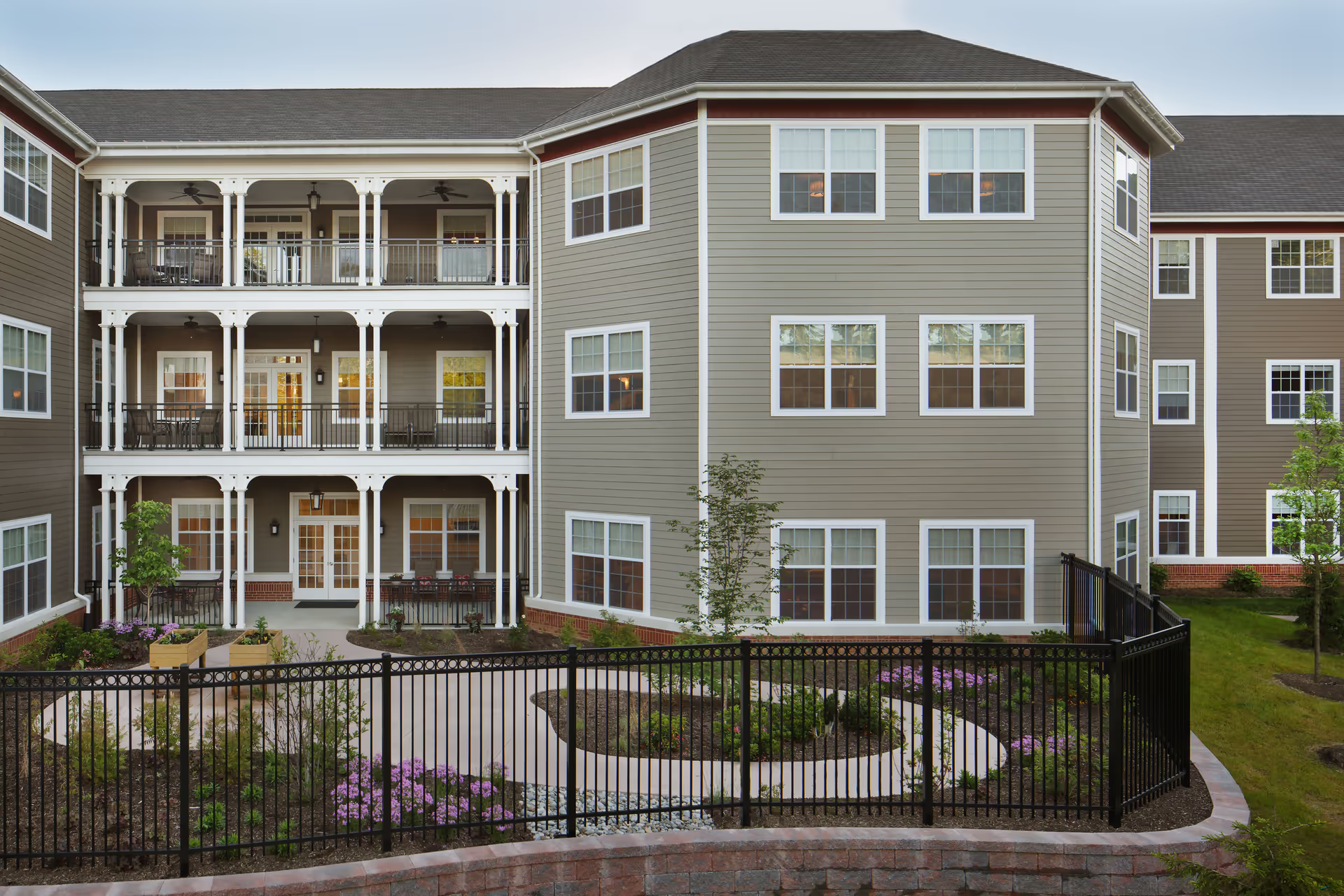
Facilities and housekeeping: Several reviews describe attractive outdoor spaces, natural light, and recent renovations in parts of the facility, along with responsive maintenance staff. At the same time, sanitation concerns, odor control issues, pest‑control concerns, and inconsistent housekeeping were reported across other reviews. Physical layout concerns were also raised (very small shared rooms, outdated residential units), suggesting that the environment may vary significantly by unit and by room.
Management, communication, and administration: Experiences with management and administration are mixed. Multiple reviewers praised admissions, social work, and specific administrators for responsiveness, problem resolution, and clear communication. Others reported poor phone responsiveness, unanswered calls, abrupt discharges, billing disputes, and lack of follow‑up. Financial transparency and out‑of‑pocket cost concerns were raised by some families. There are also references to alleged theft or misplacement of personal items and inconsistent handling of such claims; families should ask about the facility’s property policies and documentation procedures.
Notable patterns and recommendations: The dominant pattern is variability — the same facility is described as exemplary by some families and problematic by others. Where care was strong, it tended to be associated with stable, engaged staff teams, good therapy continuity, and attentive administration. Where care was weak, the issues clustered around staffing shortages, medication and dining assistance failures, sanitation and odor control, and inconsistent family communication. Prospective residents and families should tour the specific unit and room under consideration, observe staffing and mealtime operations, ask for current staffing ratios and medication‑management protocols, review recent inspection and incident records, and request names of clinical leads (therapy, nursing, administration) they can contact. If possible, obtain references from recent families and verify how the facility handles complaints, property loss, and billing disputes before admission.