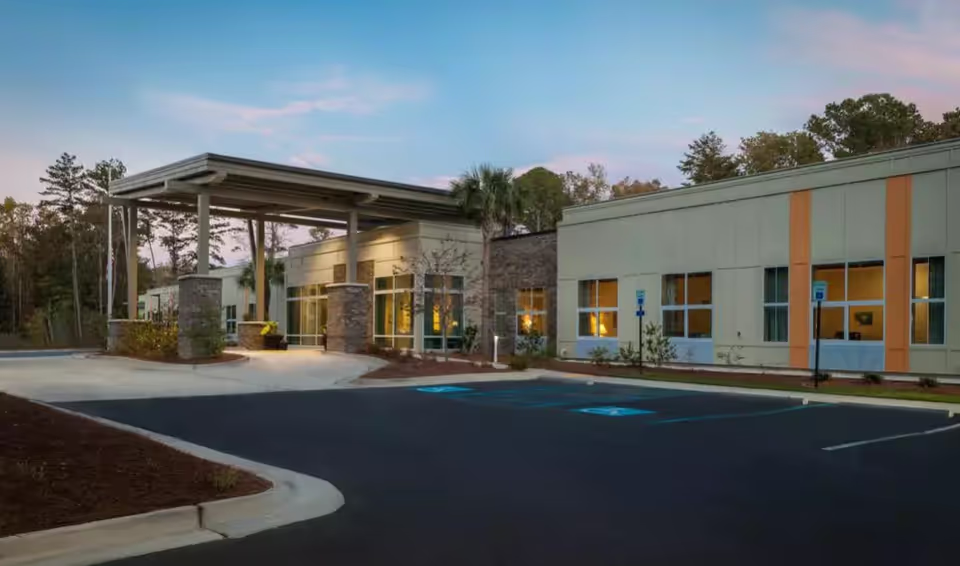
The reviews present a highly polarized picture of care at Cooper River Post Acute. Many families praise the facility’s rehabilitation services, naming therapy staff and programs as major strengths that produce measurable recovery. Long-tenured nurses and several dedicated CNAs are repeatedly commended for compassionate, consistent bedside care. Admissions coordination, discharge planning, and some leadership interventions are also described as helpful in navigating transitions. Activity programming and social offerings receive positive remarks for contributing to resident engagement.
At the same time, a substantive cluster of clinical and operational concerns appears across reviews. Multiple accounts describe inconsistent clinical monitoring and medication administration practices, including delayed vital-sign checks and missed medications. Reviewers also flagged gaps in documentation and hospital-transfer processes, and there are instances of significant family communication breakdowns—difficulty reaching nursing staff by phone and delayed notifications after clinical events. A few reviews reference state regulatory citations and fines, and there are serious allegations of theft and financial mishandling that families should consider when evaluating the facility.
Facility condition and service consistency are recurring themes. Cleanliness and sanitation issues, odor concerns, incontinence-care delays, and pest-control problems are cited alongside maintenance shortfalls such as broken equipment and inadequate room repairs. Food-service complaints center on inconsistent quality, cold meals, and use of disposable containers; some reviewers contrasted poor dining experiences with others who found the meals satisfactory. Room configuration—small shared rooms and limited privacy—was noted as a drawback for some residents. Several reviewers observed that renovations and leadership changes have begun to address physical and operational shortcomings.
Staffing patterns are a notable driver of variability in experience. Positive accounts often reference specific caregivers, nurses, or therapy staff by name and describe attentive, effective care. Negative accounts more commonly point to understaffing, high turnover, and particular problems on the night shift, which are linked to longer call-light response times and inconsistent assistance. Communication style and conflict management by certain administrative staff also influenced family perceptions—some families praised responsive administration, while others reported adversarial interactions and slow resolution of billing or clinical concerns.
For prospective residents and families: the facility appears capable of delivering strong rehabilitative and specialty clinical outcomes when staffed and managed effectively, but there are recurring operational weaknesses that can affect day-to-day safety, sanitation, and family communication. Suggested focus areas for a visit or initial conversation include observing therapy sessions, checking recent regulatory history, asking about staffing ratios (particularly overnight), reviewing medication and monitoring protocols, confirming housekeeping and pest-control schedules, and clarifying billing/refund procedures. These inquiries can help discern whether the current operating environment aligns with the level of oversight and consistency your loved one requires.