Reviews of Signature HealthCARE of Elizabethton Rehab & Wellness Center present a mixed but clear pattern: the facility receives frequent praise for its clinical rehabilitation capabilities and for many individual caregivers, while operational and leadership inconsistencies create significant variability in day-to-day resident experience.
Care and staff: Many families highlighted compassionate, hands-on caregiving and a strong therapy team. Reviewers credited physical and occupational therapy with producing measurable rehab successes and helping residents return home. Specific caregivers and CNAs were singled out for individualized attention and warmth, and several accounts described skilled nursing and effective wound care. At the same time, other accounts describe lapses in staff conduct and responsiveness — including abrupt or confrontational interactions, inconsistent attention to call-for-help requests, and variability in clinical competence among nurses and CNAs. These divergent accounts point to uneven performance across shifts and personnel rather than uniformly excellent or uniformly poor caregiving.
Dining and nutrition: The dining experience is inconsistent. Some families praised the dietary staff and described tasty, satisfying meals, while other families raised concerns about food quality, special-diet accommodations not being followed, and inadequate assistance during mealtimes. There are operational gaps related to meal-service continuity and mealtime supervision that appear to affect resident nutrition and dining support for those who need help eating.
Activities and therapy: Therapy-oriented activities receive positive feedback: reviewers noted engaging, fun exercise sessions and an atmosphere that encourages activity and participation. The facility’s rehab-focused programming and interdisciplinary coordination are strengths. However, some reviewers found general amenities and non-therapy activities to be mediocre or lacking in detail, and there were comments about limited therapy scheduling availability during busy periods.
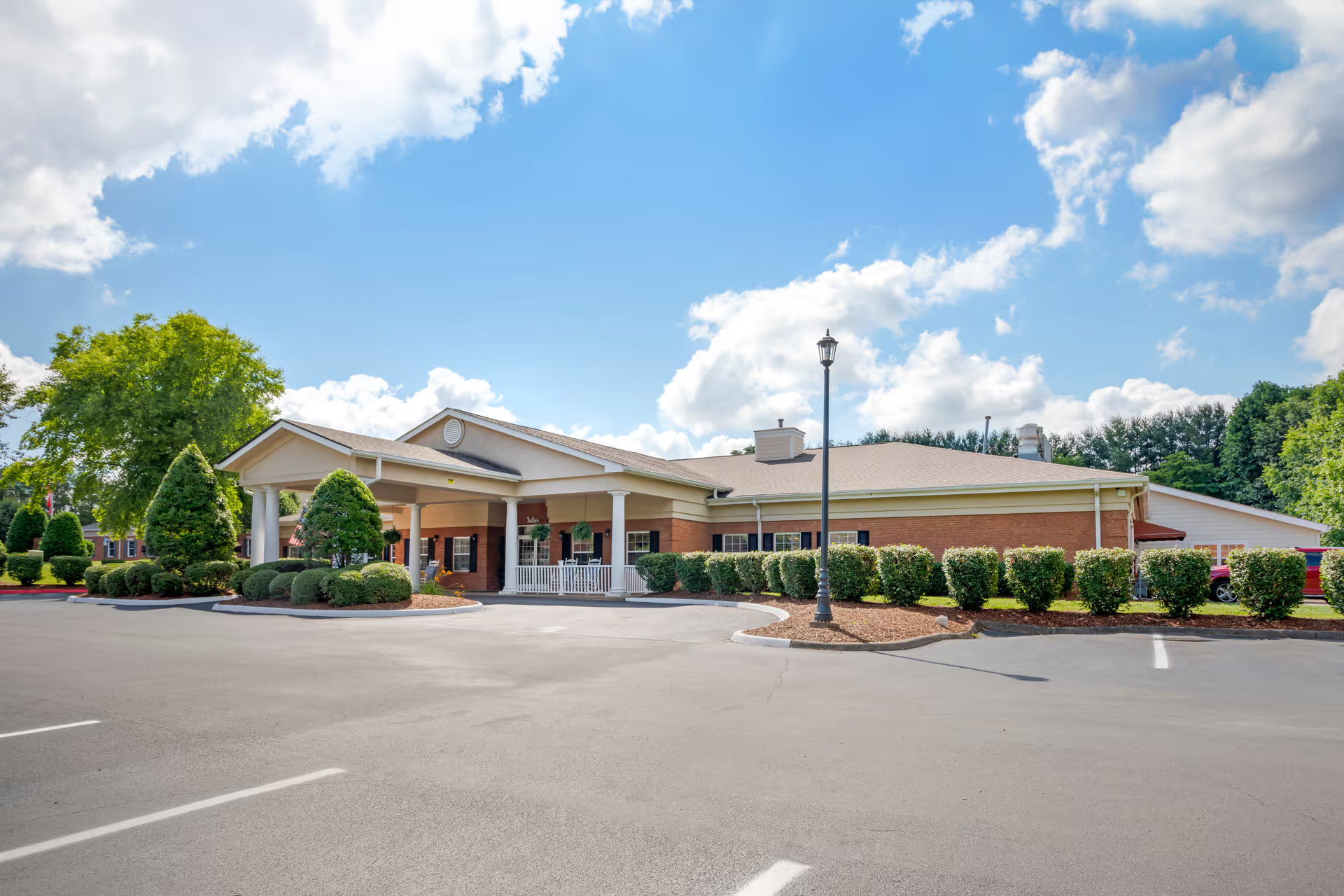
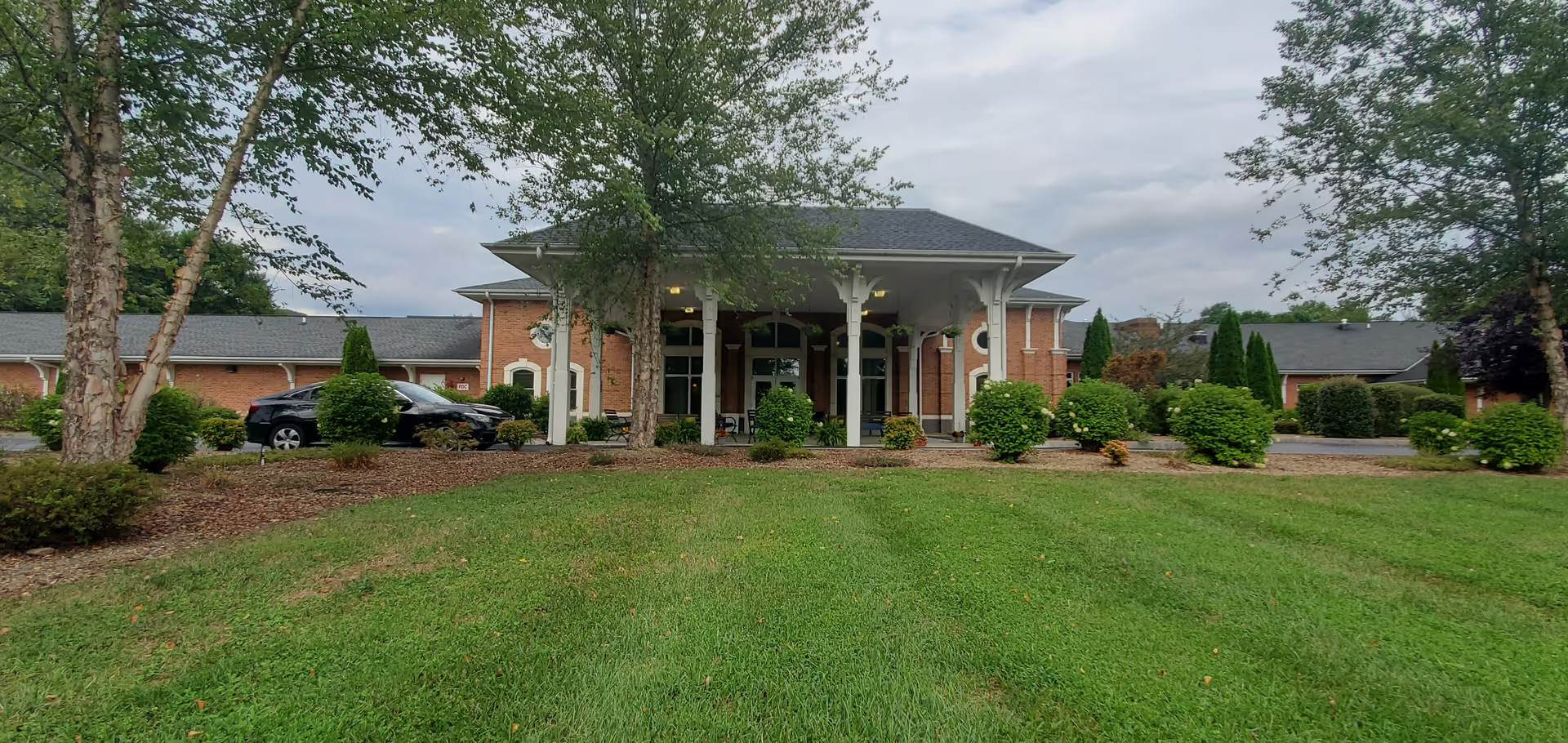
Facilities and environment: The center is described as welcoming, quiet, and located on pleasant grounds, with many visitors noting clean, comfortable rooms. Conversely, shared-room configurations and space constraints were concerns for some families; issues included cramped shared rooms and limited access to in-room sinks or personal space. Centralized control of heating and cooling was also mentioned as limiting individual resident comfort.
Management, safety, and communication: A recurring theme is uneven leadership and communication. Several reviews describe inadequate on-site supervisory coverage (notably on weekends), inconsistent family communication after incidents such as falls, and lapses in information privacy controls. There are also operational concerns raised about staffing stability, managerial priorities, and transportation safety practices. These issues collectively suggest gaps in oversight, escalation processes, and consistent enforcement of policies.
Notable patterns and guidance: The overall picture is one of strong clinical and rehabilitative capability combined with variability in operational consistency. Prospective residents and families will likely encounter dedicated, effective caregivers and a capable therapy program, but should also be prepared to confirm facility practices around staffing ratios, weekend leadership, mealtime assistance, dietary accommodations, room assignments, privacy safeguards, and transportation protocols. Visiting in person, meeting shift staff and leadership, and asking for recent quality measures or incident-response policies can help families assess whether the facility’s strengths align with their expectations and care needs.