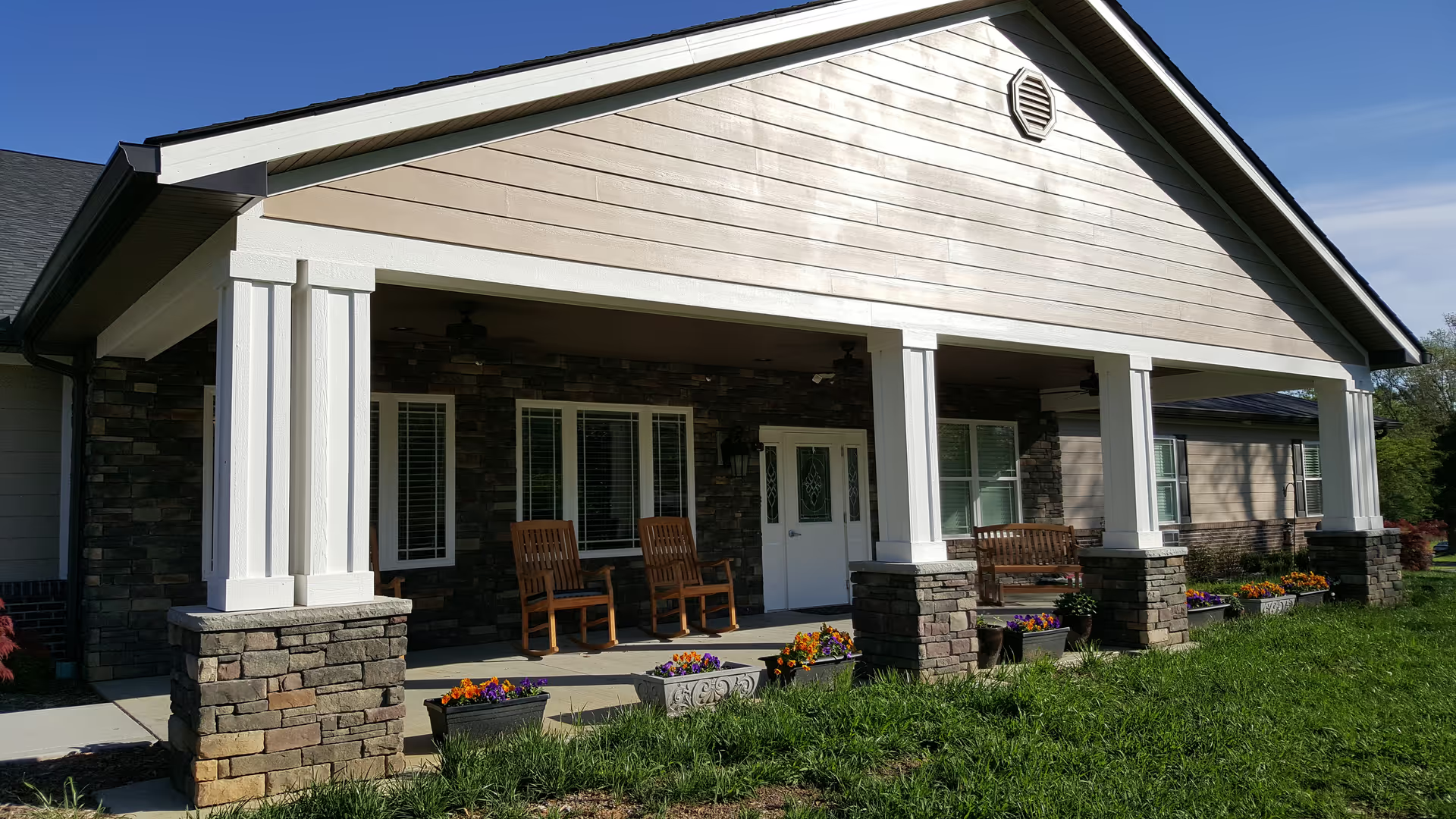
The reviews for La Follette Court Assisted present a mixed picture. Many comments praise frontline caregivers for providing compassionate, friendly, and attentive care. Families describe staff who made them feel comfortable, were helpful and responsive, and who provided clear guidance and direction; one staff member (Rhoda Graves) was singled out positively. These observations suggest strengths in day-to-day resident interactions and family communication, and point to instances of individualized, reassuring care.
At the same time, a subset of feedback raises operational concerns that could affect reliability and consistency. Several comments point to problems with leadership and oversight, and there are direct concerns about staff conduct in resident interactions. Combined with mentions of inadequate employee benefits, these items imply potential workforce stability and supervision issues that can undermine consistent care delivery. The phrase "needs investigation" used by a reviewer signals perceived gaps in accountability or oversight rather than a detailed documented incident in this dataset.
Dining, activities, and the physical environment were not described in the supplied summaries, so there is limited information to evaluate those areas. Because those service domains are important to overall quality of life, prospective residents and families should request specifics during a visit: sample menus, activity schedules, examples of engagement programming, and an opportunity to observe common areas and resident rooms.
In sum, the pattern here is a contrast between well-regarded direct caregivers and concerns about management practices and workforce supports. That contrast can produce variability in experience depending on shift, staff assignment, or unit. When evaluating this facility, families should focus questions on leadership and oversight practices, staff training and supervision, turnover and benefits, incident-reporting procedures, and measurable staffing levels. Reviewing state inspection results and speaking with current families can help clarify whether the concerns affect day-to-day care continuity or reflect isolated issues.