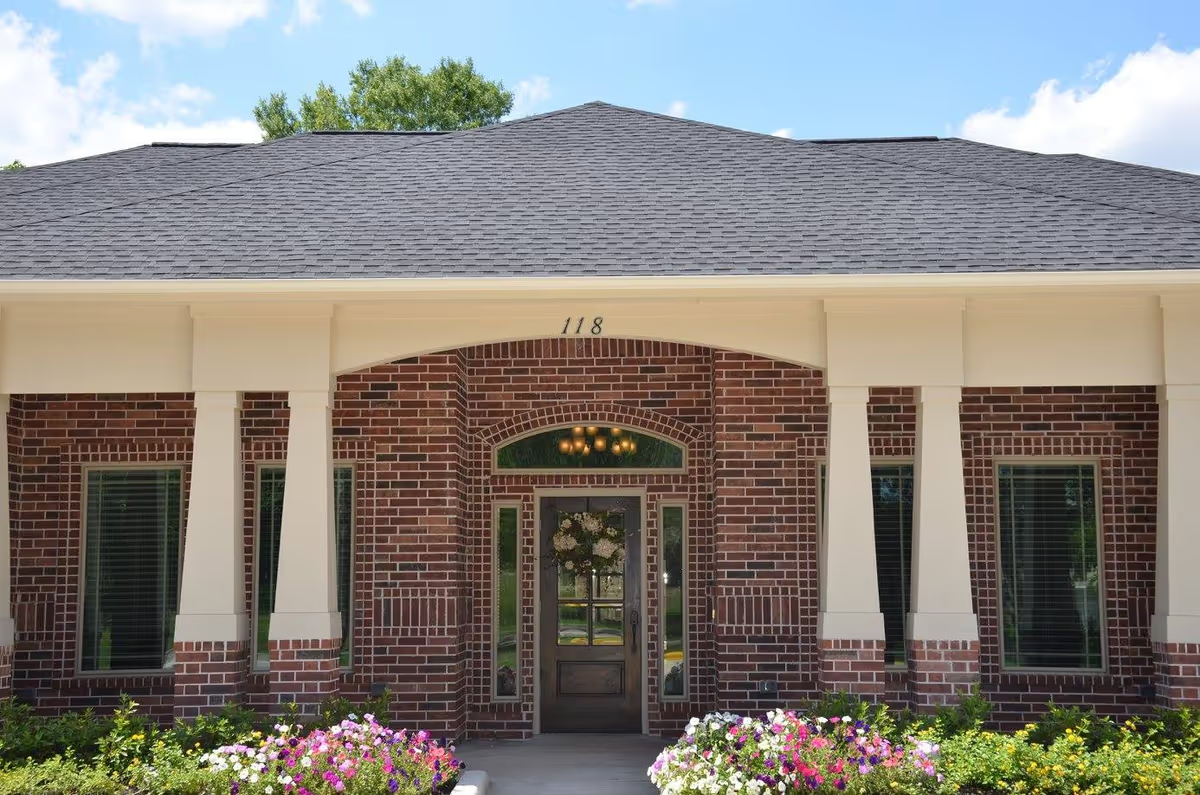
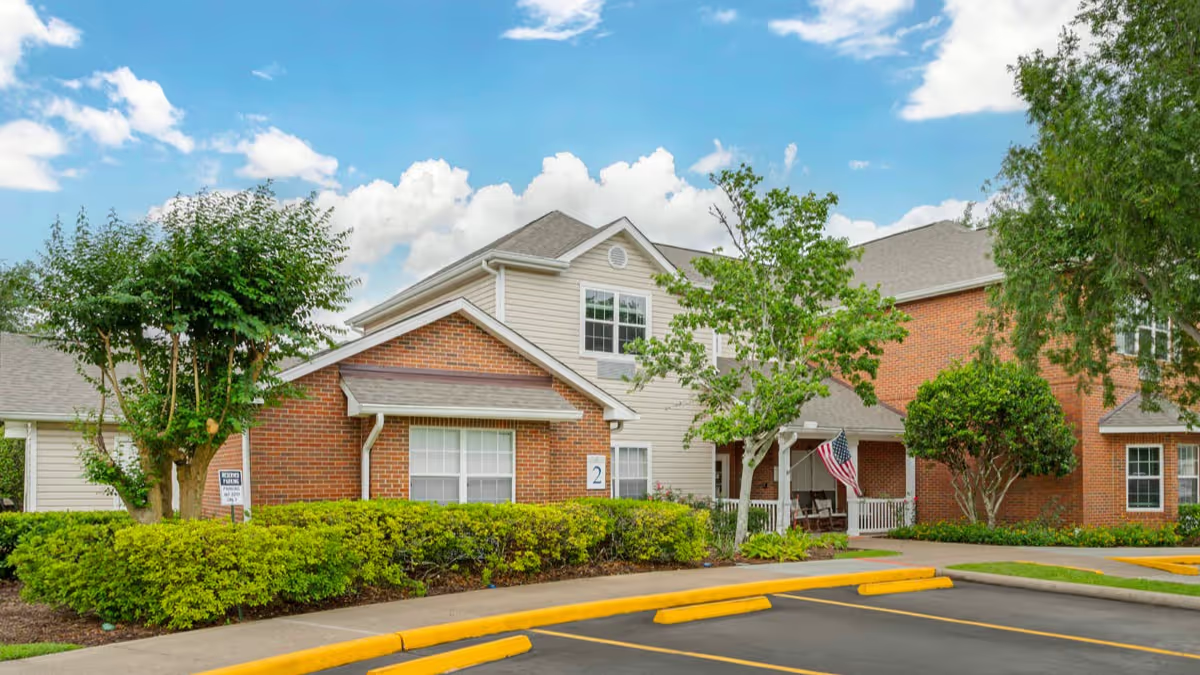
The reviews present a highly mixed picture of Friendship Haven Healthcare and Rehabilitation Center. Many families and patients praise the facility’s clinical strengths: attentive caregivers and nurses in several units, strong therapy services (PT/OT), and notable wound-care expertise. Admissions and discharge coordinators, social work, and some nursing leaders receive consistent positive mention; these elements support effective short-term rehabilitation and respite stays for some residents. The building’s entrance, landscaping, and portions of the interior are described as clean and welcoming, and certain rooms are noted as spacious and accessible.
At the same time, recurring operational weaknesses are described across reviews. Staffing levels and reliance on agency nurses are frequently cited as contributing to delayed responses to call lights, inconsistent bathing and toileting schedules, and delayed assistance with basic needs. Reviewers commonly describe variability in staff professionalism and communication: while some nursing leaders are praised for responsiveness, other units are characterized by inconsistent caregiver conduct and a lack of clear accountability. Several families reported difficulties obtaining timely clinical updates, coordination around transfers or discharges, and clear explanations of medication or pain-management plans.
Several aspects of the facility’s environment and logistics also show mixed results. Dining receives widely variable feedback: some reviewers found meals adequate and timely, while others noted poor meal quality, late service, and limited diabetic-friendly options. Housekeeping and laundry services are reliable in some areas but problematic in others; multiple accounts mention sanitation and pest-control concerns, odor concerns in communal areas, and missing personal items, indicating weaknesses in property controls and environmental services. Maintenance issues—air-conditioning outages, broken call bells, and delayed repairs—were reported and appear to affect resident comfort and safety in certain units.
Notable safety and quality patterns emerge that prospective families should weigh carefully. Reviewers cite medication/pharmacy management issues, gaps in incident escalation, inconsistent infection- and end-of-life communication, and reports of missing or mishandled personal property. There is also a serious individual allegation involving staff conduct that reviewers flagged as requiring formal investigation; this, combined with other accounts of poor responsiveness and occasional adverse clinical outcomes, suggests the facility has uneven oversight across units. Conversely, strong pockets of clinical performance—especially in rehabilitation, wound care, and units led by engaged nursing leadership—indicate that care quality may depend heavily on unit-level staffing and management.
In summary, Friendship Haven appears to offer substantial strengths in therapy services, individual clinicians, and certain administrative supports, but its overall performance is inconsistent. Families considering the facility should ask direct questions about current staffing ratios, use of agency staff, pest-control and sanitation protocols, incident reporting and escalation procedures, medication management practices, and property-loss prevention. Visiting specific units, meeting the unit nursing leadership, reviewing recent state inspection reports, and clarifying discharge/transfer communication processes will help identify whether a particular unit aligns with an individual resident’s needs.