Overall impression: Reunion Court of Clear Lake presents a mix of clear strengths and recurring operational concerns. Many families describe a warm, home-like environment with attentive direct-care staff, structured activities, and dependable support services such as on-site nursing, housekeeping, laundry, and transportation. The community operates an on-site memory-care unit and highlights formal CNA training and Alzheimer's continuing education, plus access to house-call physicians and sister-community clinical resources. Several reviewers praised the activity program, outings, and personalized staff–resident interactions that contribute to resident engagement and family reassurance.
Care and staff: Direct-care staff are frequently characterized as compassionate, personable, and attentive, and the facility maintains licensed nursing coverage and formal CNA training. However, staffing levels and turnover emerged as a consistent operational concern. Reviewers described stretched shifts and limited aide availability, particularly in memory care, which corresponded with examples of delayed responses, inconsistent personal-care assistance, and gaps in clinical follow-through. There are specific concerns about medication administration processes and the adherence to care plans and assessments; these appear as variability in how clinical tasks are completed and documented. Prospective families should ask for current staffing ratios, medication-management protocols, and incident-notification procedures during a tour.
Dining and sanitation: Dining experiences are mixed. Many residents and families find meals nutritious and reasonably varied, and some praise the dining staff. At the same time, there are sanitation and pest-control concerns tied to certain dining and kitchen areas, and some reviewers cited limited meal-service flexibility (restricted meal windows and limited menu customization). These issues suggest the need to confirm both housekeeping/food-safety practices and specific meal schedules before committing.
Activities and engagement: The community offers a broad activities program including memory-focused crafts, music, outings, and social events; activity staff and directors receive positive mention. Nevertheless, some reviewers felt that ambulatory memory-care residents are underserved by available programming and that certain memory-care areas are darker or less stimulating. This points to variability in activity planning tailored to different functional levels within the memory unit.
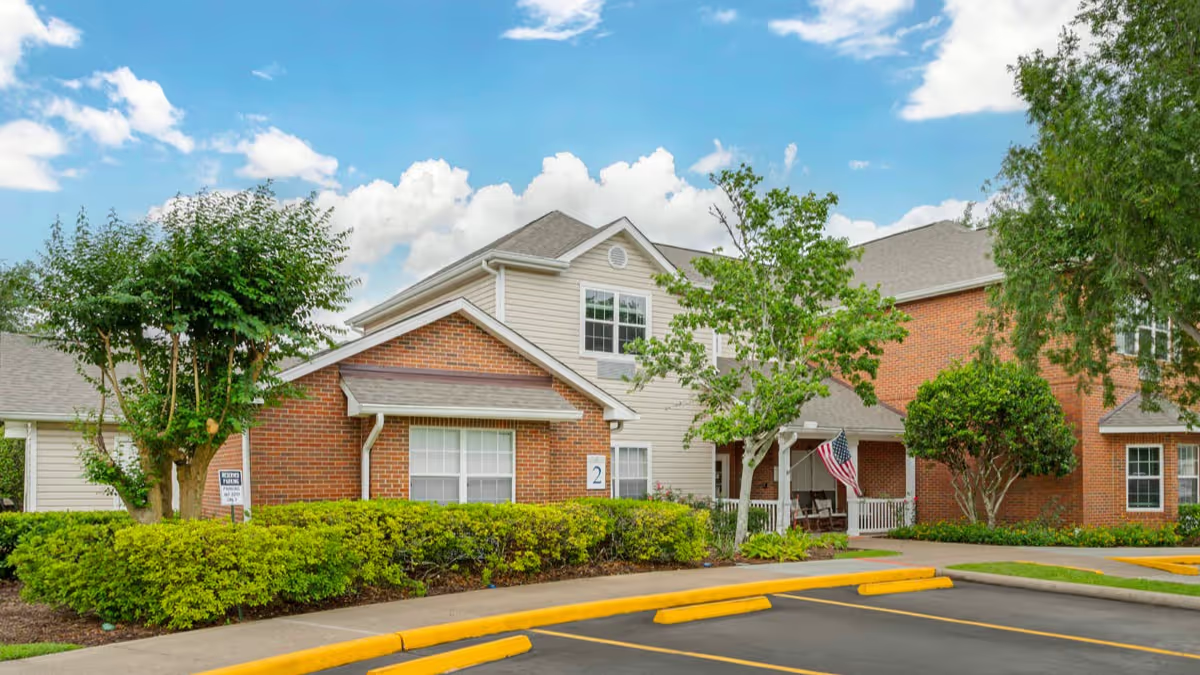
Facilities and environment: Physical upkeep is generally described as good — many common areas and apartments are clean and well-maintained — and the campus has convenient parking and a welcoming exterior. Conversely, reviewers noted areas that feel dated or dim, carpeting wear that needs replacement, and a second-floor stair configuration that is more decorative than usable. Renovations are reportedly in progress in places; visitors should evaluate specific resident areas during a tour for light, layout, and accessibility.
Management, billing, and transparency: Several families praised individual staff and care teams, yet there are recurring complaints about inconsistent communication from management and the business office, unexpected fees or delayed discount application, and steep price increases. Leadership responsiveness and professionalism were described as variable. Asking pointed questions about billing practices, contract terms, refund policies, and how leadership communicates about incidents can help clarify expectations.
Notable patterns and decision guidance: The strongest patterns are a genuinely caring frontline staff, a structured activity program, and a range of support services that many families find reassuring. The clearest recurring weaknesses are operational: inconsistent staffing and clinical follow-through, dining-area sanitation/pest-control concerns, variability in cleanliness and environment across units, communication and billing inconsistencies, and safety/security process gaps. Prospective residents and families should tour at different times of day, observe staffing levels on shift, review medication-management and incident-notification protocols, inspect dining and kitchen areas for cleanliness, ask about meal schedules and activity options for ambulatory memory-care residents, and request written details on fees and recent staffing metrics. These steps will help determine whether the facility's strengths align with an individual resident's care priorities and risk tolerance.