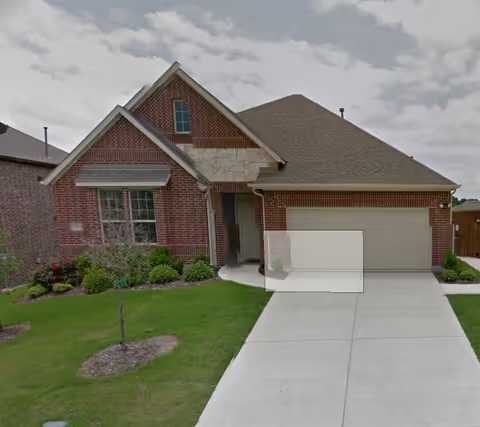
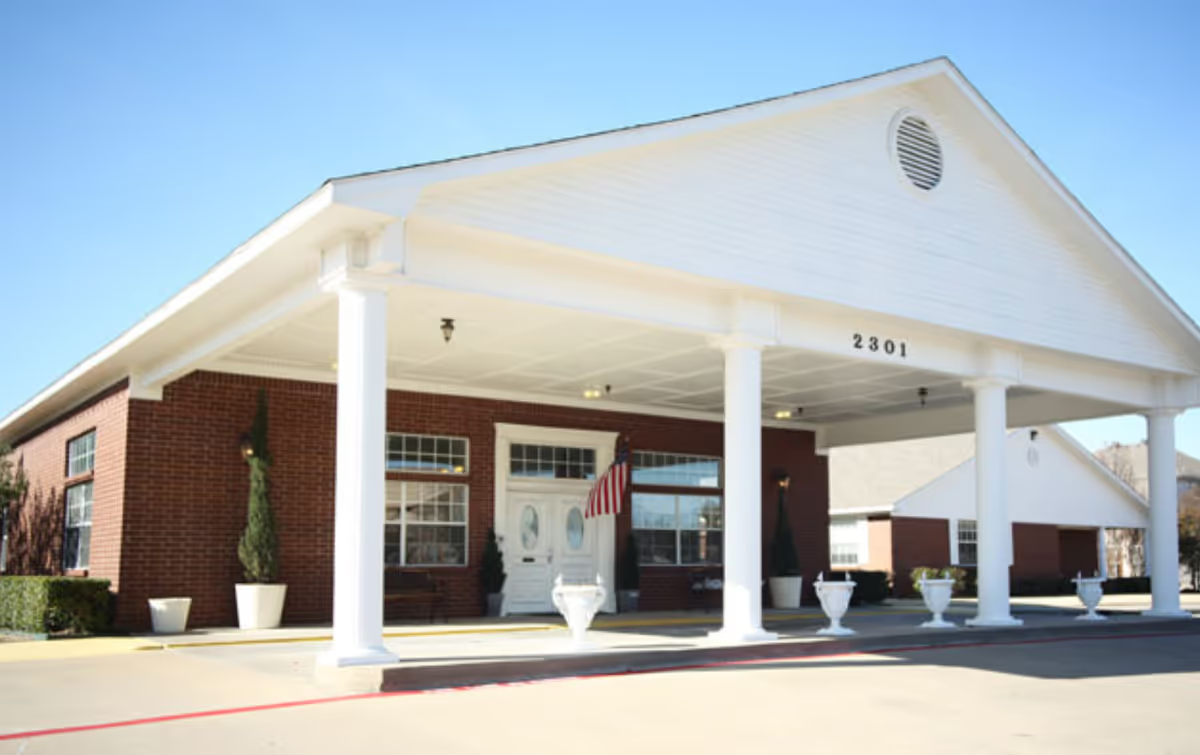
Avalon Memory Care elicits a strongly mixed but thematically consistent set of impressions. Many families describe a warm, home-like setting with staff who provide compassionate, individualized care. Positive comments emphasize staff who learn residents’ and families’ names, proactive assistance with dressing and personal care, and a director who is accessible and communicative. The facility’s small size, one-level converted home, and country/residential location are seen as strengths for residents with memory challenges because they reduce institutional cues and support social interaction.
Staff quality and caregiving practices are central to resident experiences. Numerous accounts highlight calm, patient caregivers with Alzheimer’s-specific skills who can redirect residents and manage challenging behaviors professionally. Reviewers point to personalized attention, consistent housekeeping, and staff involvement in daily routines (bathing, dressing, laundry, and meal preparation) as positive indicators of quality. At the same time, several operational concerns appear repeatedly: perceived understaffing (especially at night), caregiver workload strain, and what families describe as delays in attending to residents. These operational weaknesses connect to reports of insufficient supervision, residents moving unmonitored, and worries about mobility-related skin integrity and pressure-risk management.
Dining and daily life are frequently praised. Home-cooked meals served family-style, a non-institutional dining atmosphere, and staff flexibility around meal textures are noted positives. The setting includes a usable backyard and communal television/activity area that some families find engaging for residents. However, the facility’s layout — an older one-level home converted for memory care — creates trade-offs: it is perceived as cozy but not fully accessible for wheelchairs, and common rooms can feel small or crowded when multiple residents gather.
Management and communication receive mixed evaluations. The director and several caregivers are repeatedly described as approachable and caring, and staff continuity is a recurring positive. Conversely, reviewers raise concerns about communication consistency with families and about how the facility handles billing or fee disputes. Language and communication barriers due to staff accents are also noted as an impediment to clear family–staff interactions in some cases. Finally, while many families strongly recommend Avalon for its attentive, personalized atmosphere, a minority report serious safety and responsiveness concerns; this creates a polarized overall impression where positive day-to-day experiences coexist with operational gaps that warrant clarification for prospective families.
For prospective residents and families: Avalon offers a small, home-like memory-care option with evident strengths in personalized caregiving, domestic-style meals, and a compassionate staff culture. Important due diligence topics to discuss during a tour include staffing levels at night, supervision and door-securement practices, wheelchair and accessibility accommodations, mobility- and skin-care protocols, and the facility’s approach to dietary safety and family communication. Asking for a current staffing plan, sample activity schedule, and clarification of financial/dispute policies will help determine whether the operational model matches a prospective resident’s clinical and safety needs.