Friend's Place Adult Day Services is presented in reviews as a daytime-focused, dementia-aware adult day program with strong strengths in staff engagement, social programming, and a welcoming physical environment. Families commonly describe staff as compassionate, cheerful, and proactive; leadership and director-level involvement are singled out as dedicated and hands-on. Several accounts emphasize that staff go beyond basic duties to support both residents and family caregivers, and that the facility fosters a consistent sense of belonging that encourages regular attendance.
The activity program is a consistent highlight. The center offers a wide variety of group activities — bingo, music visits and performances, Zumba, crafts, word games, and other cognitive-stimulation exercises — organized on daily and yearly schedules. Memory-focused design elements such as decade-themed cubicles and structured memory-stimulation sessions are used to engage people living with dementia. Reviewers attribute measurable functional and behavioral improvements to the program, including increased alertness, socialization, and preserved activity levels for extended periods. Daytime respite and caregiver-support offerings are also frequently mentioned as important family benefits.
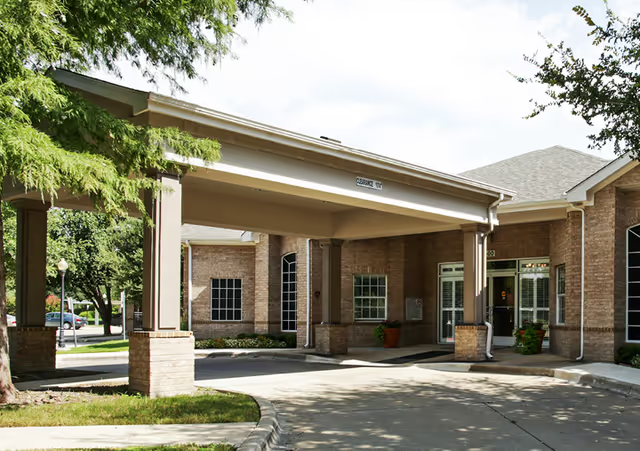
Dining and facilities receive positive remarks. Reviews describe daily fresh hot lunches, meals characterized as better than institutional fare, and well-maintained common spaces including a dedicated shower area. Overall cleanliness, a comfortable atmosphere, and a layout that supports activities of daily living and communal interaction are noted. The combination of organized programming, approachable staff, and pleasant physical facilities contributes to the repeatedly mentioned impression that the center is a supportive, life-enhancing daytime option.
Notable operational patterns and limitations appear alongside praise. The program is explicitly daytime-oriented and intended for mobile or ambulatory participants; it does not operate as a 24-hour care facility and may not have the clinical capacity for advanced, high-dependency care. The emphasis on group-based activities, while beneficial for many, could be less suitable for individuals who need intensive one-to-one clinical or behavioral interventions. Reviewers also flag pricing as a potential barrier—families vary in their ability to afford the stated daily fee—and several families expressed a desire for weekend availability, which the program does not routinely provide.
In summary, Friend's Place is described as a well-run adult day program with strong dementia awareness, an extensive and engaging activity roster, supportive staff and leadership, and good dining and facility upkeep. Prospective families should weigh those strengths against the program's daytime-only model, group-focused programming, potential resident-acuity limitations, and cost considerations when assessing fit for a particular care need.