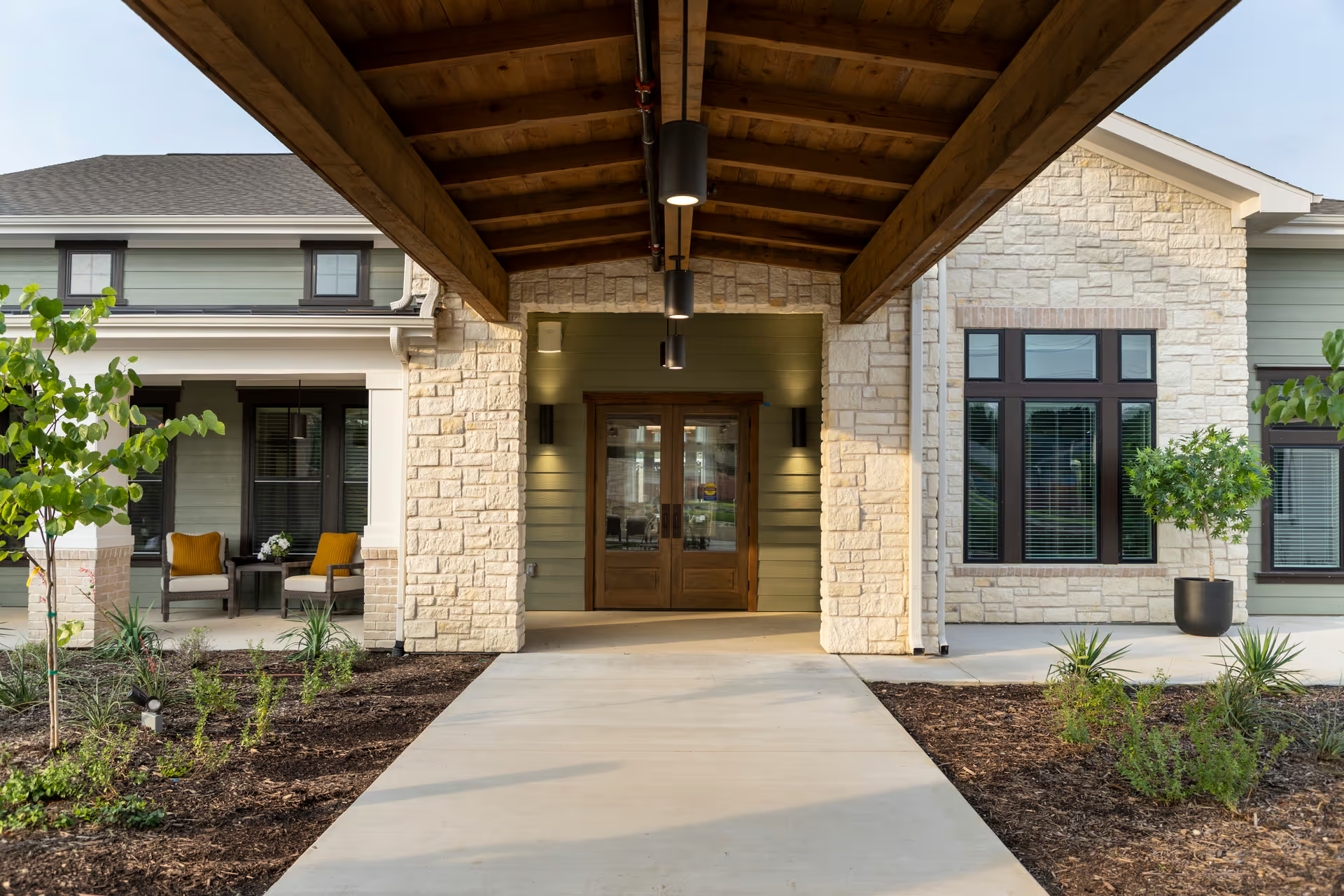
Reviews describe a facility with a clear set of strengths concentrated around a small-house, home-like model and many individual staff members who deliver compassionate, person-centered care. Positive remarks frequently cite on-site, home-cooked meals served in family-style dining areas, meaningful social programming (choirs, games, outings), comfortable and modern common spaces, and strong memory-care approaches in designated houses. Several households and individual caregivers are identified as particularly effective — offering regular check-ins, one-on-one attention, and supportive hospice coordination — and these elements contribute to a welcoming environment for many residents.
Alongside those strengths, a consistent pattern of operational weaknesses emerges. Staffing levels and consistency are the dominant concern: reviewers describe chronic understaffing, higher turnover, and a reliance on inexperienced caregivers. Those staffing gaps are linked to downstream problems in clinical operations, including gaps in medication-administration controls and documentation, inconsistent training for behavioral and clinical needs, and weaknesses in supervision that have contributed to falls and frequent emergency transports. Weekend and specific-shift variability is notable — some shifts and houses receive strong praise while others are characterized by limited coverage and delayed responses.
Sanitation and housekeeping are uneven. While common areas and newly built sections are often described as clean and well-maintained, reviewers also describe laundry lapses, bedding and room-cleaning inconsistencies, and other sanitation concerns in residents' private spaces. Emergency and safety systems are another recurrent theme: the facility uses alternative call systems in some houses and reviewers flagged unreliable or faulty call/door alarms, contributing to delays in attending to residents. Communication and management follow-through are variable as well; families describe both proactive, engaged directors and cases where requests were slow to be addressed or promises were not fully implemented.
Dining and programming reflect the same variability. Many reviews praise fresh, home-style meals and the visible kitchen, while others report processed or difficult-to-chew items, inconsistent accommodation of dietary needs, and limited or age-inappropriate activities in certain houses. Clinical oversight beyond day-to-day caregiving — access to on-site physicians, timely medication ordering, and rehabilitation coordination — is also inconsistent based on reviewers' experiences.
Taken together, the pattern is one of a facility with strong design, committed staff members, and programs that work well under adequate staffing — but with operational fragility when staffing, training, or management attention are insufficient. Prospective families should evaluate specific houses and shifts (weekday vs. weekend, day vs. night), verify staffing ratios and training credentials, ask about medication-administration protocols and emergency-call systems, and confirm laundry/housekeeping schedules and dietary accommodation processes before making a placement decision.