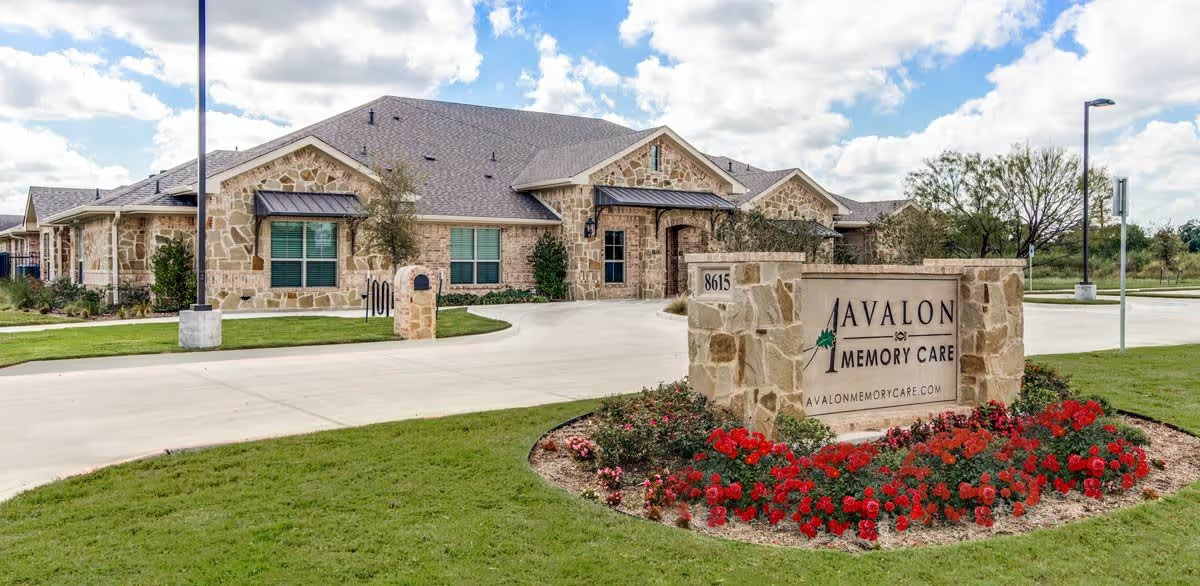
Overall impression is positive on core elements of daily living: reviewers consistently described warm, attentive staff and a generally high level of care. Families and residents emphasized kindness and an approachable administrative presence, and many noted that staff–resident interactions felt respectful and supportive. At the same time there are operational concerns about transfer safety that families flagged; this suggests the facility should review transfer protocols and staff training to ensure consistent, documented safe-handling practices.
Dining and room arrangements are clear strengths. Meals were characterized as better than typical institutional food, and the facility provides regular meal service with additional touches such as weekly fresh fruit. Room options allow residents to bring personal furniture, decorate their spaces, and use in-room refrigerators and microwaves, while housekeeping and laundry are included. The combination of apartment-style living and resident personalization contributes to a homelike feel for many residents, and the recent interior remodeling was described as an improvement to the living environment.
The facility’s size and services shape daily life. The small capacity (maximum ~16 residents) creates an intimate community where social activities such as dominoes can occur and staff notice individual preferences. The location close to family homes and availability of virtual communication (Skype) support family contact. Conversely, reviewers described a perception that the setting can feel more like a clinical nursing home than a private home for some people; this reflects a possible mismatch between expectations for a purely homelike model and the realities of regulated clinical care.
Infection-control practices have been consequential to resident experience. Quarantine and isolation measures implemented during outbreak periods limited group activities and interpersonal contact, and families noted the social impact of those restrictions. This is consistent with pandemic-era precautions but remains an important operational trade-off between infection prevention and resident social engagement. In summary, the facility appears to deliver solid everyday care, good meals, and a personalized, small-community environment, while the leadership may benefit from targeted attention to transfer-safety protocols, ongoing communication about infection-control trade-offs, and continued efforts to reinforce a homelike atmosphere where possible.