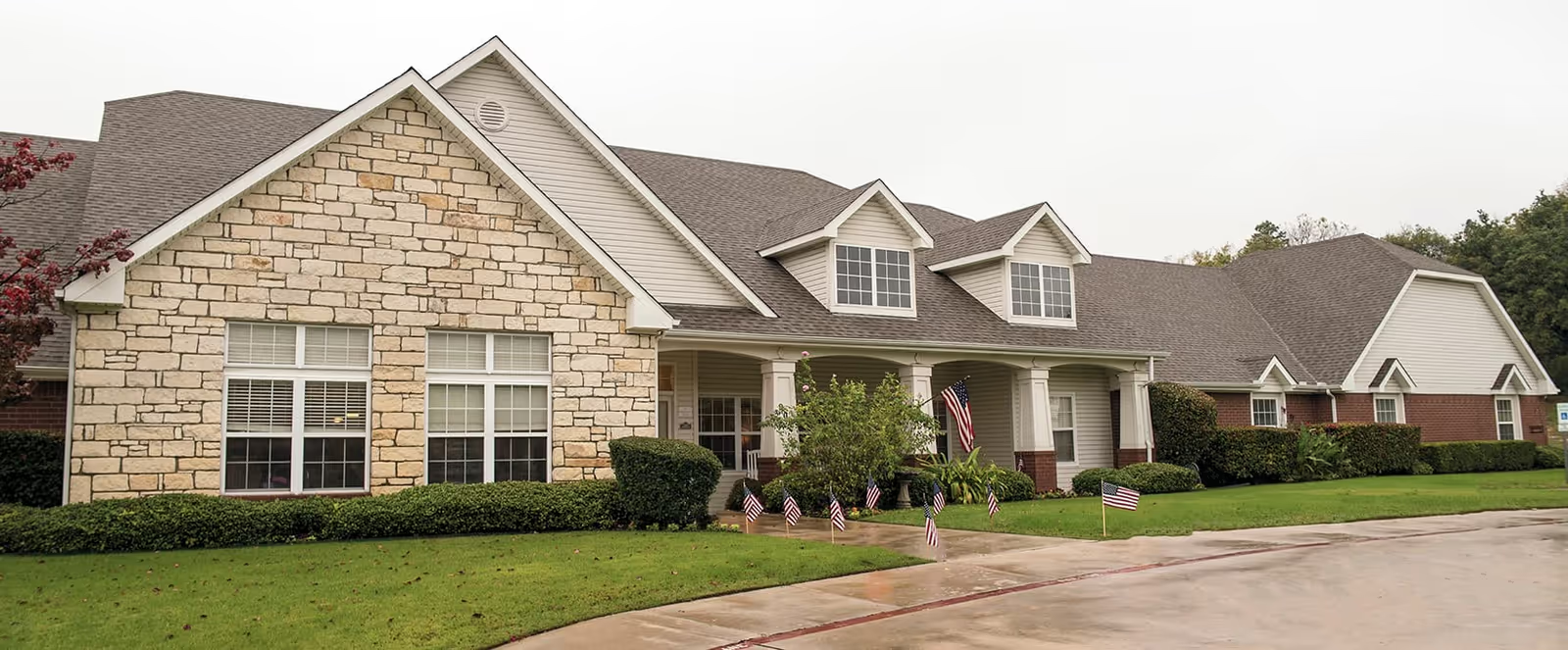
Overall impression Windsor Court is presented across reviews as a small, community-oriented senior living option with a homelike aesthetic and apartment-style independent living units. Reviewers commonly praise compassionate, long-tenured caregivers and highlight favorable caregiver-to-resident ratios that enable one-on-one engagement and meaningful conversation. The facility's smaller scale is repeatedly described as an advantage for monitoring, individualized attention, and quick familiarity between staff and residents.
Care and staffing Care quality receives generally positive assessments: night-staff performance and certain long-standing team members are frequently lauded for responsiveness, dignity in end-of-life care, and hands-on engagement such as assisting with exercise and social interaction. Memory-care staff are often described as experienced and well trained. However, there is a clear pattern of variability: day-shift performance is reported as inconsistent at times, and some families cite intermittent staff turnover and leadership changes that have affected continuity. Operational weaknesses inferred from reviews include gaps in transfer technique and handling practices, periodic supply and medication-supply lapses, and moments when laundry and sanitation workflows have fallen behind. These operational traits create uneven experiences depending on unit and staff on duty.
Medication and clinical practices Several reviews reference early medication shortages or first-month medication-management issues that were later resolved; combined with comments about additional administrative charges for medication administration, these accounts suggest unevenness in medication-supply chains and billing practices. Families should ask about current medication-administration protocols, extra fees, and how supply interruptions are handled. There are also reports indicating concerns about transfer safety and skin-injury incidents during assistance, pointing to the importance of reviewing staff training and lift/transfer policies during a tour.
Dining and activities Dining is generally seen as a strength: reviewers note better-than-average meals, dessert service, and reasonable portion sizes. Independent living residents often have meal service available for purchase rather than included, which may affect total cost. Activity programming is active for many residents (bingo, bunco, puzzles, outings with transportation), and social engagement is cited as a major benefit for residents who participate. At the same time, some families report limited ability to engage residents with advanced mobility or cognitive impairments, so activity accessibility can vary by resident capability.
Facilities and environment The facility's physical environment is commonly described as clean, well-decorated, and homelike, with apartment features such as private bathrooms, walk-in showers, kitchenettes, dens, and generous closets in independent units. Memory-care and assisted units are smaller and described as easier to monitor; some tours showed occupied rooms, which made a few visitors uncomfortable. Reviewers appreciate included groundskeeping, parking, and pet-friendly outdoor space. Periodic sanitation concerns and laundry backlogs were mentioned in some accounts, so cleanliness may fluctuate by unit and staffing levels.
Management and value Value perceptions are mixed. Many reviewers find Windsor Court reasonably priced compared with local alternatives and praise responsiveness from certain managers and a formerly well-regarded wellness director. Conversely, others cite recent fee increases, proposed extra charges, perceived favoritism, and inconsistent management presence as concerns. These governance and billing patterns are a notable theme: families considering Windsor Court should review current fee structures, change-notice policies, and leadership stability during their decision process. There are also serious individual claims, including allegations involving missing personal items and medications; these are not presented as systemic findings here but warrant direct inquiry and documentation if a prospective family observes related issues.
What to ask and observe on a visit Prospective residents and families should confirm current staffing levels by shift, review medication-administration procedures and associated fees, ask about transfer-training and lift policies, and inspect laundry and housekeeping routines. Observe day-shift interactions and activity participation during visiting hours, and ask for examples of how the facility accommodates residents with limited mobility or advanced dementia. Finally, request written details on fees, recent staffing turnover, and leadership continuity so you can assess how operational patterns described in reviews align with the facility’s present practices.
Bottom line Windsor Court offers a small, homelike setting with many strengths in staff engagement, memory-care experience, and apartment-style independent living. Those strengths are balanced by operational variability—particularly around day-shift consistency, medication and supply processes, occasional sanitation workflow delays, and recent management-driven cost changes. For families prioritizing close personal attention and a quieter, community feel, Windsor Court may be a good fit; for those prioritizing consistently high operational reliability across every shift, it is important to confirm current staffing, clinical protocols, and administrative practices during a visit.