Pillsbury Manor elicits mixed impressions: many families praise frontline caregivers for compassion and effort, while others raise operational concerns that affect overall confidence in care. Several families described longstanding residents who are well supported and spoke positively about staff who go beyond routine duties, treat residents with dignity, and maintain warm, energetic interactions. The facility appears to accommodate long-term stays for residents who fit well with its level of care.
Care quality shows a split pattern. Positive accounts emphasize respectful handling of residents with behavioral risk and continuity for residents who have lived there for extended periods. On the other hand, reviews indicate uneven responsiveness to clinical needs and monitoring, including delays in overnight attention and incontinence-care follow-up. A serious incident that resulted in an ownership change has been mentioned by families; several described limited improvement in operational practices after that transition. Taken together, these comments suggest variability in day-to-day clinical oversight and in how the facility communicates about incidents with families.
Dining and food-service presentation are also mixed. The dining room and common dining environment receive positive comments for appearance and atmosphere, and some reviewers described meals as acceptable. However, several families noted inconsistencies in meal temperature, use of disposable serviceware and packaging, and an overall sense that meal quality and presentation fall short of expectations for the price point. Cost is perceived by some as high relative to the level of dining and other services provided.
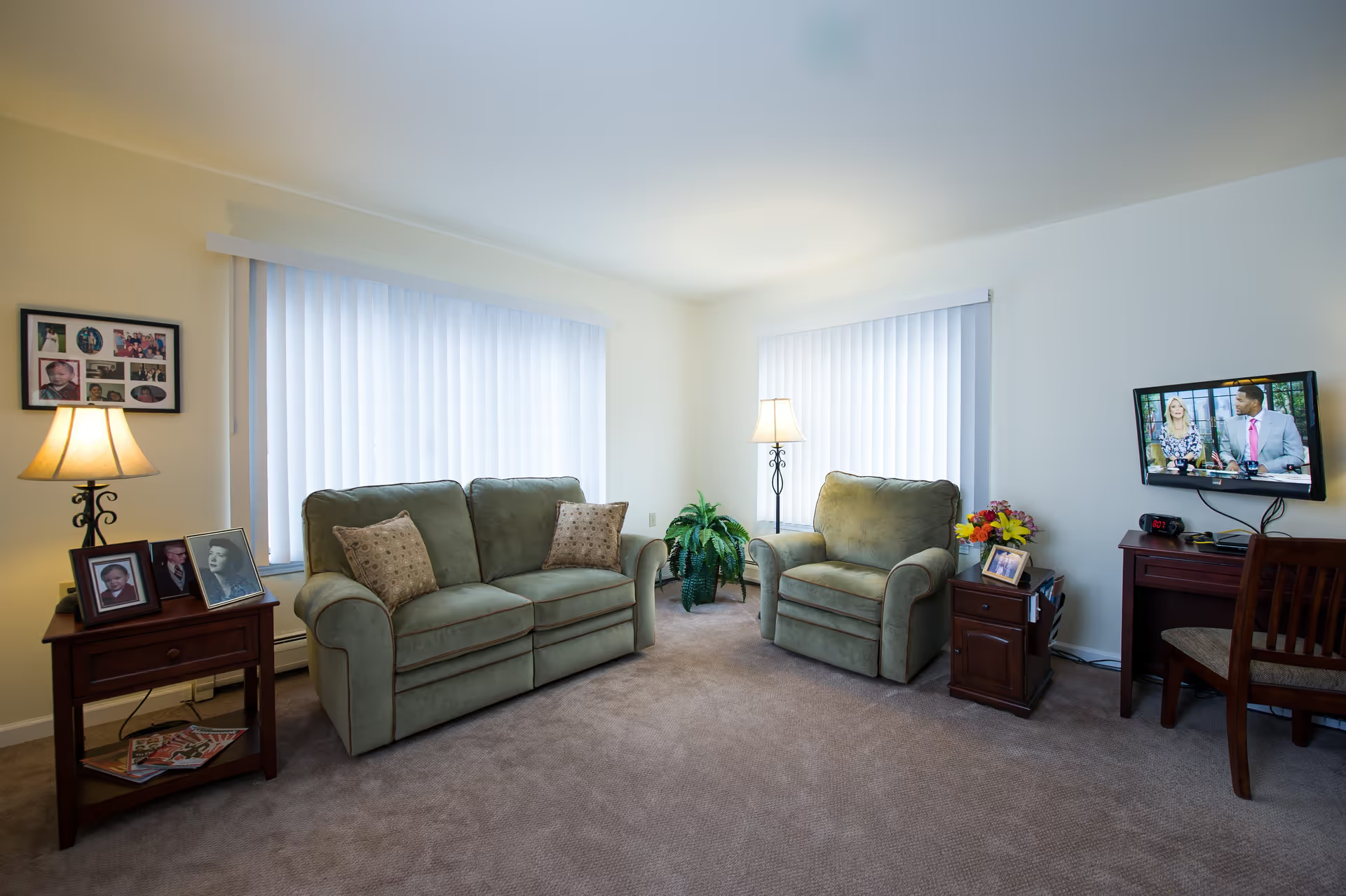
Activities and physical amenities are strengths for many residents. Reviewers highlighted art classes, card rooms, and generally pleasant social programming described as engaging and enjoyable. Individual rooms are described as adequate for single occupancy; however, there are limited features noted (for example, no pool). These amenities support social engagement for residents who take part in scheduled activities.
Operational and staffing issues appear as recurring themes. Language barriers among some staff members were noted as a challenge for clear communication with families. Comments also point to inconsistencies in staffing that affect monitoring and overnight care. Families expressed concern that management changes have not yet translated into reliable quality improvements, and they identified gaps in how the facility responds to clinical incidents and updates families.
Recommendation for prospective families: weigh the facility’s clear strengths in compassionate frontline caregiving and social programming against concerns about consistency in clinical monitoring, meal-service standards, communication, and value for cost. When evaluating the community in person, focus on staffing patterns, overnight care protocols, incident-reporting and family-notification procedures, language support, and a recent history of operational improvements following ownership change.