Care quality: Review language emphasizes a consistently compassionate approach to resident care. Caregivers are described as attentive and reassuring, and the overall impression conveyed is that clinical and daily-support needs are being met in a way that reduces family members' anxiety about placement. The facility appears to be able to support residents with greater care needs while providing comfort to families.
Staff: Staff behavior is a defining feature in the reviews. Many describe staff as kind, patient, respectful and family‑oriented, creating a home-like environment. At the same time, there are isolated accounts of poor visitor interactions and curt treatment of guests; this suggests variability in staff conduct or in enforcement of visitor-interaction expectations. The facility is also described positively as a workplace, which may reflect management practices that support caregiver retention and morale.
Dining: The dining experience is described less favorably, with terms indicating mediocre or inconsistent food quality. That points to an operational area that could benefit from menu review, consistency checks, or enhanced culinary staffing to match the otherwise positive care environment.
Activities: Several comments express a lack of engaging activities, indicating limited program variety or insufficiently stimulating offerings for residents. This is an operational gap in recreational programming and resident engagement that could affect quality of life for people who require more structured or frequent activity options.
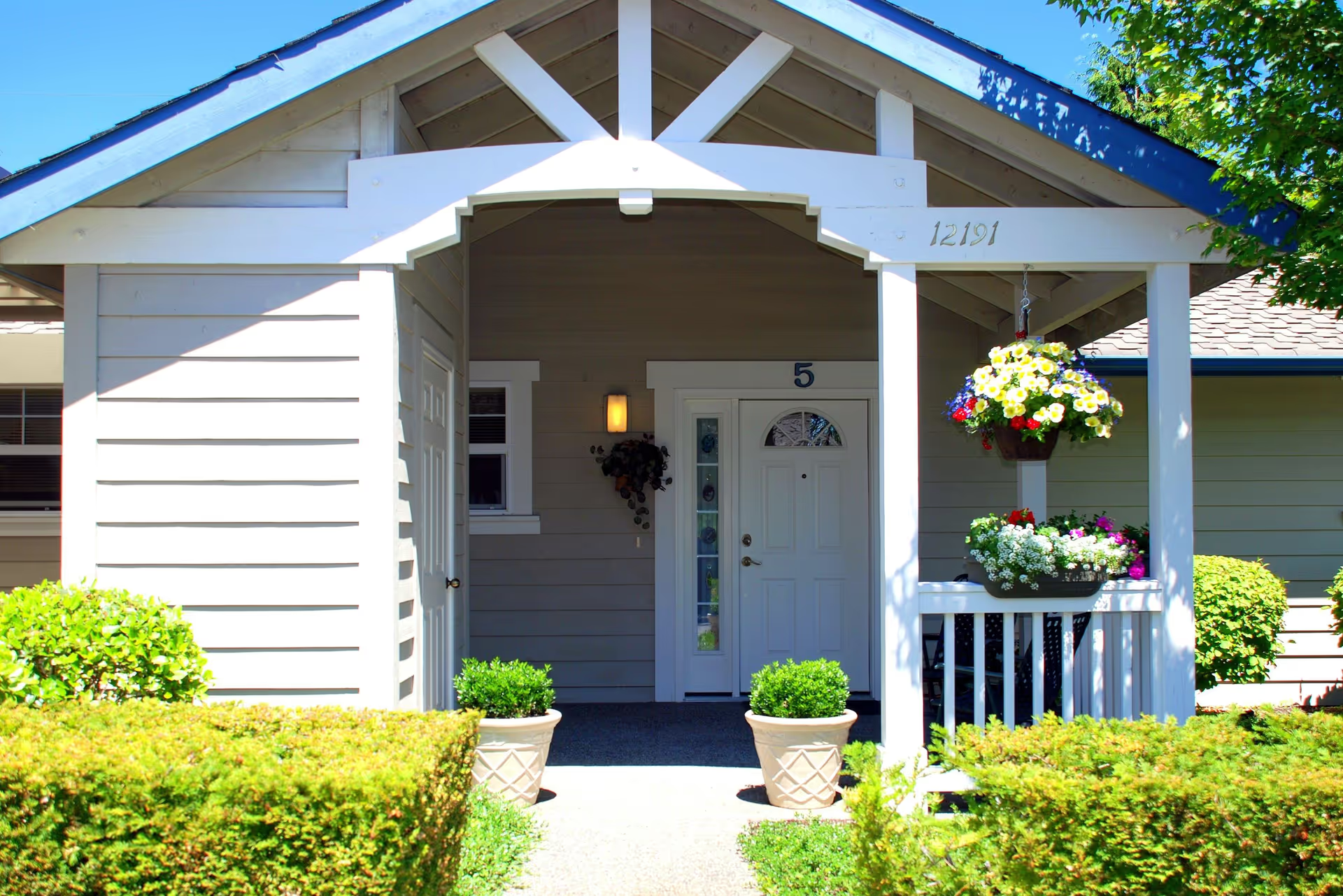
Facilities and visitation: The physical atmosphere is characterized as home-like and comforting in many accounts. However, concerns about visitor privacy during visits indicate a need for clearer protocols or designated private spaces to support family interactions. Strengthening visitor-privacy measures would address an important aspect of family satisfaction.
Management and notable patterns: Overall, the dominant pattern is one of strong, compassionate caregiving and a family-style culture that many families find reassuring. Counterbalancing that are recurring operational issues: variability in staff conduct toward visitors, limited activity programming, and inconsistent dining quality. These patterns suggest that targeted management actions — for example, standardized customer-service training, formalized visitor-privacy policies, activity-program development, and dining-quality controls — could preserve the facility's caregiving strengths while addressing the practical concerns families raised. Prospective residents and families should weigh the facility's evident strengths in direct care against these operational considerations when evaluating fit.