Overall sentiment across the provided reviews is largely positive about day-to-day care, staff behavior, and the physical condition of Serenity Cove AFH, but there are notable concerns around ownership and communication in critical situations. Multiple reviewers emphasize a clean facility and describe staff as professional, kind, and caring. Several comments stress that residents are well looked after and that the home is a "wonderful adult family home," with at least one reviewer summarizing their experience as "great time" and another explicitly recommending the facility.
Care quality and staff interaction are the strongest themes in the reviews. Reviewers repeatedly highlight staff professionalism and compassion; phrases like "professional and kind staff," "caring staff," and "residents well looked after" indicate consistent, positive experiences with caregivers. These comments suggest that everyday personal care, attentiveness, and the general approach of caregiving staff are reliable strengths of the home. The fact that multiple reviewers end up "highly recommending" the facility supports the conclusion that many families feel confident entrusting day-to-day care to Serenity Cove AFH.
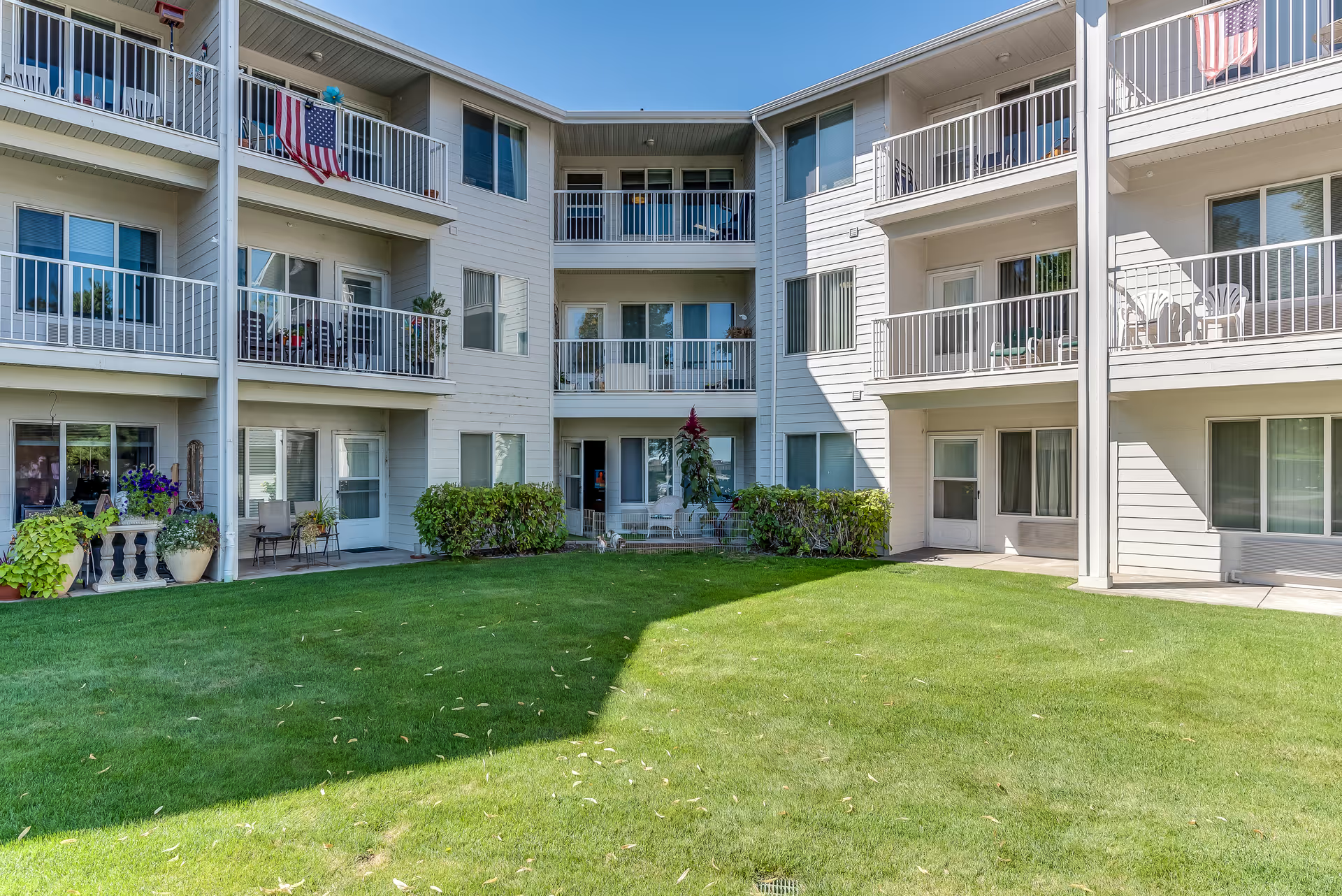
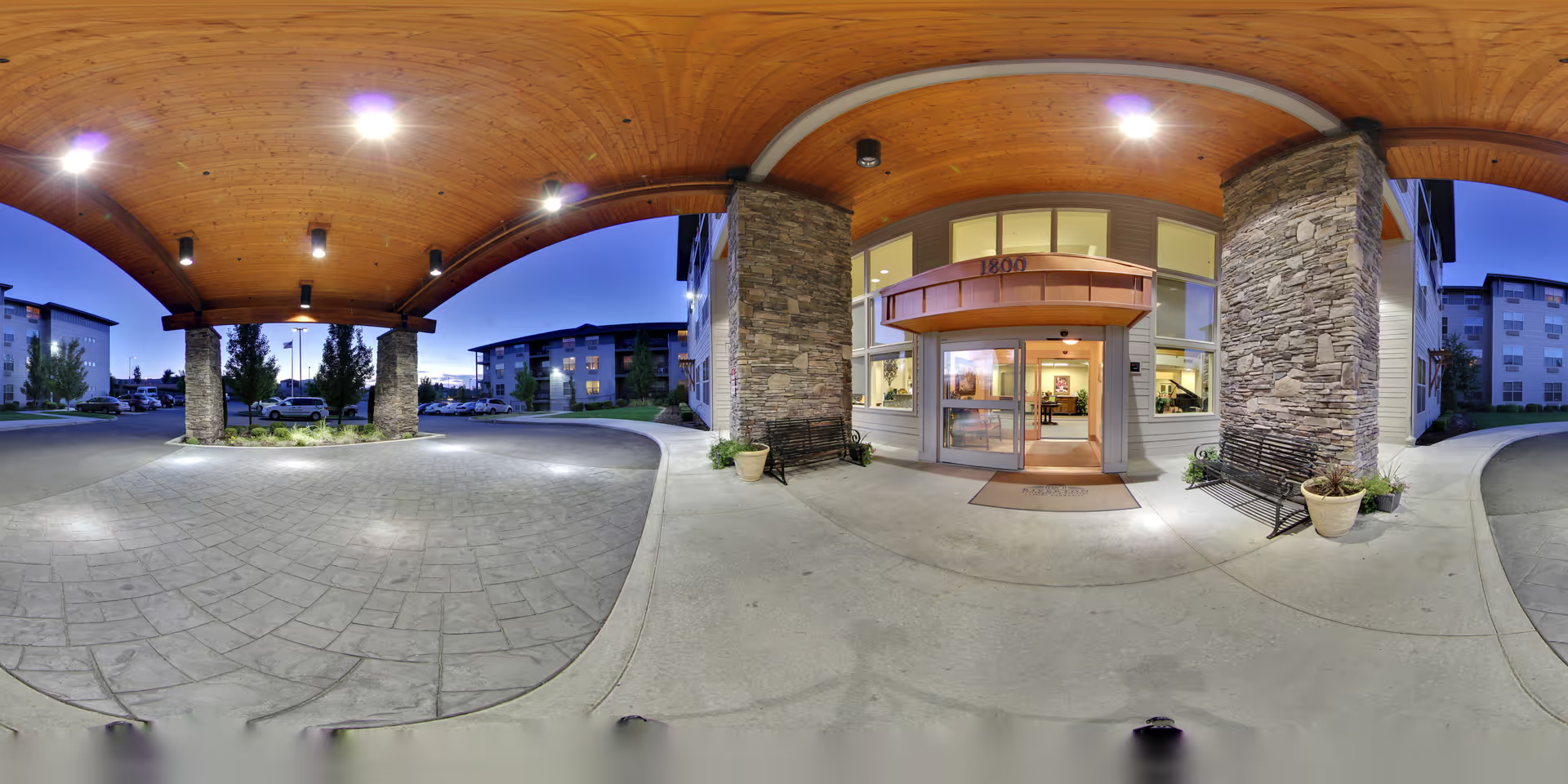
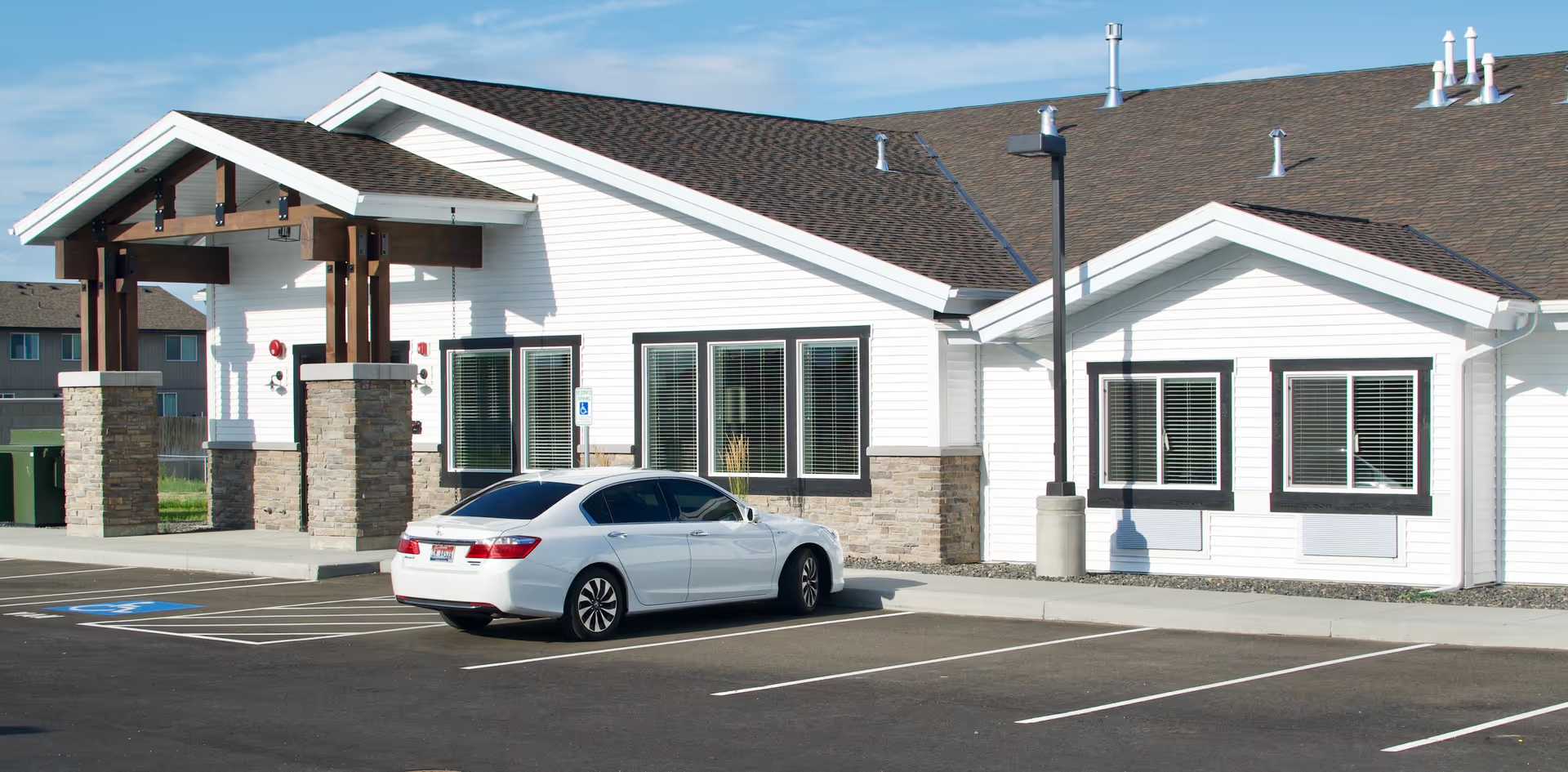
Facilities and environment receive uniformly positive mentions. The facility is described simply but clearly as "clean," a detail echoed in more than one summary. The use of the term "adult family home" in reviews points to a smaller, home-like residential model rather than an institutional setting; reviewers' favorable language suggests that the environment supports comfort and a sense of being well looked after.
However, a recurring and significant concern centers on management and communication. One review explicitly calls the owner "sketchy," and another notes "poor communication with staff and hospice," particularly during an "end-of-life care for mother" situation. These comments indicate that while frontline staff may be compassionate and effective, there are breakdowns or perceived trust issues at the ownership/management level and in coordination with external providers such as hospice. Poor communication in end-of-life scenarios is especially important because these situations require timely, clear coordination among family members, facility staff, and hospice providers. The reviews imply that communication failures in this area negatively impacted at least one family's experience.
Notable patterns and gaps: the reviews uniformly praise care staff and cleanliness but simultaneously raise red flags about ownership and critical communications. There is no mention in the provided summaries of food/dining, activities, staffing ratios, clinical competence beyond caregiving demeanor, or pricing — so no conclusions can be drawn about those areas from these reviews alone. The contrast between consistently positive remarks about staff and the distinct criticisms about the owner/communication suggests a split between day-to-day operational strengths and higher-level management or coordination weaknesses.
Recommendation for prospective families: take the positive reports about staff and cleanliness into account, and plan an in-person visit to observe staff-resident interactions and facility cleanliness yourself. At the same time, probe specifically about management policies and communication protocols: ask how the home coordinates with hospice and external providers, how they handle end-of-life planning and family updates, who the primary contact is for medical coordination, and how complaints or concerns about ownership are addressed. If the end-of-life period is a foreseeable need, request references from other families who navigated that situation with the home and clarify escalation procedures. In summary, Serenity Cove AFH appears to offer compassionate day-to-day care in a clean, home-like setting, but prospective residents and families should do focused due diligence around ownership trustworthiness and communication practices in critical care circumstances.