Care quality: Review information presents a mixed picture. Several comments praise the caregiving team as compassionate and attentive, and reviewers credit hands-on staff and managers who understand resident needs at times of transition. At the same time, operational gaps — notably staffing shortfalls and inconsistent hygiene practices — raise concerns about timely responsiveness and consistent delivery of routine care tasks.
Staff and management: Staff are frequently described as friendly and compassionate, and management is characterized in some accounts as understanding and willing to support residents. Specific activity leaders receive positive mention for providing fellowship. However, there are also descriptions of limited staff engagement and understaffing that appear to constrain staff availability and the facility’s ability to sustain consistent service levels.
Dining: Dining impressions are variable. The kitchen is noted as willing to adjust meals to individual preferences, which indicates flexibility in resident-centered dining. Overall food quality is described as fair to bland in several accounts, and the facility’s menu variety and consistency are identified as areas for improvement.
Activities: Activity programming shows contrasts: some reviewers praised meaningful fellowship and exercise opportunities, while others described limited activities and low engagement. This suggests variability in program availability or in how consistently activities are delivered across different shifts or units.
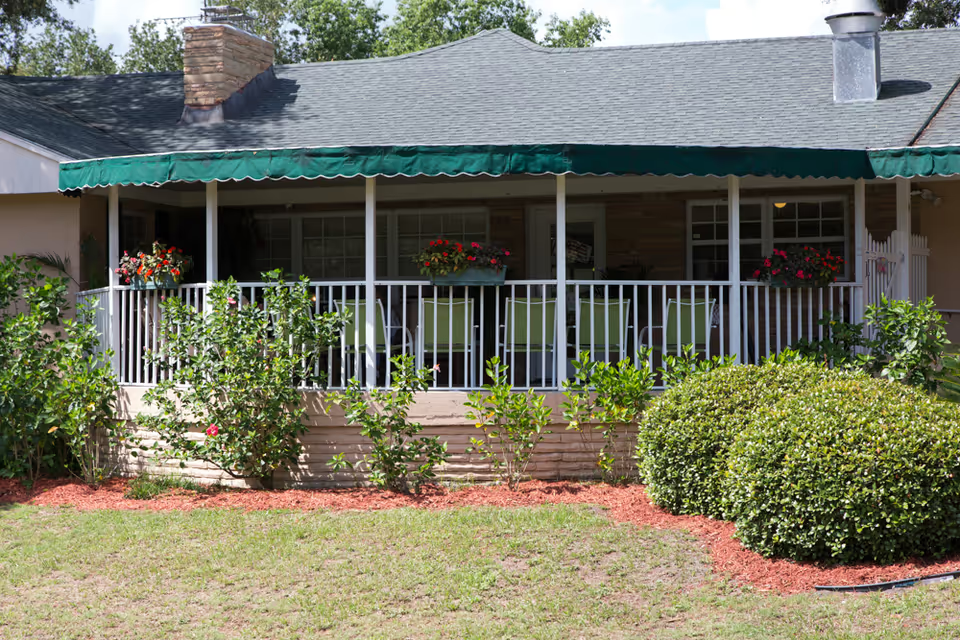
Facilities and maintenance: The building and resident rooms are characterized as dated and in need of updating. Multiple operational concerns are evident: aging equipment, maintenance lapses, and reported issues with laundry and personal-property handling. Cleanliness issues and odor concerns in common areas and some rooms were noted, along with inconsistent infection-control and hand-hygiene practices; these items suggest the facility needs focused attention on environmental maintenance and infection-prevention processes. The presence of shared bathrooms in some units was also identified as a limiting feature for resident privacy and convenience.
Notable patterns and guidance for families: The recurring pattern is one of strong, compassionate staff and management intent, paired with facility-level constraints — older infrastructure, equipment and maintenance shortfalls, inconsistent environmental sanitation, and staffing limitations that affect activity levels and responsiveness. Prospective residents and families would likely benefit from an in-person tour that includes inspection of specific rooms and bathrooms, direct questions about staffing levels and infection-control procedures, review of maintenance and equipment-repair protocols, clarification of laundry and personal-property policies, and a review of the current activity calendar and dining menus to assess consistency and fit with resident preferences.