Reviews for Southeast Nursing & Rehabilitation Center present a highly mixed picture. A number of reviewers describe strong clinical strengths—most consistently the physical-therapy and rehabilitation program—and several note compassionate, team-focused caregivers and an engaged activities program. At the same time, a substantial set of comments points to operational weaknesses that families should evaluate closely during a visit.
Care quality is described as uneven. Rehabilitation services receive frequent positive mention for outcomes and therapist engagement, and some families describe effective care coordination at discharge. However, multiple accounts indicate delays in nursing responsiveness, missed or delayed medications, and gaps in discharge medication handling. These items suggest variability in day-to-day nursing reliability and medication-management processes rather than a uniform level of performance across the facility.
Staff behavior and culture are also mixed. Many reviewers praise individual staff members, social work support, and a warm, family-oriented atmosphere; others describe unprofessional conduct, slow call-light response times, and communication tone concerns. This divergence suggests that staff performance and supervision may be inconsistent across shifts or units. Several reviewers highlighted instances where staff went beyond expectations; others described situations that felt inadequately supervised.
Dining and activities are generally viewed positively in some reports and inconsistently in others. Activities programming is often described as engaging, with regular offerings and an active program director. Food presentation and certain meal experiences were noted favorably, but additional reviewers described variability in food quality and dietary management, indicating that mealtime experience may differ by unit or resident diet plan.
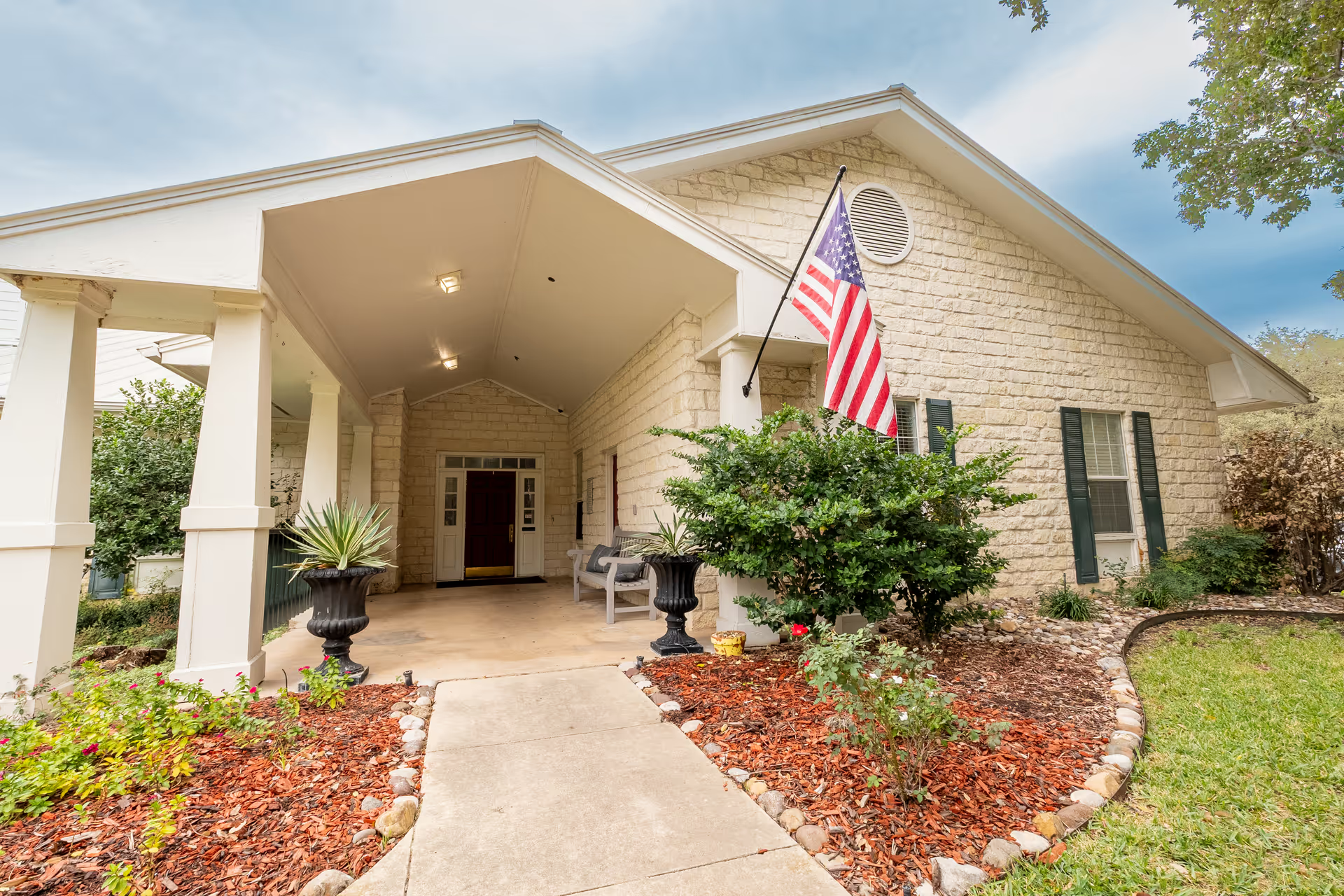
Facility condition and safety-related operational practices are recurring concerns. The building is described as older; some reviews report clean, odor-free areas, while others identify sanitation and odor-control issues, maintenance deficits (peeling paint, loose boards, mold in ductwork), and limited in-room amenities such as private showers. Concerns about roommate assignments, infection-control screening, and privacy (including mail-handling) were also raised. There are even allegations of meal-theft and a mail-privacy breach, which point to potential gaps in property controls and administrative oversight.
Management and administration receive mixed feedback. Several accounts describe responsive, team-oriented leadership and improvements underway; conversely, others report weak complaint resolution, restricted or confusing door policies, and poor front-desk communication. These patterns indicate that administrative consistency and policy enforcement may be variable.
Recommendation: prospective residents and families should conduct an in-person tour, ask for current staffing ratios and recent state survey results, review medication-management and discharge procedures, inquire about roommate-assignment and infection-control protocols, inspect maintenance and cleanliness in relevant units, and request documentation of therapy outcomes. Where possible, speak with current families and ask management how they address the specific concerns noted above to determine whether the facility’s strengths align with the prospective resident’s priorities.