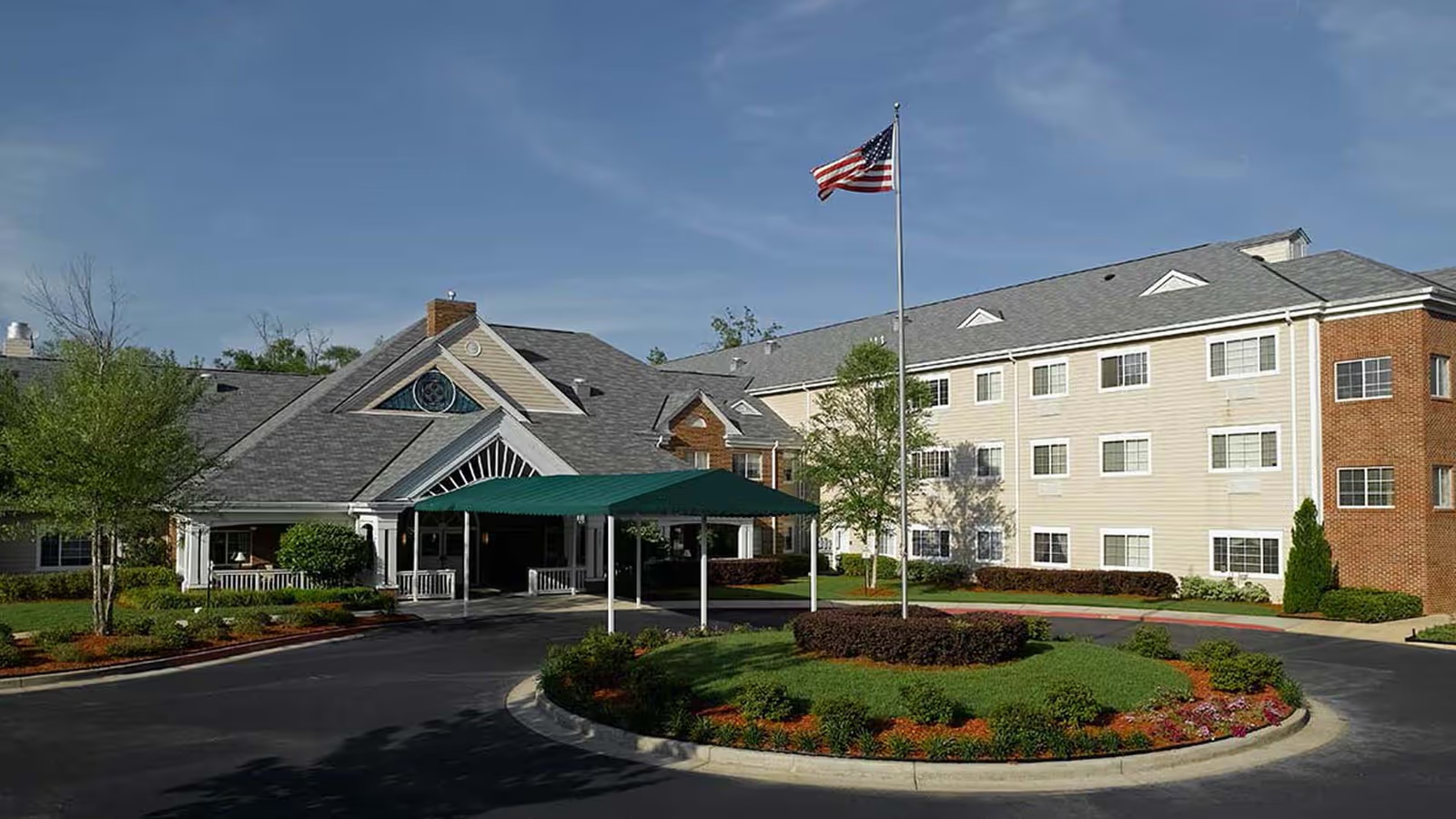
Asher Point Independent Living of Mobile presents as a well-appointed independent-living community with numerous social and amenity-based strengths alongside several operational limitations that prospective residents and families should weigh. The facility is repeatedly described as having friendly, attentive frontline staff, an engaged concierge, renovated common areas, and a robust activities program that includes games, live music, outings, and transportation to shopping and medical appointments. Common amenities cited positively include on-site therapy and salon services, weekly housekeeping and laundry support, communal dining, and a life-alert/emergency pendant system.
Care and clinical capability: The community operates as independent living rather than assisted living or a skilled-nursing facility. That distinction is important: there is limited on-site clinical coverage and no expectation of 24/7 nursing care. Multiple reviewers emphasized that the community is not appropriate for residents who require memory-care supervision, frequent transfers, or round-the-clock clinical support. Families should anticipate hiring private sitters or arranging external care for higher-need residents; reviewers consistently noted that those ancillary care options add meaningful out-of-pocket expense.
Staff and management: Staff members and many managers receive strong, repeated praise for day-to-day warmth, helpfulness, and resident engagement. Specific frontline employees and directors were highlighted as going above and beyond. At the same time, several reviewers described inconsistent communication from management, delays in follow-up, and occasional gaps in billing or documentation. There are also indications of staffing fluctuation tied to ownership or operational changes; these fluctuations have been associated with service-quality variability in a subset of accounts.
Dining and activities: Dining is a central feature of life at the community. Many residents and families commend the communal dining room, three meals per day, and an active social meal environment; some reviews describe standout chefs and personalized dining interactions. Conversely, a recurring pattern is inconsistent meal quality and service reliability—examples include menu offerings that do not match promotional materials, meals running out, and variability in food preparation. The activities program is consistently cited as a strength, with regular outings, social events, games, and opportunities for chapel and group exercise that support social engagement.
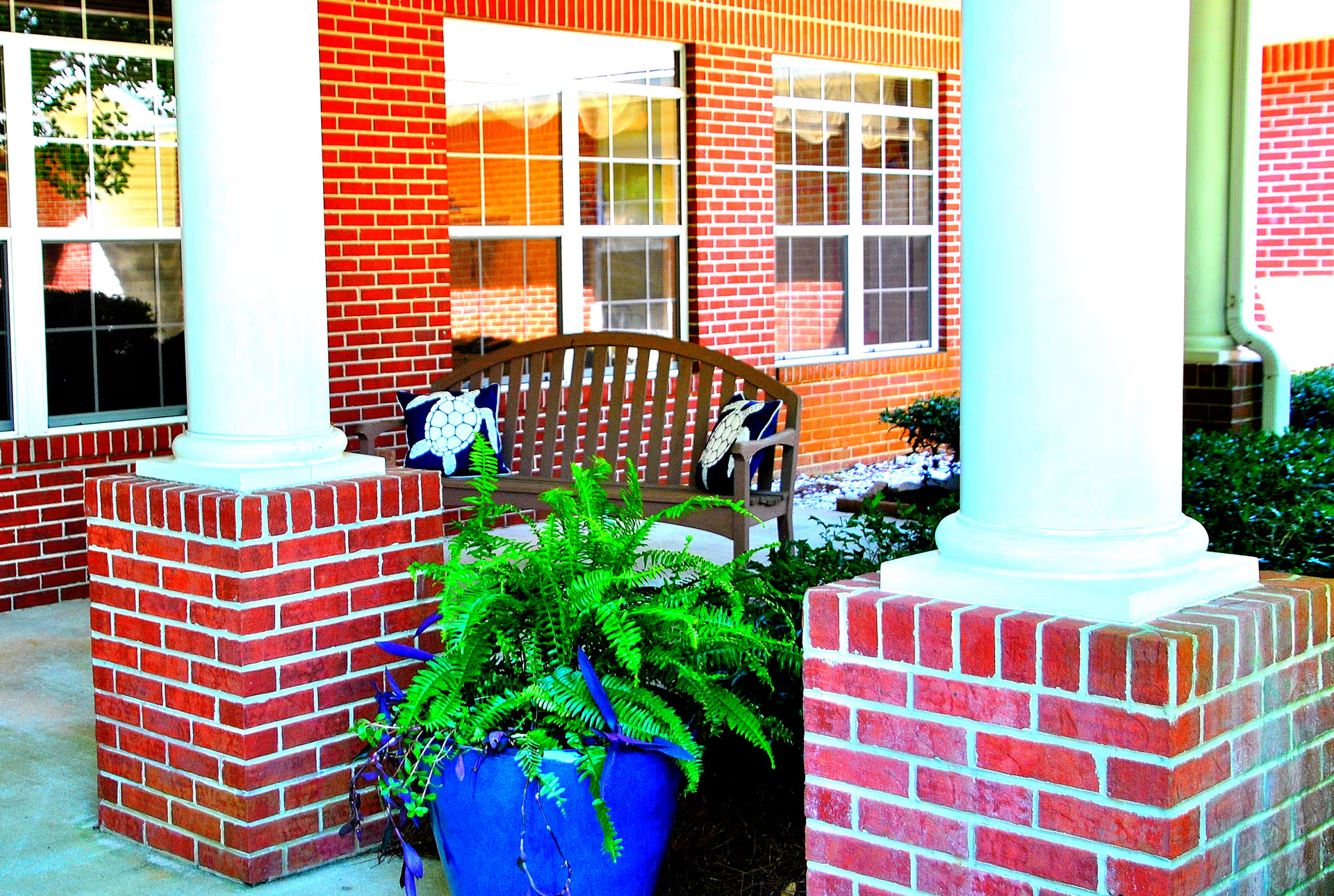
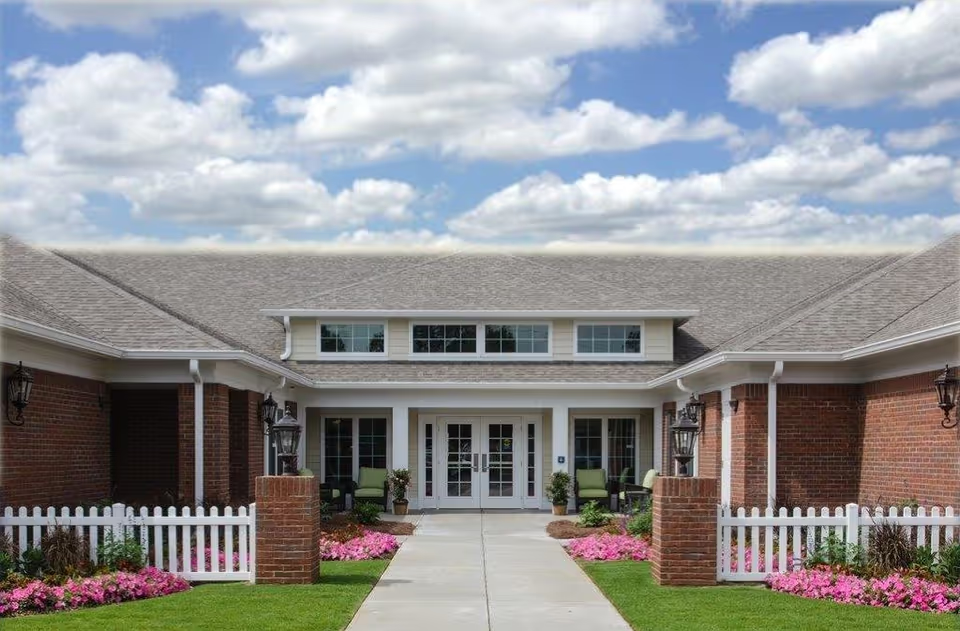
Facilities and safety: The property has undergone renovations and is generally described as attractive with pleasant grounds, balconies, and inviting common spaces. Apartment options vary in size and layout; some units are described as small with limited storage, while others are spacious two-bedroom units. Important accessibility limitations are noted: bathrooms and showers may not meet full handicap requirements, some transport vans lack wheelchair lifts or ramps, and parking is sometimes constrained. Safety and security controls were an area of concern for several reviewers—issues included unlocked doors at certain times and limited wandering-risk mitigation—so these features should be evaluated closely for anyone with cognitive impairment or a wandering-risk profile. There are also isolated sanitation and pest-control concerns reported in shared spaces that merit inspection during a tour.
Notable patterns and recommendations: The dominant positive pattern is consistent praise for staff engagement and a strong social environment. The dominant cautionary patterns are (1) the community’s operational scope as independent living rather than assisted care, (2) variability in dining quality and service, (3) additional costs for higher-level care delivered by private sitters, and (4) safety/accessibility and communication issues that some families experienced. Prospective residents should verify current clinical staffing levels, review the contract and fee schedules for ancillary services, inspect unit accessibility and security features in person, and ask for recent examples of how management has addressed sanitation, pest control, and communications issues. For seniors seeking an active, socially rich independent-living setting, Asher Point offers many strengths; for those needing regular clinical supervision, memory care, or full accessibility, it is likely not the appropriate choice without substantial private support.