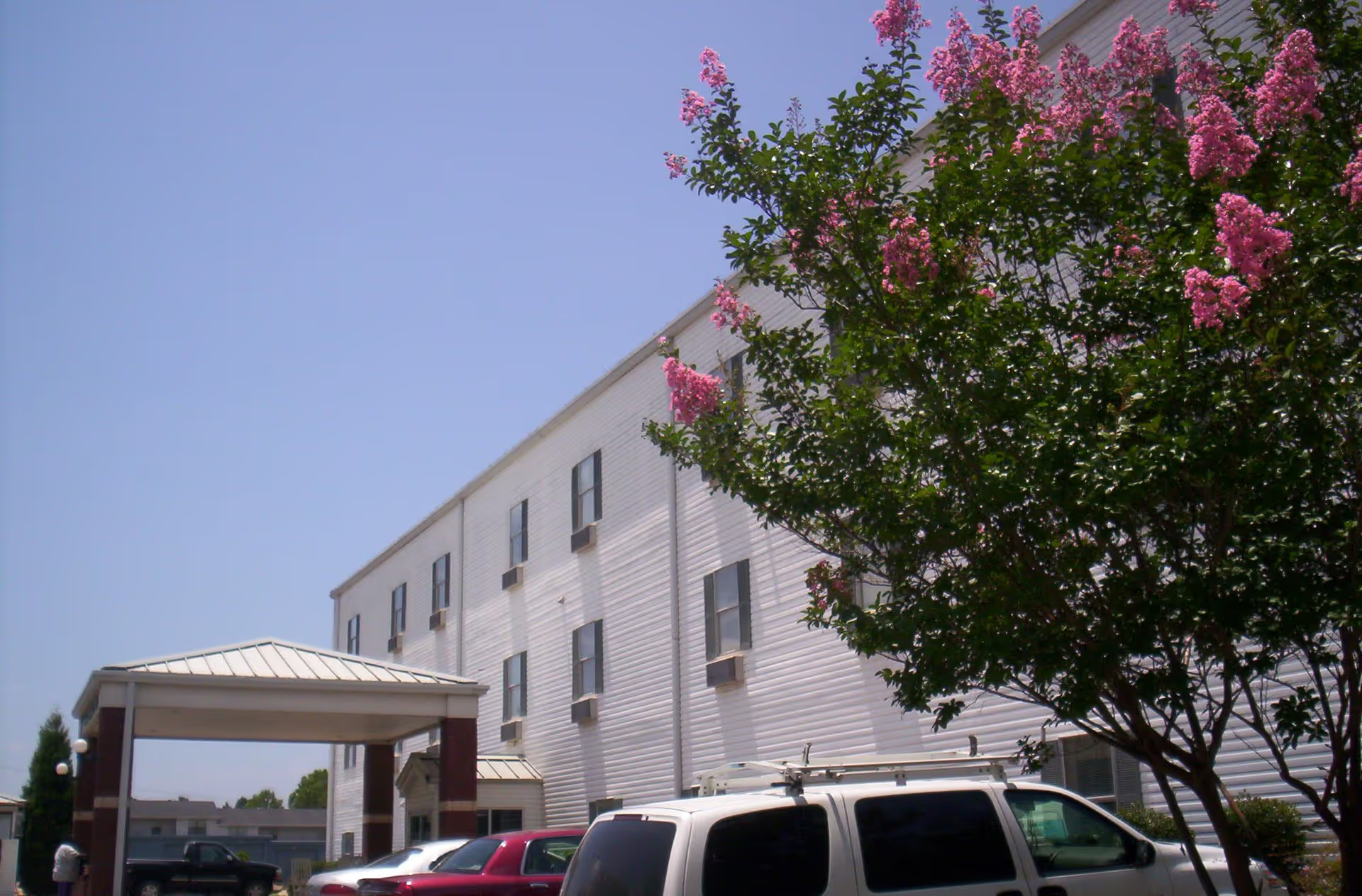
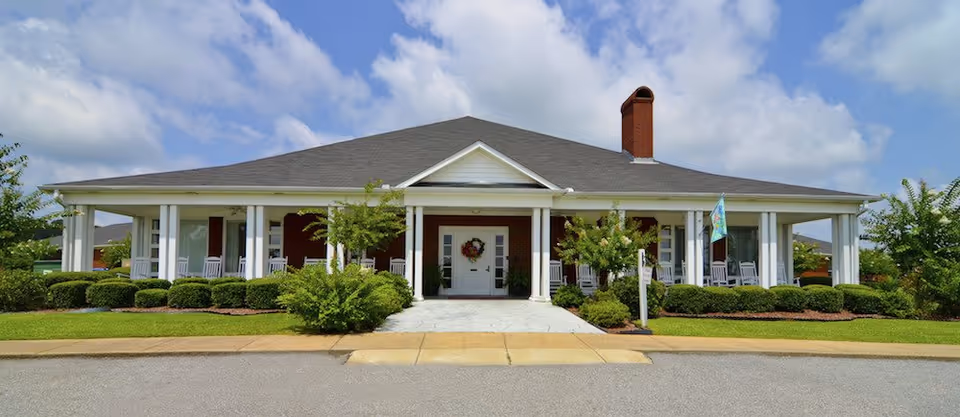
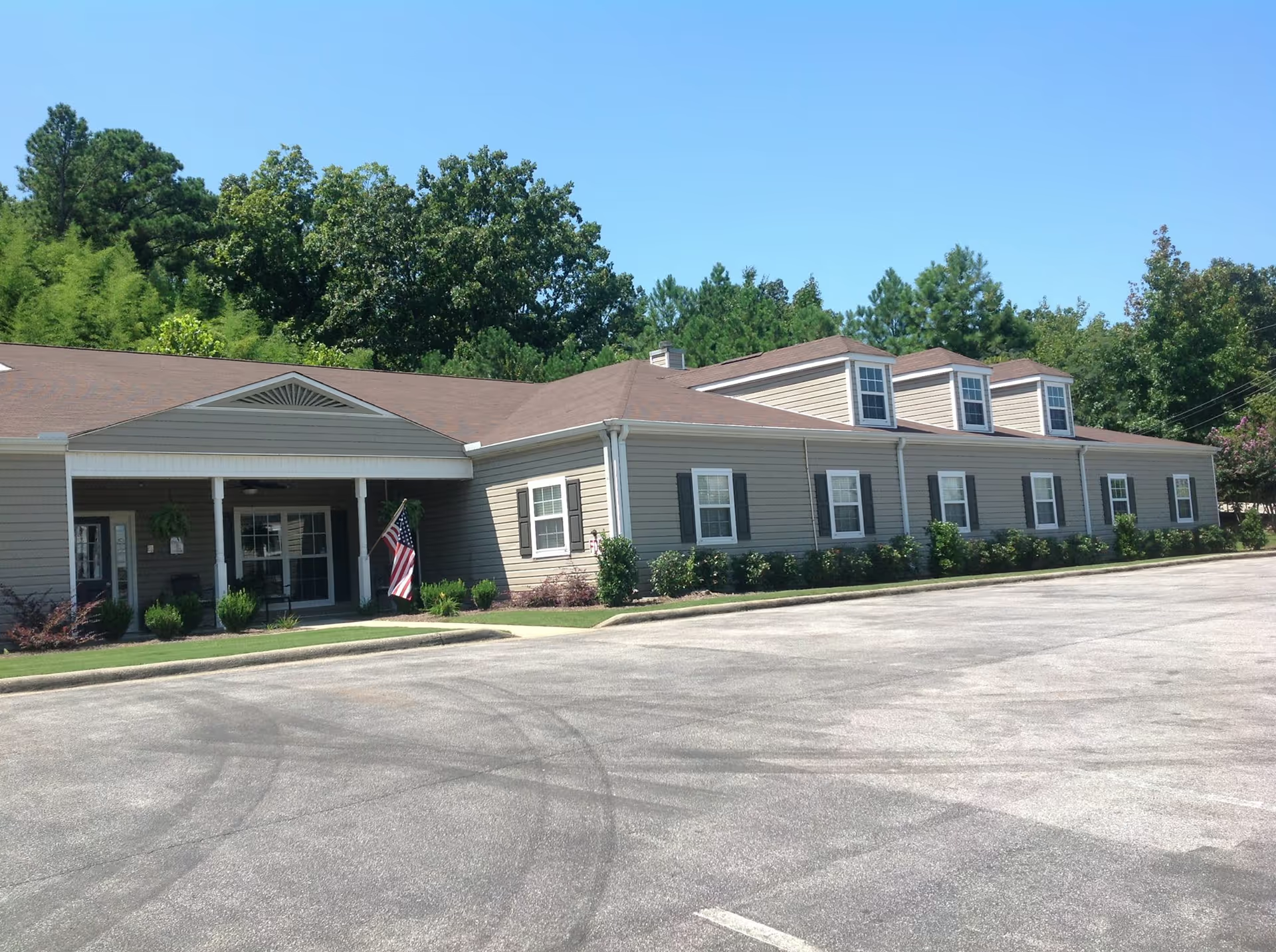
Regency Retirement Village of Tuscaloosa elicits a mixed but instructive set of impressions. Many families and visitors highlight a warm, family‑oriented community with staff who provide personalized attention, visible caregiving, and a high level of responsiveness. The facility offers a variety of life‑enrichment programming, regular social events, themed activities, and spiritual services; residents frequently socialize and report making friends. Practical supports such as transportation to medical appointments, on‑site salon services, an on‑site nurse, and multiple dining opportunities are consistently noted as conveniences that add to residents' day‑to‑day quality of life.
Care quality and staff performance are central themes. Numerous comments praise specific caregivers and nurses for compassion, helpfulness, and attentive follow‑through; several families described feeling comfortable leaving loved ones in the staff's care. At the same time, there are recurrent concerns about variability in staff conduct, occasional lapses in professionalism, and higher-than-desired turnover. Reviewers also identified issues around clinical operations in some circumstances — described as infection‑control concerns and episodic failures of responsiveness — that have affected family confidence. These appear unevenly distributed: some households report exemplary nursing care, while others describe gaps that warrant review during a tour or intake conversation.
Dining and housekeeping impressions are similarly mixed. Many residents and families praise communal meals, a pleasant dining room, and some very positive meal experiences. Counterbalancing that are reports of inconsistent food quality, service interruptions, and variable housekeeping performance in certain rooms or bathrooms. Sanitation and maintenance issues were raised by multiple reviewers as operational weaknesses rather than isolated taste complaints. Prospective families should ask about current kitchen practices, sanitation protocols, and routine housekeeping schedules during visits.
Memory care and assisted‑living programming show heterogeneous performance. Some accounts commend the memory‑care staff and specialized attention, while others report roommate conflicts, limited engagement, and perceived disengagement from staff on a particular unit. The aggregate picture is one of uneven memory‑care quality within the same campus, making unit‑specific assessment and direct observation essential for families considering those services.
Amenities and activities are a clear strength in many reports: regular church services, activity rooms, holiday and musical events, and opportunities for crafts and games. That said, reviewers also request more varied off‑site outings beyond nearby retail trips and note limited accessible outdoor porch/patio areas for residents. Facility features such as apartments and cottages receive praise for natural light and maintenance in many cases, but room size and the prevalence of shared rooms are recurring practical concerns. Several families also noted additional fees for certain nursing or laundry services; clarity about all ancillary charges is advisable before move‑in.
Management and communication present mixed signals. Positive remarks single out helpful front‑desk and administrative staff, named directors, and instances of proactive maintenance and problem resolution. Conversely, reviewers cite inconsistent communication about billing, occasional delays in responsiveness, front‑desk coverage gaps, and areas of the building that could use updating. A few serious incidents referenced by families — including infection events and a resident death that prompted questions about follow‑up — suggest it is prudent to ask about the facility's infection‑control policies, recent regulatory reviews, staffing ratios, and emergency/protocol history.
Overall, Regency offers many features attractive to seniors seeking an active, social community with on‑site services and caring staff. The pattern of comments suggests strengths in hospitality, programming, and individualized caregiving for many residents, alongside operational gaps that produce variability in cleanliness, clinical consistency, and administrative communication. Prospective residents and their families should tour the specific unit of interest, observe mealtime and activity periods, review written policies on fees, infection control, staffing levels, and memory‑care programming, and request references from current families to determine whether the facility’s current performance aligns with their priorities.