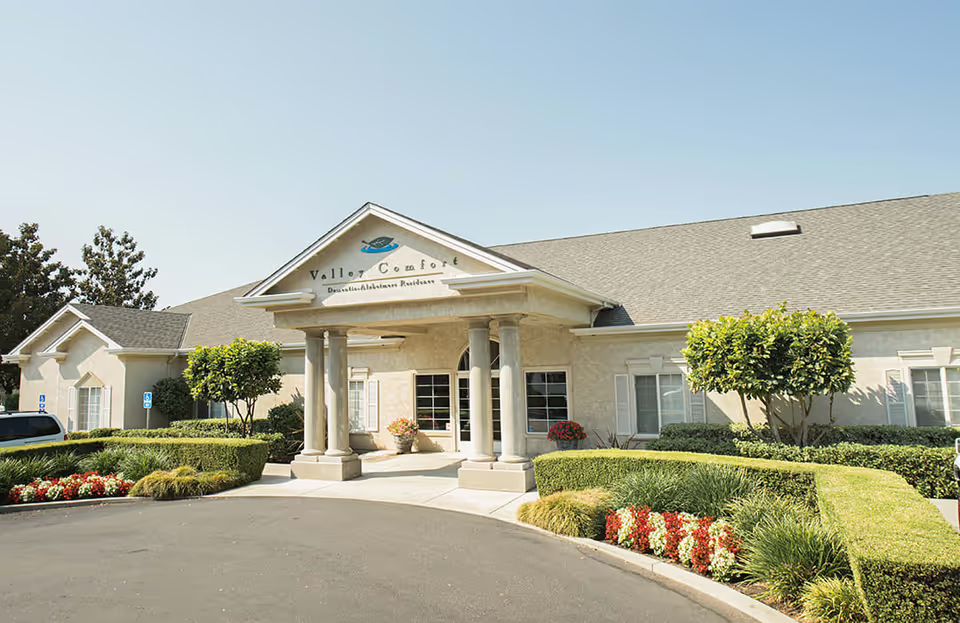
The review set describes a facility with mixed performance: many families and reviewers emphasize genuine strengths in hands-on caregiving and rehabilitative services, while others describe operational and environmental deficits that affect day-to-day resident experience.
Care quality and staff: Positive comments frequently highlight compassionate CNAs, nurses who go beyond basic duties, and a capable multidisciplinary therapy team. Reviewers credited the facility with effective wound care, attentive pain management, and successful rehab outcomes that supported return-to-home planning. At the same time, there is a recurring pattern of inconsistent staffing — high turnover and frequent use of new or temporary personnel — which reviewers associate with delayed responses to call buttons, delayed medication administration, and uneven delivery of personal care. Several accounts describe variability in staff professionalism and communication tone; conversely, some named staff and administrators receive strong praise for being responsive and proactive.
Therapy, dining, and activities: Therapy services are cited as a clear strength by many families, with direct references to effective PT/OT and care plans tailored to recovery. Nutrition and menu variety are also noted positively, with comments about creative menus and generally good food. However, other reviewers said therapy access and intensity were inconsistent, with some residents receiving little to no therapy depending on staffing and scheduling. Transportation and appointment support are available and have been helpful according to several accounts, though there are also reports of missed pickups or coordination failures.
Facilities and safety: Facility-condition comments are mixed. Some reviewers describe clean interior spaces and a pleasant-smelling environment; others point to sanitation and odor concerns in resident rooms and common areas, inconsistent bathing or incontinence-care routines, and maintenance deficits such as broken call buttons, lack of hot water at night, and limited climate control. Safety-related gaps are raised, including delayed response times, concerns about emergency equipment availability, and general maintenance issues that affect resident comfort and safety.
Management, communication, and notable patterns: Administrative leadership receives both commendation and criticism. Several reviewers praise an accessible administrator and central staff who coordinate care and pre-op arrangements. Conversely, there are consistent concerns about poor family communication, failures to return calls or notify families of changes, inconsistent admission and billing practices, and property-safeguarding shortcomings (including allegations of missing belongings). A small number of very serious claims — including concerns following a resident's death and allegations of missing funds — appear in the material; these are serious individual issues that several families raised and warrant further inquiry.
Overall impression and guidance for families: The facility presents a dual picture: when staffing and clinical oversight are functioning, residents can receive compassionate care, effective therapy, and helpful administrative coordination. When staffing is inconsistent or maintenance systems fail, families report delays in care, inconsistent therapy, environmental comfort problems, and concerns about property security and communication. Prospective residents and families should evaluate current staffing levels, ask about recent inspection and complaint resolution history, confirm availability of required therapies and emergency equipment, and review property-safeguarding and communication practices during an on-site visit to determine whether the facility's strengths align with their needs.