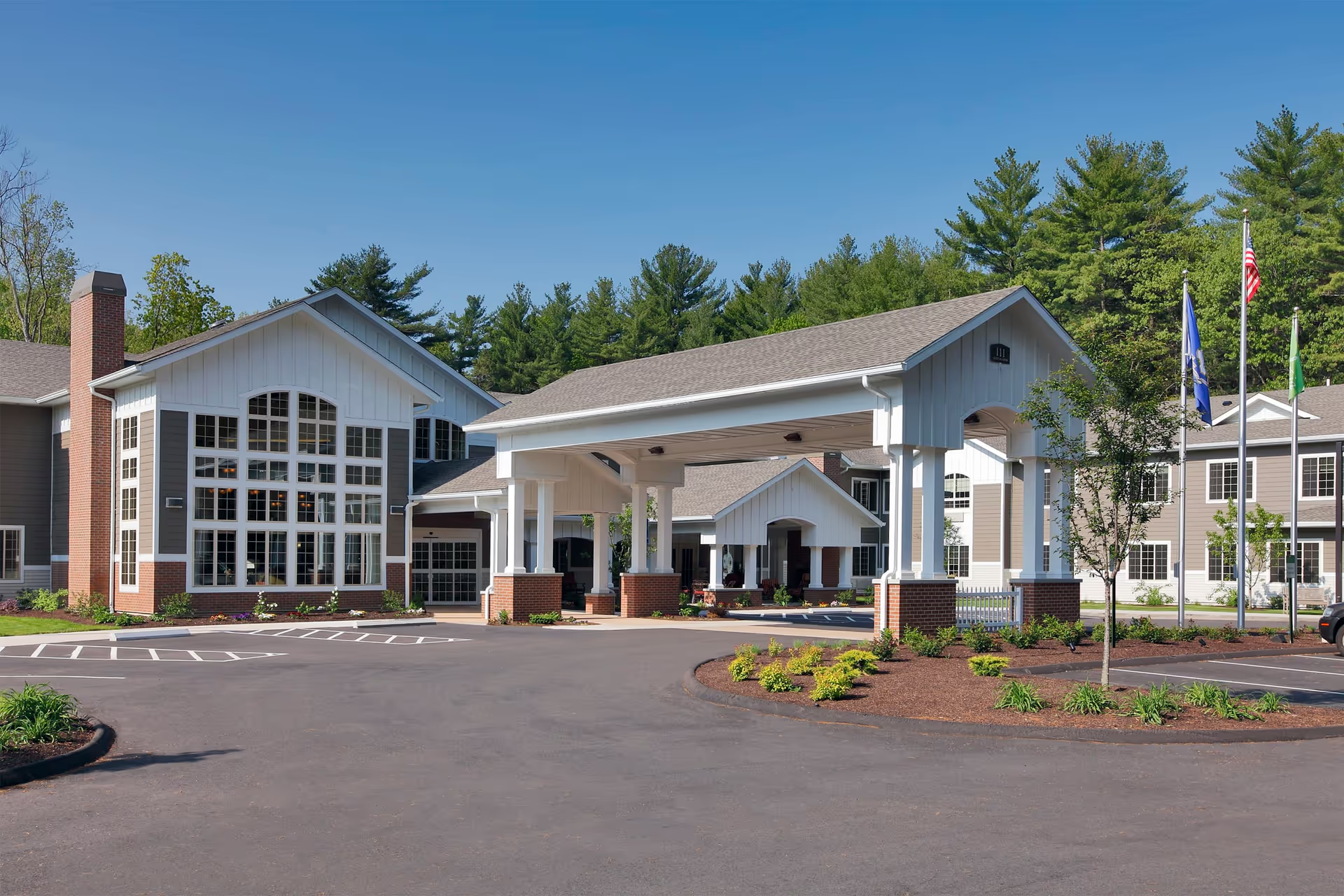
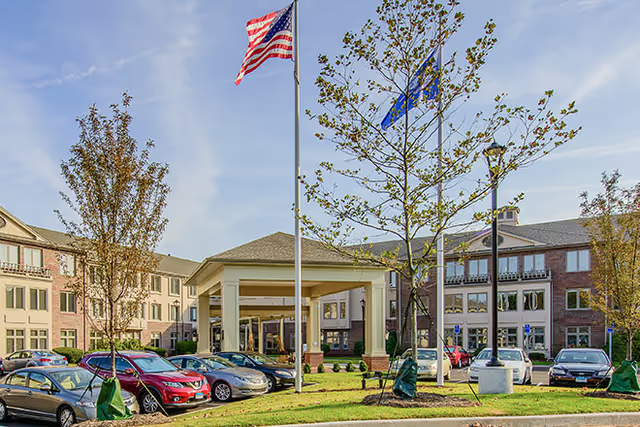
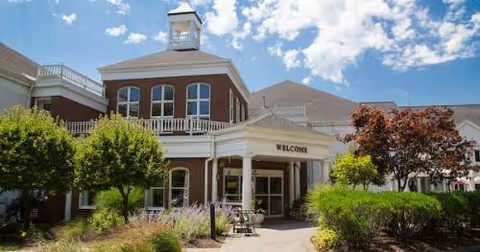
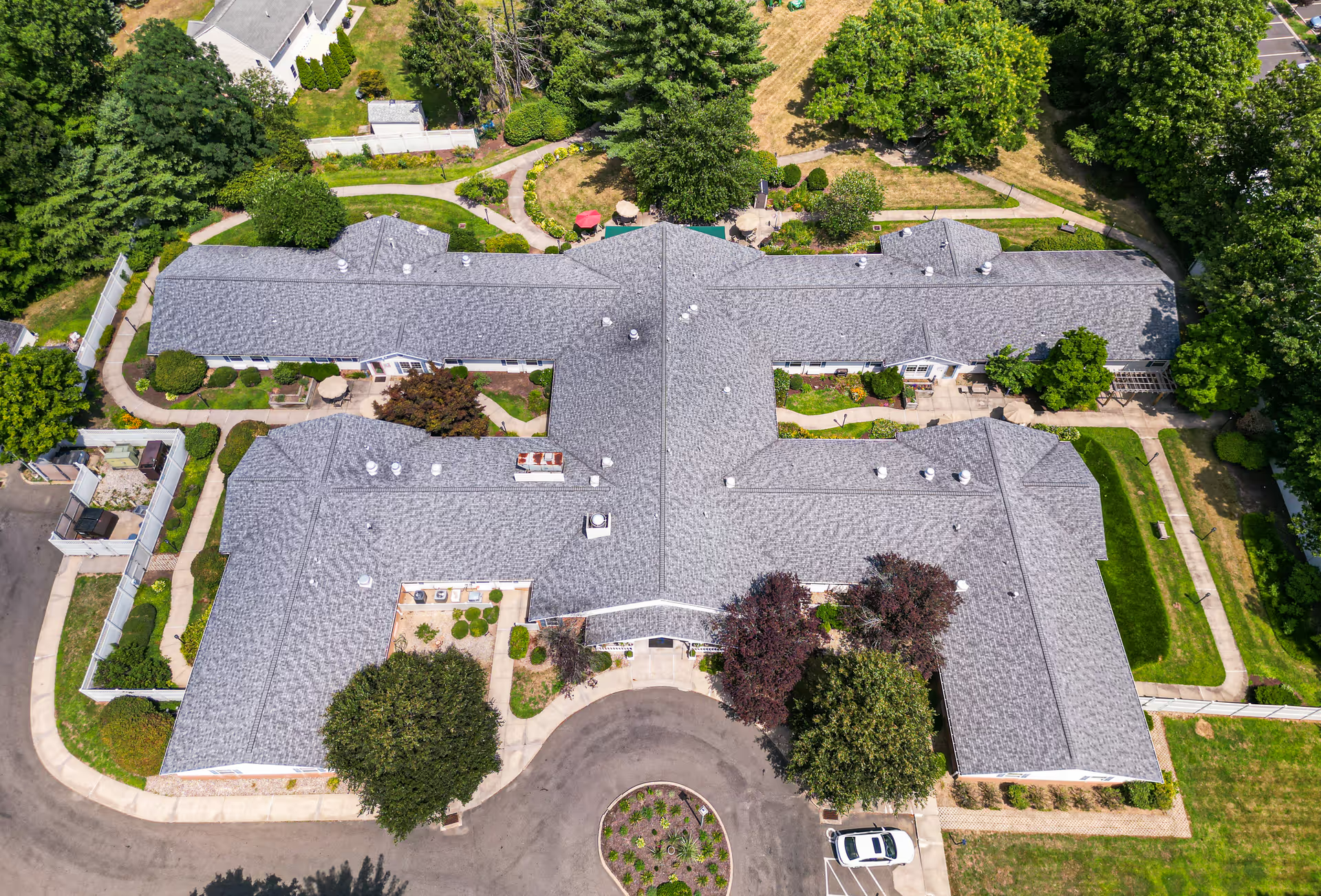
The Pines at Bristol Center for Nursing and Rehabilitation elicits markedly mixed impressions. Many reviewers describe a core of committed clinical and caregiving staff — long‑standing CNAs, competent nurses, and a highly regarded rehabilitation team — who provide attentive, compassionate care and meaningful therapy outcomes. Families frequently cite friendly front‑desk and admissions staff, visible leadership presence on the floor, spiritual services, an active recreation program, an on‑site salon and gym, and a generally welcoming, home‑like environment in portions of the building.
At the same time, there are consistent operational concerns that recur across accounts. Staffing inconsistencies appear to be a root cause for a number of issues: delayed responses to call bells, long waits for assistance with toileting or transfers, and overworked CNAs who nonetheless are described as caring. Reviewers describe variability in care quality by unit and by shift, which suggests uneven staffing coverage and training gaps that affect day‑to‑day responsiveness.
Dining and housekeeping show similar variability. Several families praise appealing meals and attentive kitchen staff, yet others note tepid or carbohydrate‑heavy plates and inconsistent meal service. Housekeeping and maintenance performance is likewise uneven: while parts of the facility are described as clean and modern, other comments reference sanitation concerns in common areas and resident rooms, delayed repairs (broken ice maker, TVs without sound), and inconsistent laundry/personal‑items handling. These patterns point to inconsistencies in environmental services and facilities maintenance workflows.
Communication and administrative coordination are another theme. Positive accounts describe proactive communication and comprehensive interdisciplinary teams; negative ones highlight gaps in nurse‑to‑family updates, limited availability of the administrator or nursing leadership at critical moments, and unclear or ineffective discharge planning and home‑care referrals. Social‑work responsiveness and role clarity are noted as inconsistent, which can exacerbate transitions of care and family stress.
Clinical complexity is an area of concern for a subset of residents. Reviewers indicate training and coordination gaps for residents with psychiatric needs or feeding tubes, and some families requested closer coordination with outside psychiatrists or guardianship consent processes. Medication administration and monitoring are also described as inconsistent in some reports, warranting attention to medication management practices.
Overall, The Pines presents a mixed but actionable profile for prospective families. Strengths include a strong rehabilitation program, many compassionate direct‑care staff, visible leadership in certain departments, and a comfortable, well‑appointed environment in many areas. The most notable operational weaknesses are inconsistent staffing and responsiveness, variability in housekeeping and dining, maintenance delays, and occasional lapses in family communication and discharge coordination. These patterns suggest that while residents can receive excellent care and therapy at The Pines, outcomes and day‑to‑day experience may depend substantially on unit assignment, staffing levels, and the specific team on duty. Families considering this facility should ask targeted questions about staffing ratios on the resident’s likely unit and shift, housekeeping and maintenance response times, medication‑safety protocols, and social‑work involvement in discharge planning before placement.