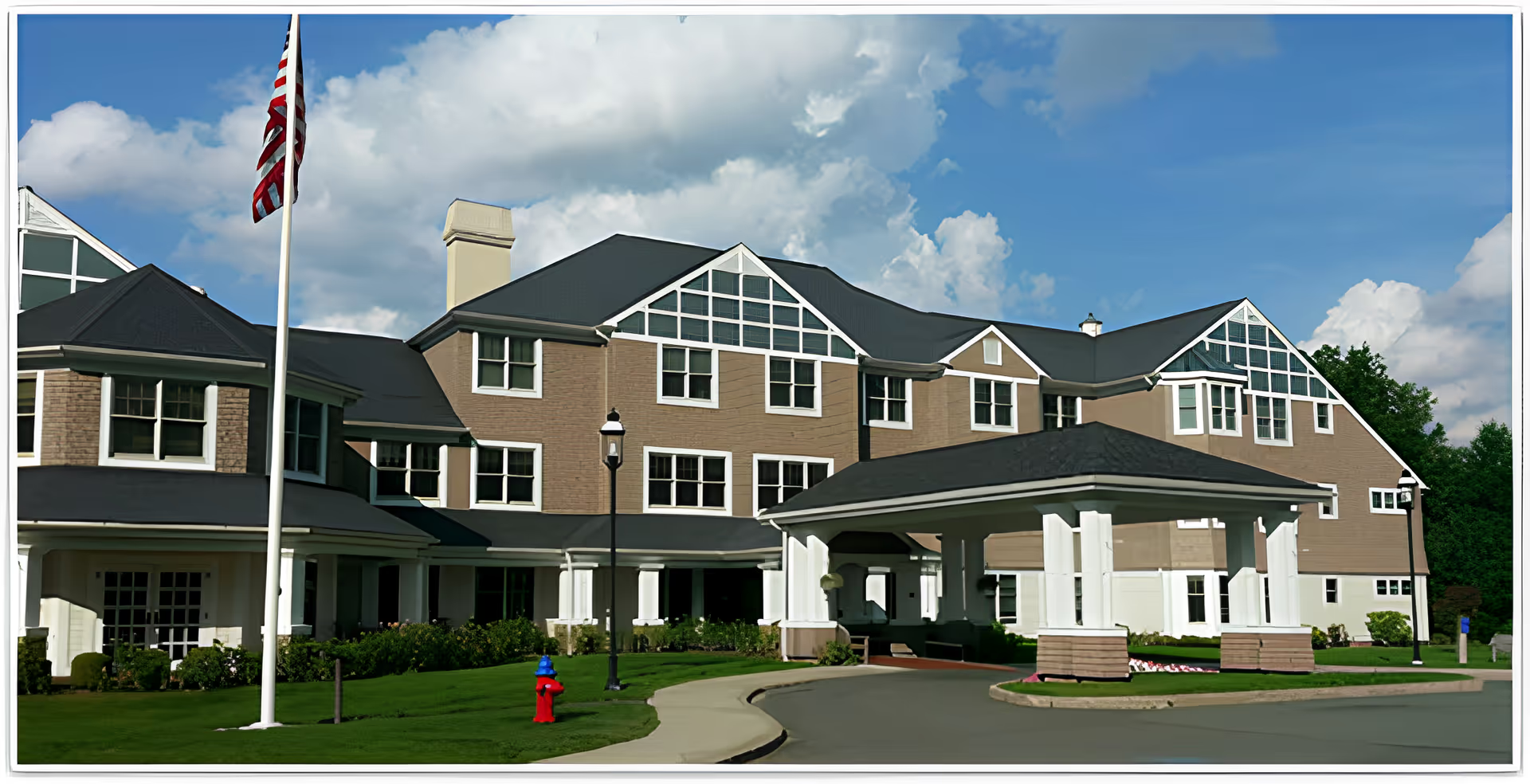
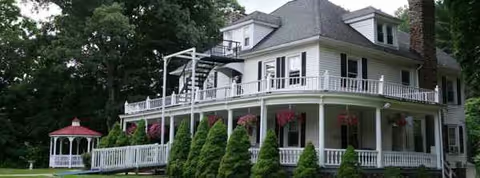
Brookdale South Windsor presents a mixed but informative profile for prospective residents and families. The community is frequently described as clean, modern, and well maintained, with multiple common areas, 24-hour security, and an active social calendar. Residents and families praise the compassionate caregiving staff, onsite licensed nurses and therapy services, and successful short-term rehabilitation outcomes. Admissions and some leadership figures are singled out for responsiveness and personable service, and the facility offers conveniences such as an on-site salon, transportation, and restaurant-style dining that many families find attractive.
Clinical quality shows strengths and limitations. The presence of on-site RNs/LPNs and therapy teams supports routine long-term and rehab care, but reviewers identified operational gaps when clinical needs escalate or change rapidly. Nighttime clinical coverage is described as limited, and there is reliance on agency aides at times; these factors, combined with accounts of medication-communication delays and instances of inadequate monitoring, suggest families should confirm staffing patterns and night-coverage protocols when evaluating suitability for higher-acuity needs. There are also specific concerns about fall-prevention monitoring and incident response that indicate a need to review the community's safety procedures and escalation pathways.
Staffing and management earn both praise and critique. Many accounts emphasize kind, attentive caregivers and long-tenured employees who contribute to a family-like atmosphere. At the same time, families report turnover, coordination gaps between sales/operations/clinical departments, and occasional failures to follow through on promises. These operational inconsistencies can affect the transition experience and day-to-day communication; prospective residents should ask for concrete commitments and examples of how the community addresses interdepartmental coordination and continuity of care.
Dining and activities are a prominent strength for many residents. Reviewers commonly note a lively activities program (outings, concerts, clubs, exercise classes) and generally favorable food quality served restaurant-style. However, activity engagement is not uniformly effective for all residents—some find programs repetitive or not tailored—and meal service has experienced periodic disruptions (pandemic-related boxed meals, special-diet accommodation gaps). Verify availability of specialized dietary accommodations and the current meal-service model during a tour.
Facility layout and accessibility are mixed. The property is often described as attractive, immaculately cleaned, and bright, with a secure memory-care neighborhood and ample social spaces. Conversely, some apartments are characterized as modest or small, with limited wheelchair accessibility in certain living areas. Families with specific mobility requirements should inspect unit sizes, doorways, and communal circulation during a visit.
In summary, Brookdale South Windsor offers many elements that support quality daily living—engaged staff, active programming, therapy services, and a well-kept environment—but also displays operational weaknesses that affect residents with higher or rapidly changing clinical needs. Prospective residents and families should clarify night clinical coverage, staffing sources (in-house vs. agency), fall-prevention protocols, medication communication practices, and the facility’s pricing structure before making a decision. Visiting during activity hours and reviewing recent care plans or incident-response procedures can help determine whether the community aligns with a particular resident’s medical and social needs.