Reviews of Brandywine Nursing & Rehabilitation Center present a polarized picture: several accounts emphasize attentive, familiar nursing staff, active therapy programming, and a pleasant campus layout, while others raise operational and quality concerns that prospective families should evaluate closely.
Care and staff: Many reviewers praised direct-care nurses as caring and professional, often noting that staff knew residents by name and provided attentive bedside care. At the same time, repeated comments describe variability in staffing levels and timeliness of assistance, particularly for toileting and bathing. These recurring descriptions indicate that care responsiveness can depend on shift staffing or unit assignment. There are also remarks about communication gaps with families and mixed perceptions of administrative tone and decision-making.
Dining and nutrition: The facility generally provides adequate portions and consistent meal service, and some reviewers felt food quality has improved. Conversely, other accounts describe inconsistent meal presentation and quality, occasional deviations from the posted menu, and issues with serving ware or beverage service. Prospective families should ask about kitchen oversight, menu cycles, and processes for accommodating preferences and therapeutic diets.
Activities and therapy: Brandywine appears to offer daily activities, participation in physical therapy, and occasional pet visits; therapy and rehabilitation services are highlighted as a strength by several reviewers. However, there are reports that activity access can be uneven, with some residents participating less due to staffing constraints or program limitations. Inquiring about activity schedules, staffing for engagement programs, and individualized therapy plans would be advisable.
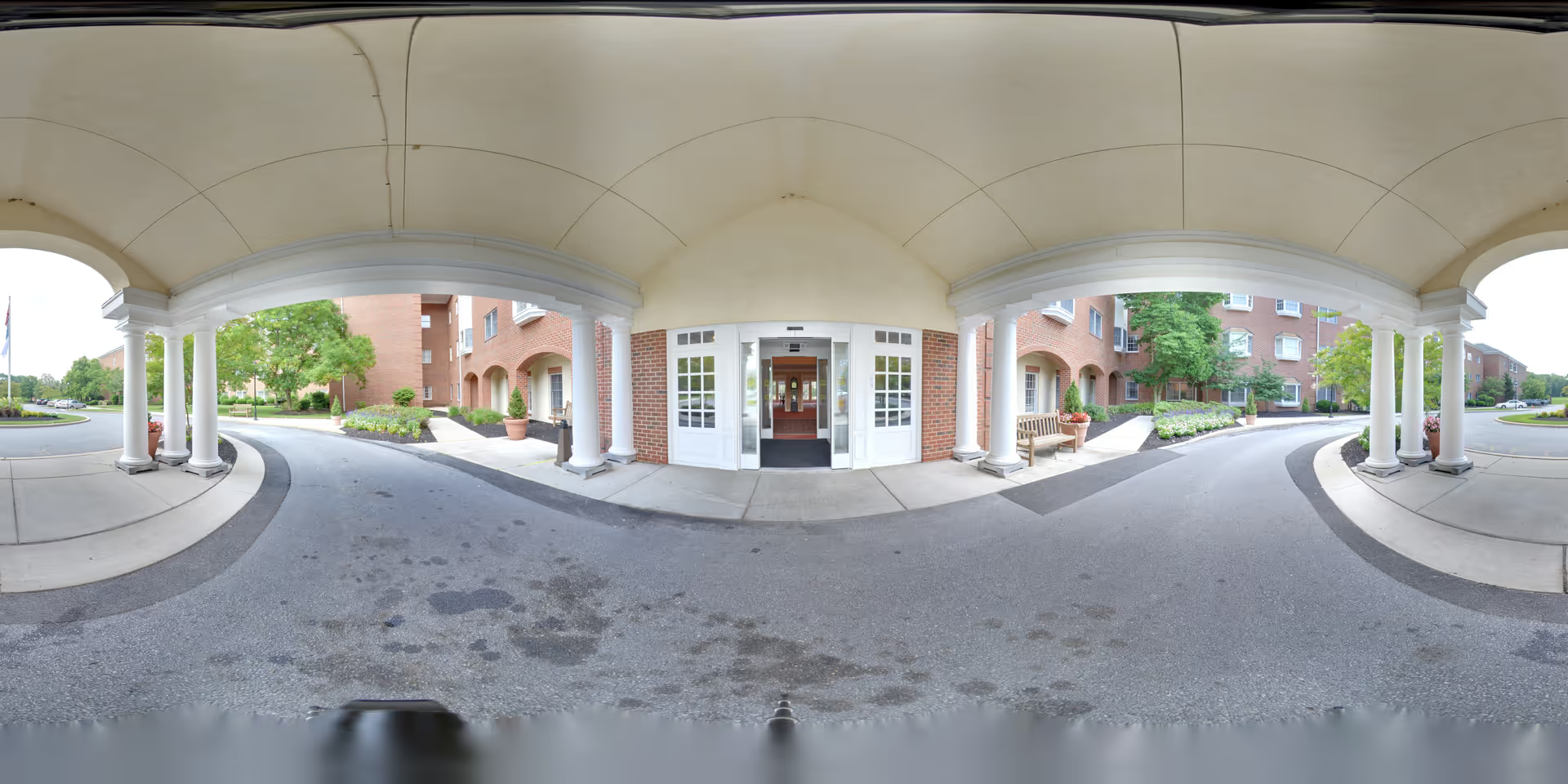
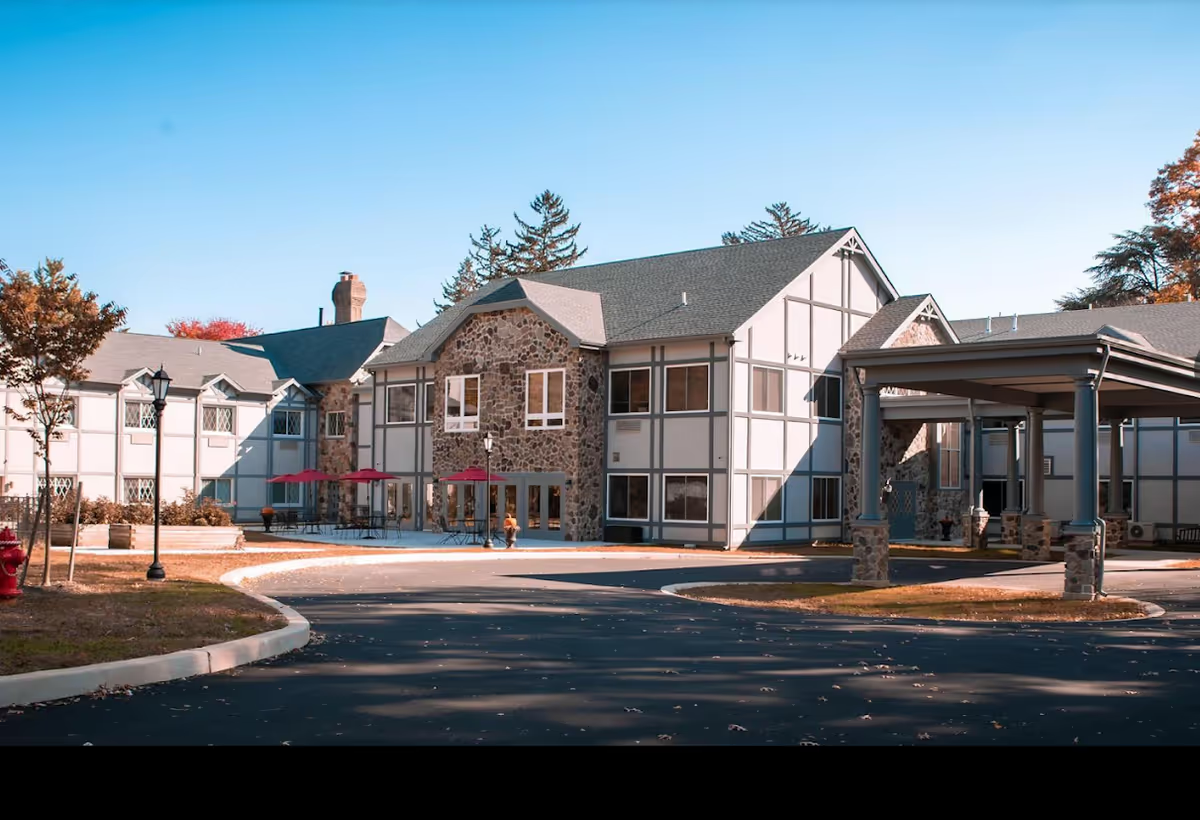
Facilities and maintenance: The facility’s single-floor design with internal courtyards and grounds is a positive feature for accessibility and outdoor access. Many reviewers found common areas and some units clean and homey, and rooms can be personalized with pleasant views. At the same time, multiple comments point to an aging physical plant—worn furnishings, broken blinds, older equipment, and occasional odor concerns—suggesting a need for modernization and more consistent maintenance. Prospective visitors should inspect rooms, bathrooms, and therapy areas for equipment condition and general upkeep.
Management and oversight: Several reviews note active management changes and efforts to address deficiencies, which can indicate responsiveness and improvement initiatives. Conversely, there are descriptions of variable administrative responsiveness and at least one serious incident that prompted a state investigation with findings against staff. Together these points suggest both ongoing corrective actions and the need to review the facility’s regulatory history, recent survey results, and incident-response procedures.
Notable patterns and recommendations: The overall pattern is mixed — compassionate direct-care staff and solid therapy/activities exist alongside operational variability in staffing, maintenance, food presentation, and incident handling. Families touring the facility should ask targeted questions about recent staffing ratios, turnover, incident reporting and corrective-action plans, kitchen oversight, maintenance schedules, and how the facility supports dementia care and toileting needs. Reviewing the facility’s latest state inspection reports and speaking with current families can help clarify which aspects are strengths and which remain areas for improvement.