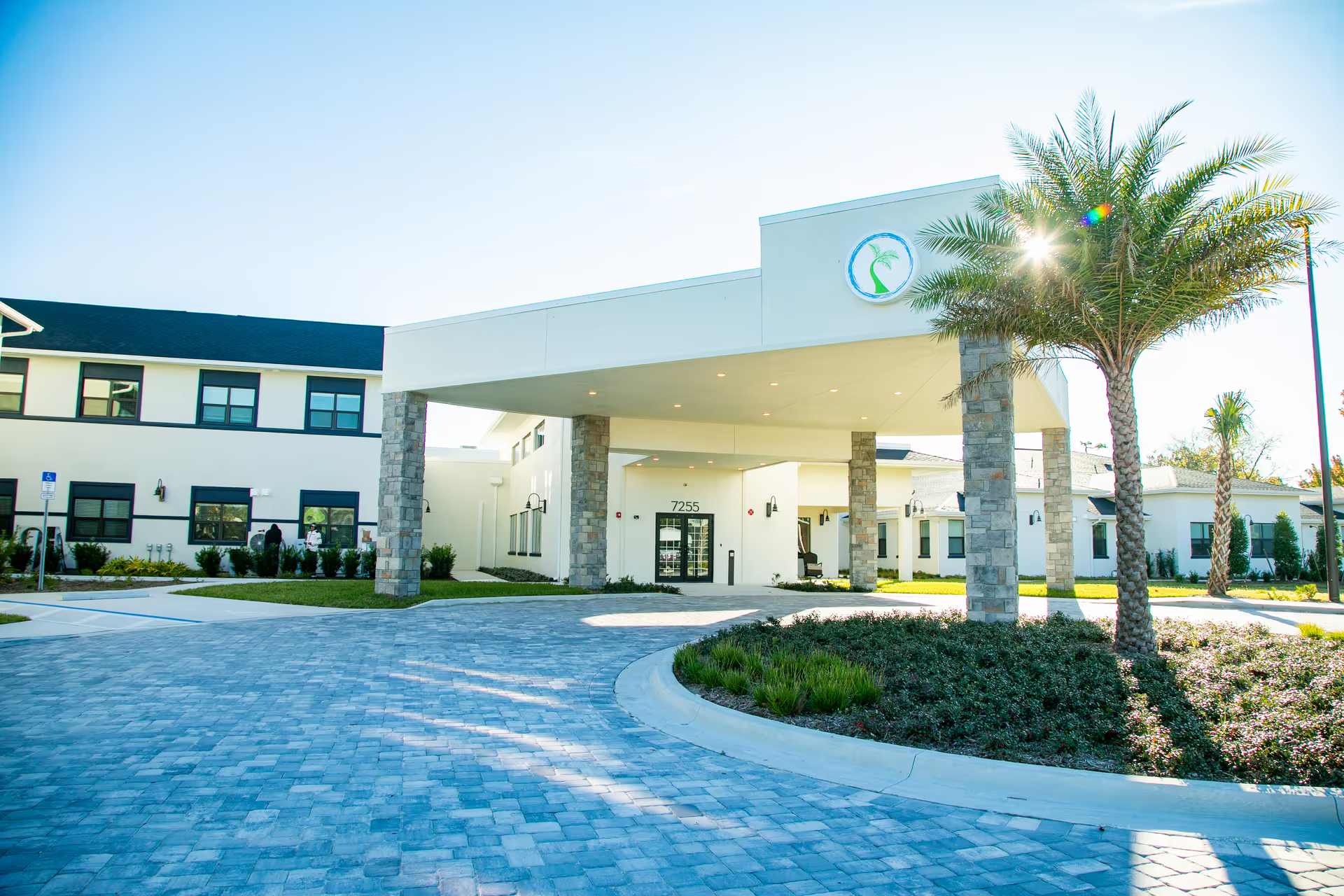
The reviews for Solaris Healthcare Forest Lake are highly mixed, showing a facility with clear operational strengths alongside recurrent, facility-level weaknesses. Many families praised individual caregivers, therapists, and ancillary staff for compassion, responsiveness, and technical skill. Physical and occupational therapy consistently earned positive comments for competent care and good rehabilitation outcomes. Multiple reviewers highlighted strong discharge planning and social-work support, as well as engaging activities (bingo, crafts, outings, entertainers) that contribute to resident well-being. Some units and shifts were described as clean, well-run, and family-oriented, with helpful maintenance and housekeeping staff and useful on-site amenities such as laundry and an on-site hairdresser.
At the same time, a substantial portion of reviews outline systemic operational issues. Staffing inconsistency and slow response times are recurring themes: families describe long waits for assistance, uneven CNA and nursing coverage across shifts, and marked differences between day and night staff performance. These staffing problems appear linked to several clinical concerns, including medication-administration errors, incomplete clinical documentation, and uneven physician rounds or oversight. A number of reviewers raised infection-control and incontinence-care concerns and described delays in addressing acute clinical changes; these accounts suggest gaps in routine clinical monitoring and escalation.
Facility infrastructure and equipment maintenance emerged as another pattern. Reviewers reported broken nurse-call systems, nonfunctional thermostats and ice machines, shower drain and plumbing problems, and HVAC or air-conditioning failures. While maintenance staff were often praised for quick fixes, the frequency of equipment issues points to an aging physical plant that requires ongoing investment. Dining experiences were described inconsistently: some reviewers praised visually appealing meals and a welcoming dining environment, while others noted poor food quality, incorrect orders, limited portions, and nutritional inadequacies.
Management and administrative practices show similar variability. Several families commended individual administrators, admissions personnel, and discharge planners for effective, compassionate support. Conversely, many reviews describe poor communication from leadership, billing and accounting errors (including contested charges and collection notices), unclear insurance/day-count practices, and instances where families felt their concerns were not addressed. Security and valuables-safety gaps were mentioned, including concerns about missing personal items; one category of reviews referenced serious allegations of theft or financial mismanagement. There are also multiple accounts of a mismatch between the facility’s advertised scope (for example, short-term rehab) and the level of medical or supervisory care available on the unit, which has operational implications for placement decisions.
Notable patterns: quality appears highly unit- and shift-dependent. Positive experiences often center on specific teams (therapy, certain nurses, or discharge coordinators) and daytime operations; many negative accounts cluster around nights, particular units, or administrative interactions. Prospective residents and families should therefore verify staffing ratios and clinical oversight for the intended unit and ask targeted questions about call-bell reliability, infection-control protocols, medication-administration checks, billing procedures, and security for personal belongings. An in-person visit at different times of day, a review of recent inspection or complaint records, and direct conversations with therapy, nursing leadership, and the business office will help clarify whether the facility’s strengths align with a prospective resident’s care needs.