Account assessments for Casa Mora Rehabilitation & Extended Care are mixed, with clear strengths around individual caregivers and administrative admissions support but recurring operational concerns that prospective families should evaluate closely.
Care quality and clinical oversight: Many families commend individual nurses, CNAs, therapists and a few mid-level clinicians for compassionate, attentive care and effective rehabilitation when delivered. At the same time, there are repeated operational concerns: inconsistent staffing levels (especially overnight), delayed responses to call lights, missed or late medication administration, and gaps in repositioning and pressure-ulcer prevention. Several accounts describe escalation to higher-level medical care following these gaps. The pattern suggests variability in day-to-day clinical reliability rather than uniformly high or low clinical competence.
Staff and management: Admissions, reception and several named admissions staff receive frequent praise for being helpful, informative and organized. Front-line caregiving teams are frequently described as caring and hardworking, but reviewers also describe variability in staff conduct, night-shift performance, turnover, and training. Communication with families is uneven — some families report regular updates and good coordination, while others describe poor responsiveness, language-barrier hurdles, and limited follow-up after incidents. This points to strengths in individual staff members and supervisory pockets of good practice, alongside inconsistent facility-wide oversight and accountability.
Dining and therapy programs: The facility offers therapeutic services and social programming; many residents engage in activities, music and games, and some patients experience positive rehab outcomes. However, meal quality and dietary management are inconsistent: complaints include meals served at suboptimal temperature, pureed or restricted diets that do not meet expectations, and instances of weight loss. Therapy delivery is similarly variable — there are reports of excellent, outcome-focused therapy but also of inadequate or infrequent rehabilitation for some residents.
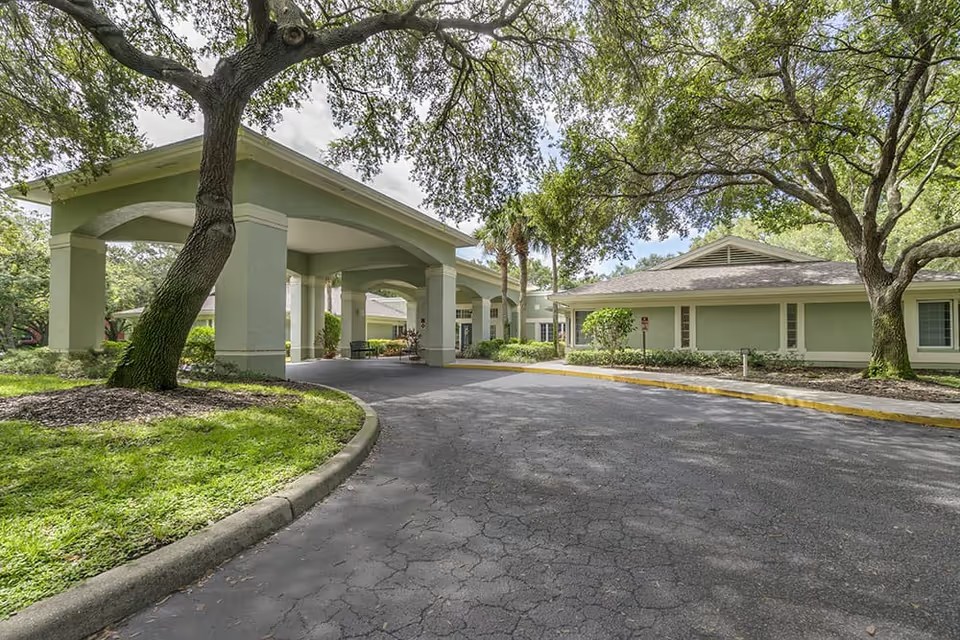
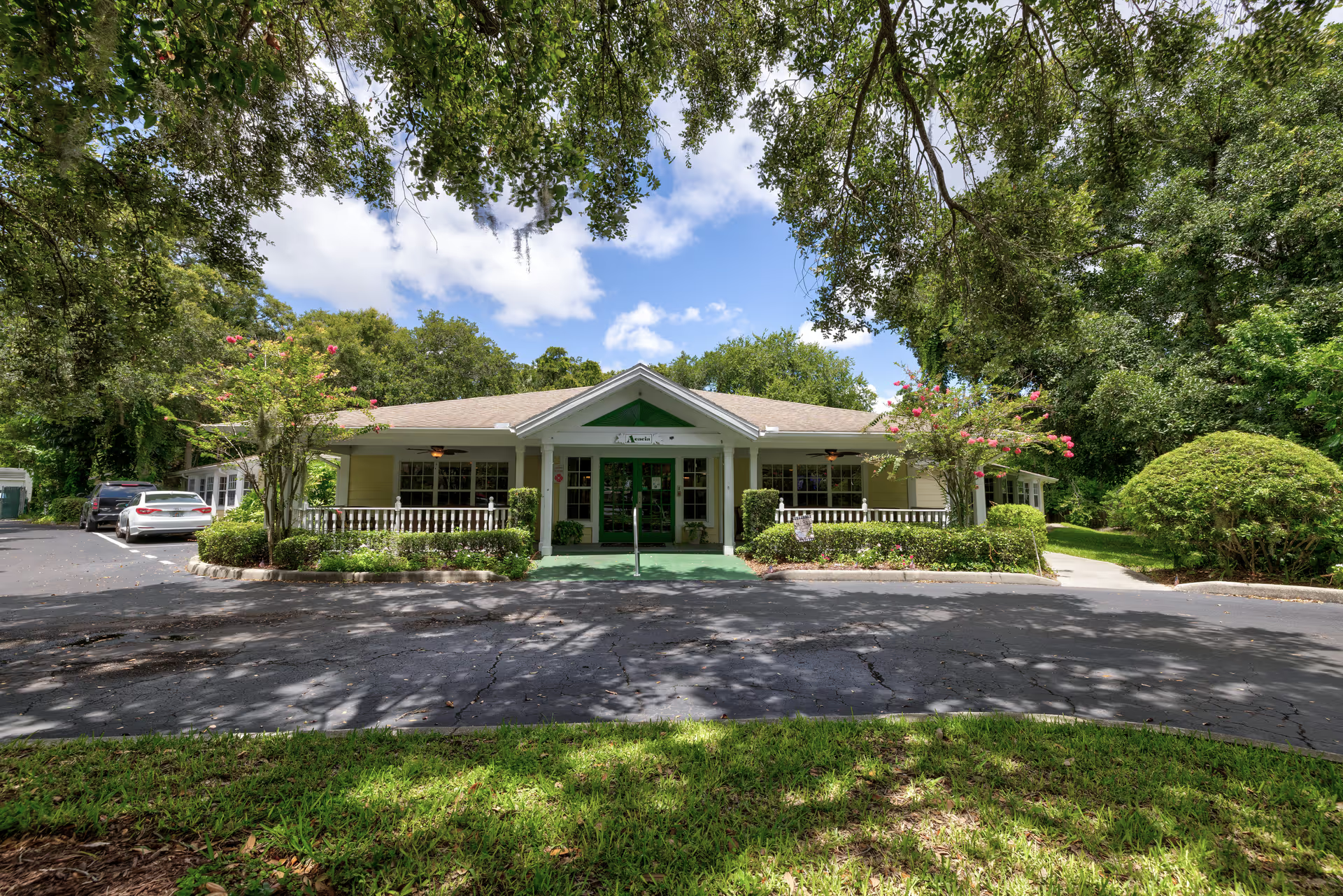
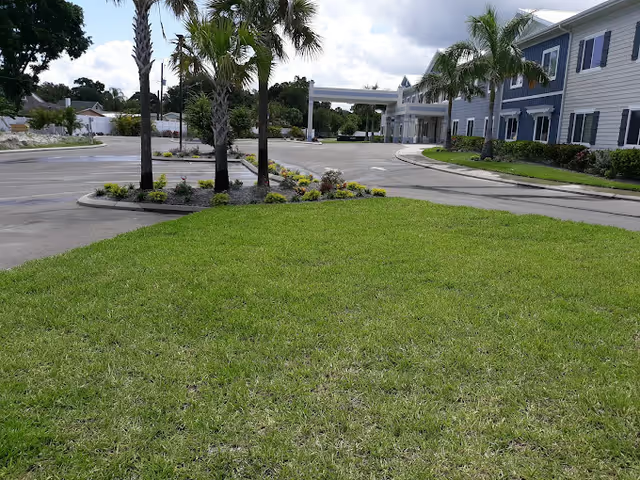
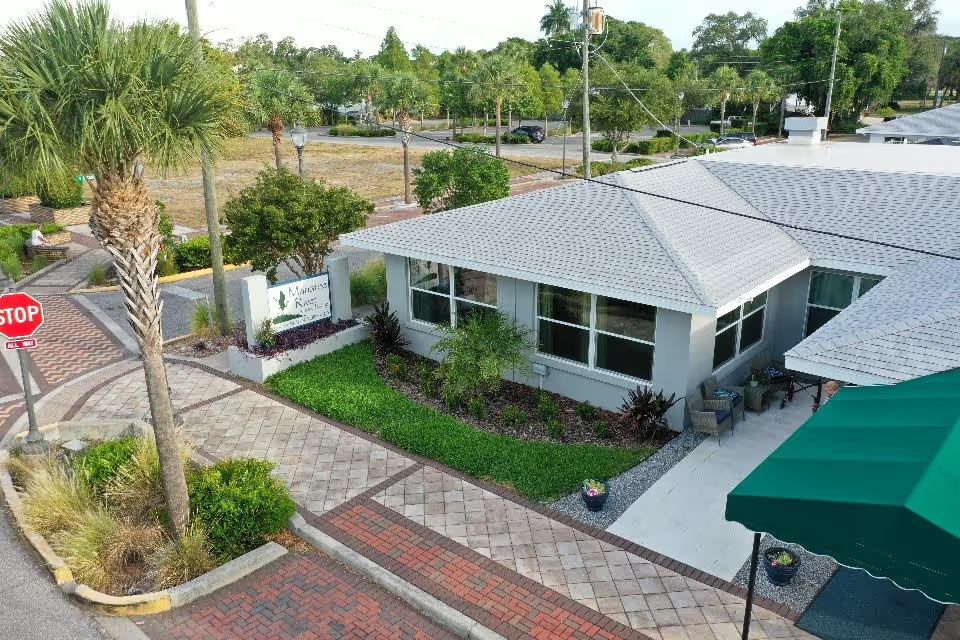
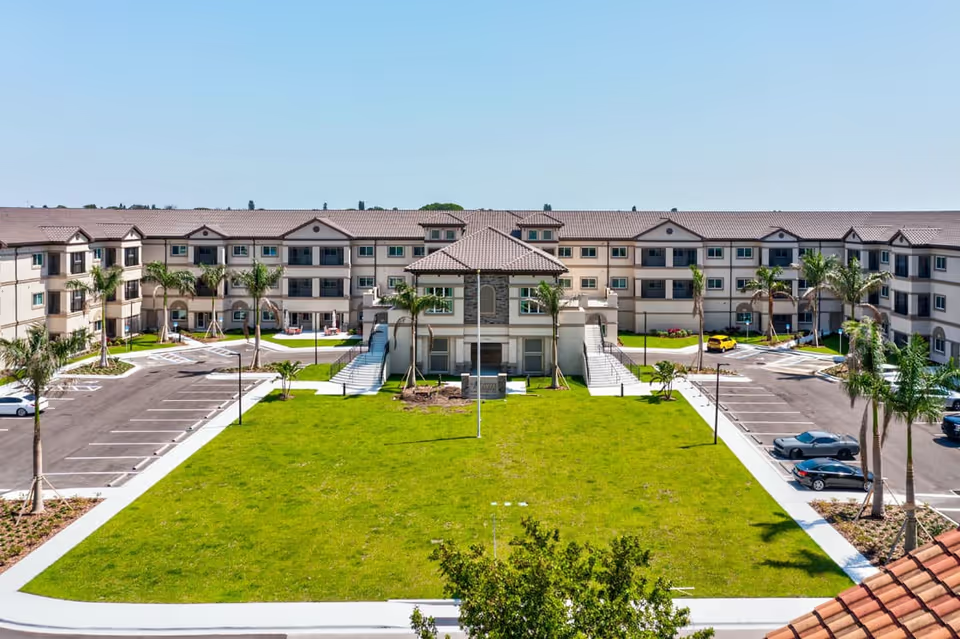
Facilities and housekeeping: Housekeeping and maintenance are often praised for keeping rooms and corridors clean and for timely repairs. Conversely, the building’s age shows through in areas: HVAC/temperature-control problems, broken TVs or call systems, intermittent odor concerns at entrances or common areas, and some units undergoing repairs. These mixed observations indicate that while some areas are well-maintained or recently remodeled, facility upkeep can be inconsistent across the campus.
Safety, infection control and equipment: Multiple accounts raise concerns about infection-control practices and contagious-skin-condition management, as well as equipment reliability (call lights, shower chairs, bed rails) and transfer-safety practices. These are operational issues that bear directly on resident safety and should be reviewed during a tour and intake discussions.
Notable patterns and guidance for families: The overarching pattern is variability — strong individual caregivers and helpful admissions staff coexist with episodic operational failures tied to staffing, communication, and systems reliability. Prospective residents and families should observe staffing levels at different times of day, ask for specific protocols on medication administration, repositioning/pressure-ulcer prevention, infection-control policies, and dietary compliance. Request recent therapy plans and progress notes, verify call-light response expectations, and confirm language-assistance availability if needed. A focused tour that includes Q&A about night staffing, clinical escalation procedures, and equipment/functionality checks will help determine whether the facility’s strengths align with the resident’s needs.