Overall impression: Dorothy Cares Assisted Living Facilities present as small, home‑style ALFs with consistently positive family feedback emphasizing compassionate, personalized care. Clinical leadership appears to be a distinguishing feature: facilities are nurse‑led with active RN oversight, structured medication management, and coordination with therapy and physicians. Families frequently highlight that staff treat residents like family, attend to individual preferences, and provide hands‑on clinical attention that supports medication accuracy and health monitoring.
Staff and care quality: The staffing model is described as attentive and warm, with a favorable staff‑to‑resident ratio that supports individualized attention. The owner/administrator is frequently cited as directly involved in care, which contributes to continuity and responsiveness. Communication practices (including regular updates, photos, videos, and progress reports) are emphasized as a strength that reassures distant family members. End‑of‑life and bereavement engagement is also mentioned as part of the facility’s supportive practices.
Dining and activities: Dining is consistently described as home‑cooked, appetizing, and adaptable to dietary needs. Daily structure includes guided walks, supervised exercise, crafts, bingo, puzzles, nail care, movie nights, and other small‑group activities that aim to maintain physical activity and social engagement. The small scale and homelike layout enable easy navigation and frequent one‑on‑one activity opportunities rather than institutional programming.
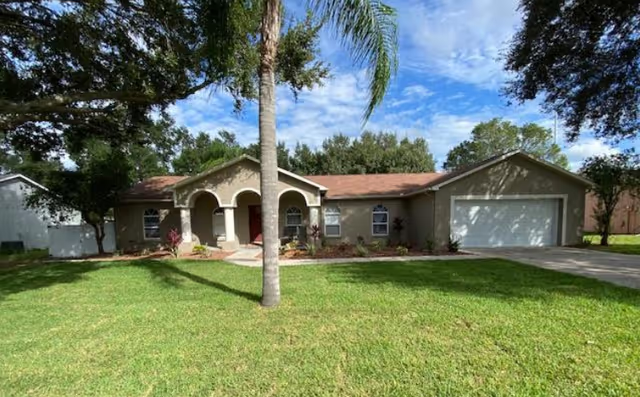
Facilities and operations: Reviewers describe the homes as immaculate, well maintained, and odor‑free, with pleasant common areas such as sunrooms, gardens, and enclosed patios. The small, intimate size (often 4–6 residents) is presented as a deliberate feature that reduces stress for residents and supports individualized routines. Operationally, the facility offers practical assistance around paperwork, medication reconciliation, insurance coordination, and transitions to other levels of care when needed.
Notable patterns and caveats: High family satisfaction and a waitlist at both locations indicate steady demand; this also produces capacity constraints that can delay admission or limit room-type availability. The small‑home model accounts for many of the strengths (personal attention, cleanliness, community feel) but can also limit on‑site capacity for higher‑acuity medical needs or highly specialized dementia tracks. A few comments suggest limited availability for particular room configurations or gendered placements at times and that private‑room pricing expectations can vary. Prospective residents and families should weigh the benefits of individualized, nurse‑led care in a small setting against potential limitations in immediate availability and the facility’s capacity to accommodate substantially higher medical acuity or specialized dementia programs.
Recommendation for prospective families: Dorothy Cares is well suited for individuals seeking a homelike environment with strong clinical oversight, frequent family communication, and active social programming. Families prioritizing small scale, close staff relationships, and affordability will likely find this model attractive. Those who require guaranteed immediate placement, large‑scale clinical infrastructure, or highly specialized dementia tracks should verify current availability and care scope during the admissions conversation.