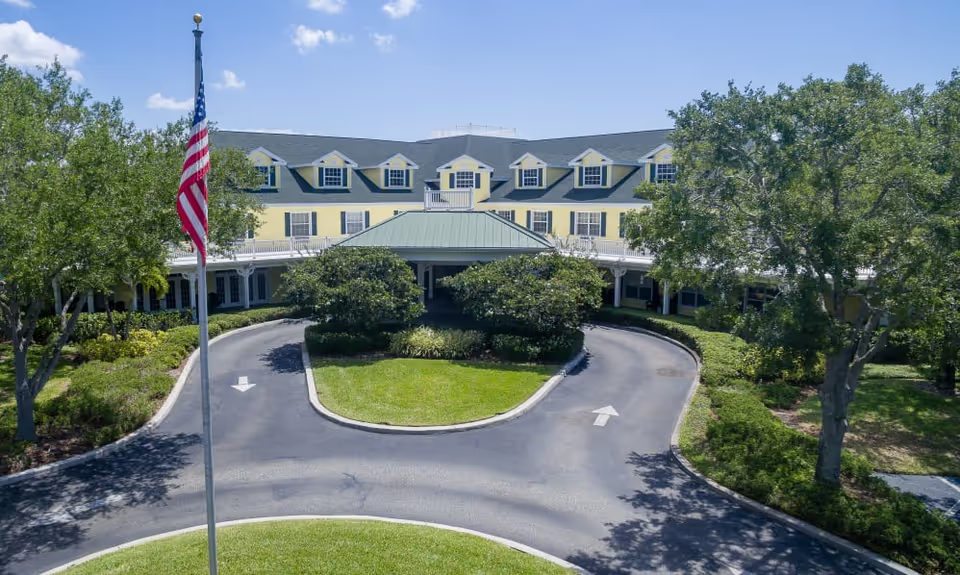
The reviewer feedback for St. Petersburg Nursing and Rehabilitation Center is markedly mixed, with a clear pattern of two distinct experience clusters. One cluster highlights robust rehabilitation services, an active activities program, and a shift toward improved operations under new leadership. The other cluster details operational weaknesses that affect daily care delivery, particularly around nursing responsiveness, medication administration, and cleanliness.
Care quality and clinical services: Therapy and rehabilitation are recurrent strengths. Physical and occupational therapy teams are frequently described as engaged, effective, and central to residents’ functional recovery. By contrast, nursing and clinical oversight show variability: recurring concerns include delayed responses to call lights, missed or late medications, inconsistent pain management, and gaps in discharge coordination. There are also isolated, serious allegations about clinical consent and recordkeeping; these stand out from the general pattern and suggest the need for careful review by families and regulators.
Staff and communication: Staffing presents a mixed picture. Numerous reviewers single out individual staff members, social-work support, and administrators as compassionate, accessible, and helpful. Conversely, other accounts describe inconsistent staff conduct, curt communication tone, and uneven follow-through with families. Communication lapses — such as unreturned phone calls, unclear updates, and difficulty reaching administration at times — are a recurring friction point. Several reviewers attribute improvements to recent management changes, while others describe prior leadership-related decline.
Dining and activities: The facility offers a restaurant-style dining model and an active calendar of events; reviewers cite themed meals, specialty bars, live music, and engaging outings as meaningful quality-of-life contributors. That said, meal quality and consistency are uneven in the feedback — some residents and families praise varied, tasty offerings, while others report cold or bland meals and irregular accommodation of special dietary requests.
Facilities, housekeeping, and infection control: Evaluations of the physical environment vary. Some reviewers note a clean, well-maintained building and visible environmental-services efforts. Others raise sanitation concerns, odor issues in parts of the building, and pest-control concerns. Infection-control practices and PPE adherence are described as inconsistent in some accounts. Room-cleaning schedules and linen management are cited positively by some and criticized by others, indicating variability across units or time periods.
Management and notable patterns: A prominent theme is operational variability over time. Multiple reviewers describe a noticeable improvement after management changes, including better food, friendlier staff, and enhanced cleanliness. Simultaneously, there remain recurring operational weaknesses around staffing consistency, medication management, documentation integrity, and family communication. The overall picture is of a facility with strong rehabilitative and activity programming and committed staff members, but with systemic process gaps that have led to serious concerns for some families. Prospective residents and family members should weigh the consistently strong therapy program and engagement offerings against the documented variability in nursing, medication processes, sanitation, and communication; they may also consider meeting with current leadership to review recent corrective actions, quality metrics, and infection-control protocols before placement.