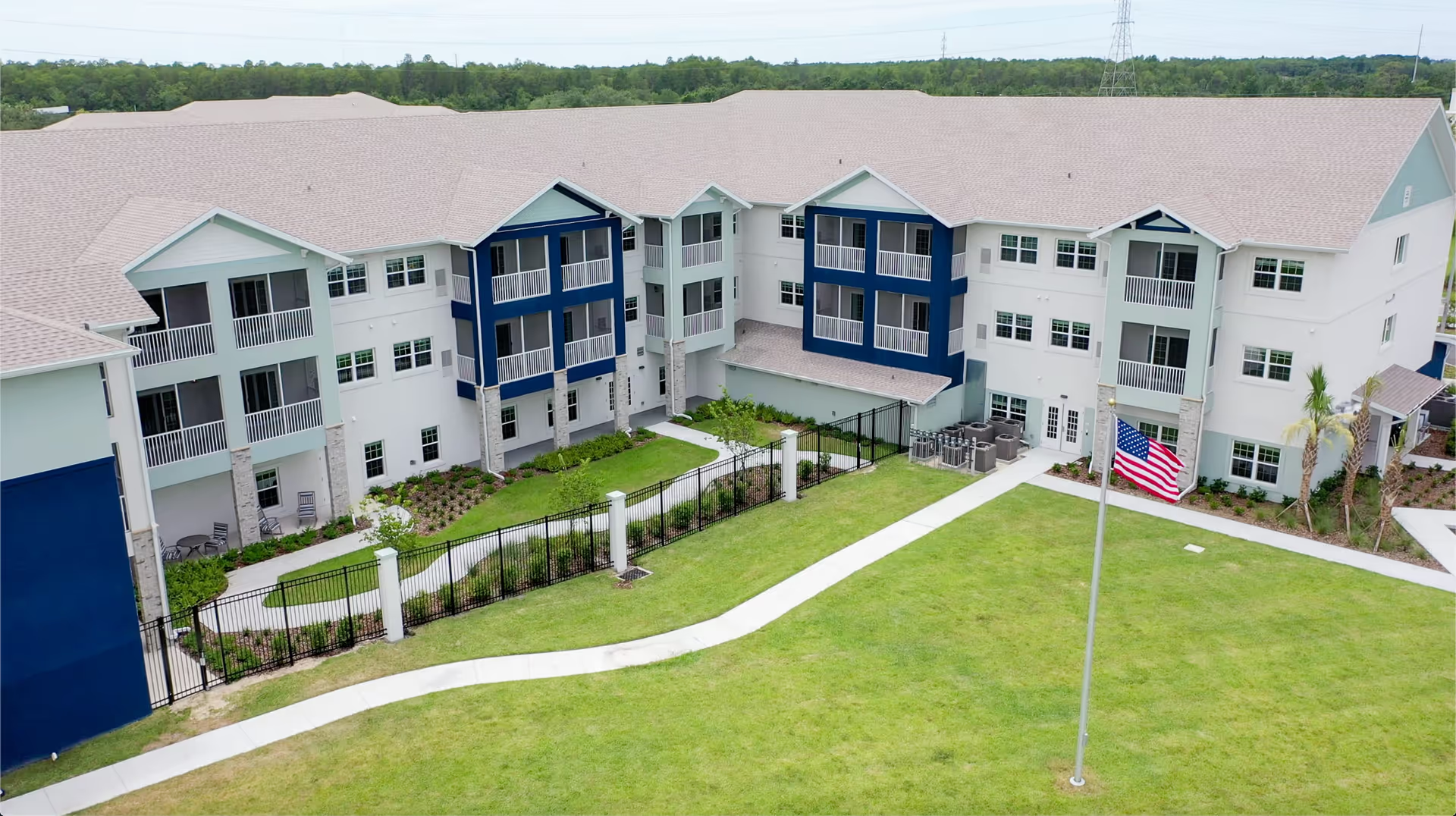
The reviews for Magnolia Trails at East Lake are polarized but consistent in certain themes: the physical environment, activities and moments of excellent personalized care are repeatedly praised, while management instability and inconsistent clinical care and communication are repeatedly criticized. Many reviewers describe the community as beautiful, modern, and thoughtfully designed for memory care — with tasteful decor, pleasant scents and lighting, family-photo displays on room screens, attractive grounds, and comfortable resident rooms. The facility’s activities program is widely noted as robust, creative, and frequent (daily listings, varied offerings like balloon volleyball and one-on-one sessions), and several families credit the activities and supportive staff with measurable improvements in residents’ mobility, verbal engagement and emotional well-being. Multiple reviewers also highlight warm, compassionate caregivers and community relations staff (several mention a Dawn/Community Relations Director by name), and describe the overall atmosphere as friendly, family-like, and calming. Many accounts praise freshly prepared meals, pet visits, and the sense of safety and stimulation the environment provides for people with dementia.
Despite these strengths, a substantial portion of reviews raise serious concerns about clinical operations, leadership, and safety. A number of reviewers report inconsistent or poor nursing care: missed or inconsistent medication administration, lack of an initial care plan, and care tasks not consistently completed (examples include residents not being bathed or shaved, missed breakfasts, or meals not being cut up). More alarmingly, several reviews describe unwitnessed falls leading to hospitalizations and a perceived lack of transparency about those incidents. Reviewers also mention poor emergency protocols, failed family notifications, and cases where hospital mixes or other communication errors occurred. These clinical and safety issues are often linked by reviewers to high staff turnover, frequent director/management changes, and understaffing — comments that suggest retention and training challenges that impact continuity and quality of care.
Communication and family experience present another mixed picture. Some families report excellent follow-up from nursing directors, clear communication, and compassionate, informed community relations staff who go above and beyond. Others recount broken promises, forgotten video chats, minimal family communication, and dismissive leadership responses when concerns are raised. Specific negative examples include lost personal items (glasses), alleged HIPAA violations (internal access to medical records), and inconsistent housekeeping or laundry service. Several reviewers explicitly advise that family members need to be very involved or present frequently to ensure medical needs are met, indicating variability in the day-to-day reliability of care.
Dining and personal care appear as both strengths and weaknesses: many praise the quality and variety of meals and say residents enjoy the food, while others report that meal service did not accommodate specific needs (food not cut up, residents not encouraged to eat), resulting in weight loss for some residents. Housekeeping and infection control concerns appear intermittently across reviews — some state the facility is very clean with no strong odors, while others cite inconsistent cleanliness and at least one mention of C. diff risk. These conflicting accounts point to variability in standards or implementation across shifts or units.
Overall sentiment is split: a considerable number of reviewers strongly recommend Magnolia Trails for memory care, citing excellent staff, stimulating programming, and a beautiful, calming environment that benefits residents’ well-being. Conversely, a meaningful subset of reviewers report serious lapses in nursing care, safety, and management responsiveness that they consider disqualifying. The pattern that emerges is one of a community with strong design, programming and pockets of excellent caregiving, but with systemic problems in leadership continuity, staffing stability, clinical consistency, and family communication that have produced significant negative outcomes for some residents. Prospective families should weigh the facility’s clear strengths in environment and activities against the documented variability in clinical care and management, and consider asking specific, evidence-based questions about staffing ratios, turnover, incident reporting, medication administration protocols, emergency procedures, and how care plans are individualized and monitored over time.