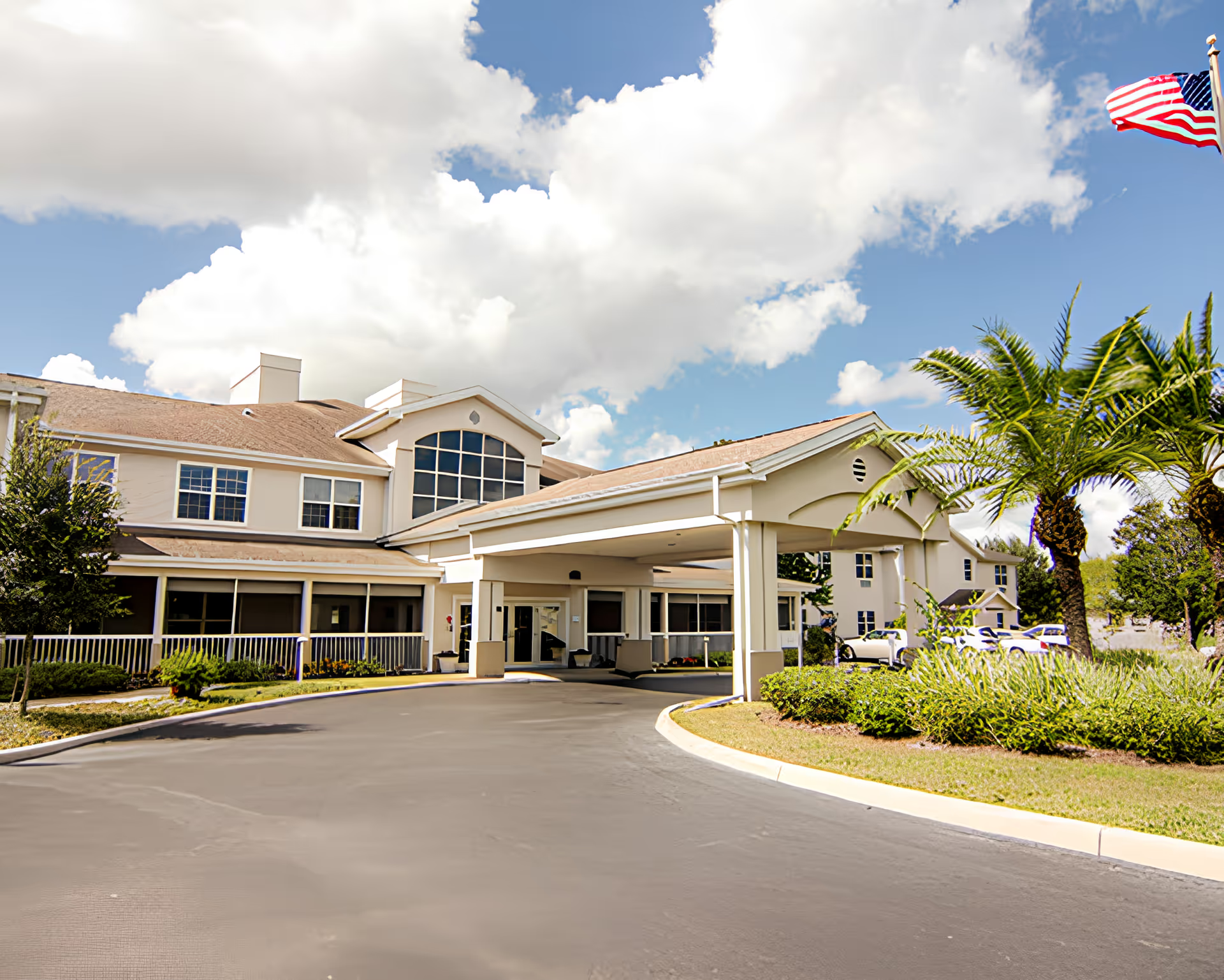
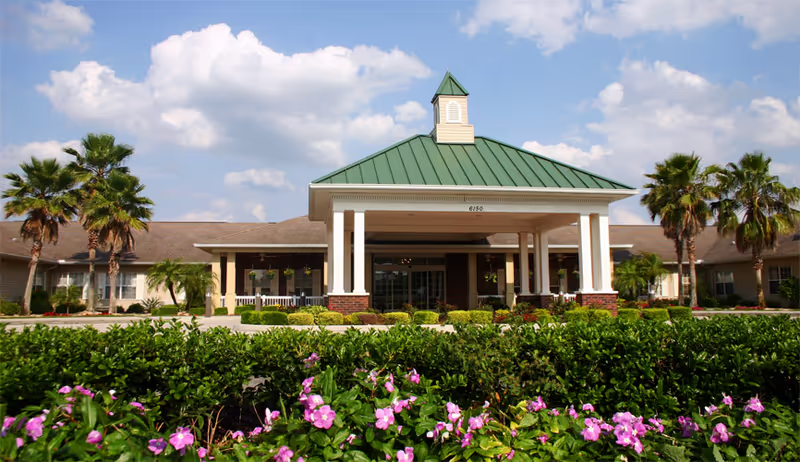
The body of reviews for Lake Mariam Health and Rehabilitation Center is highly mixed, with clear strengths clustered around therapy, a portion of the nursing and aide staff, and recent management initiatives, alongside recurring operational problems that affect resident experience. Many families praise the rehabilitation teams (physical, occupational, and speech therapy) for skillful, outcome-focused care and note ongoing relationships after discharge. Numerous reviewers also identified individual staff members — nursing, CNAs, front-desk personnel, and social services — who are attentive, communicative, and family-oriented. New ownership and administrative changes are repeatedly described as producing measurable improvement in staffing, cleanliness, and overall culture in some parts of the building.
Care and staffing: Positive accounts emphasize kind, patient caregivers and strong coordination when staffing is sufficient. However, a prominent pattern in the reviews is inconsistent staffing levels, reliance on agency or temporary staff, and variable staff training. Those operational gaps are linked to delays in attending to residents, inconsistent bathing and personal-care schedules, and reports of uneven medication handling and documentation. There are specific allegations regarding resident property loss and financial irregularities that raise concerns about property-management practices; families should ask about inventory and accountability procedures. Several reviews also describe delays or gaps in clinical escalation and communication during incidents, suggesting opportunities to strengthen incident-response protocols and family notification procedures.
Dining and activities: Reviews alternate between positive and critical observations about meals and programming. Many families report enjoyable meals, a pleasant dining area, and active social programming; others note late or cold meals and limited menu options for residents with specific preferences. Therapy and activities are a consistent strong point: individualized rehab sessions, a proactive therapy team, and available personal-care services such as an experienced hairdresser were cited as meaningful quality-of-life supports.
Facilities and cleanliness: While some units and rooms are described as clean, organized, and well-maintained, multiple reviews raise sanitation concerns in particular areas, including odor issues, pest-control concerns, and inconsistent housekeeping (bed linens, bathrooms, and spills). Memory-care and lower-level units are singled out more often for environmental deficits — outdated finishes, shared bathroom configurations, and areas in need of renovation or deeper cleaning. Several reviewers contrasted improvements under new cleaning crews and management with earlier sanitation problems, indicating variability across time and units.
Management and patterns: There are repeated mentions of a positive shift under new management, including better communication, increased administrator involvement, and tangible operational improvements. At the same time, other reviews describe poor communication, delayed paperwork processing, billing or refund inconsistencies, and uneven social-services availability. Regulatory scrutiny is referenced in connection with inspection deficiencies; prospective families should request current inspection results and corrective-action documentation. High staff turnover and periods when leadership or nursing coverage changes also appear to correlate with declines in perceived service quality.
Notable patterns and guidance: The reviews suggest Lake Mariam offers strong rehabilitative services and a number of caring staff members, but experiences are uneven across units and shifts. Key operational weaknesses to probe during a visit include staffing ratios and use of agency personnel, medication-administration controls, property-inventory procedures, housekeeping schedules and pest-control plans, and memory-care supervision. Asking to see recent inspection reports, speaking with the director of nursing and social services about escalation and family-notification processes, and observing mealtime service and cleanliness on multiple shifts can help families assess whether the facility’s recent improvements have been sustained in the areas most important to them.