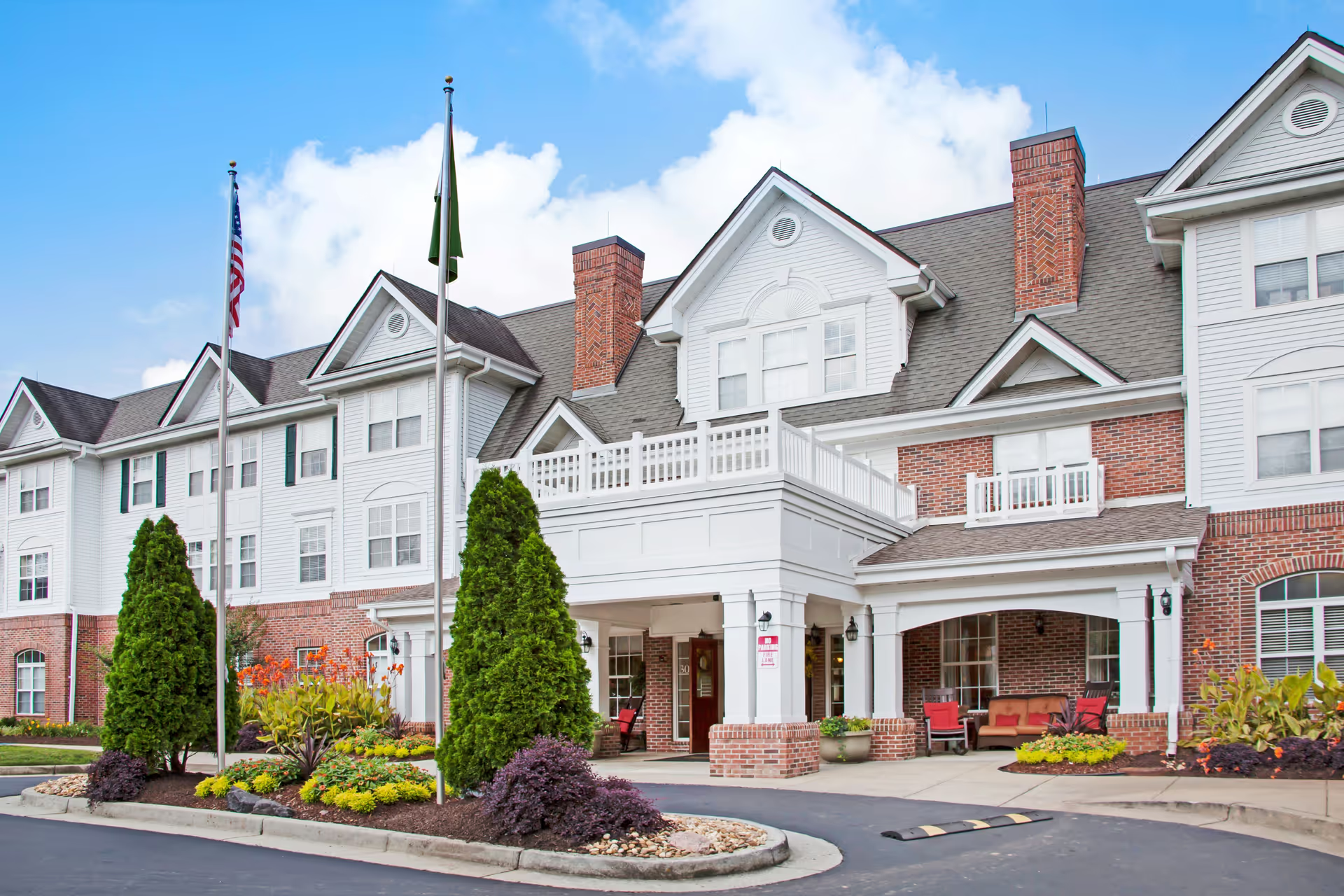
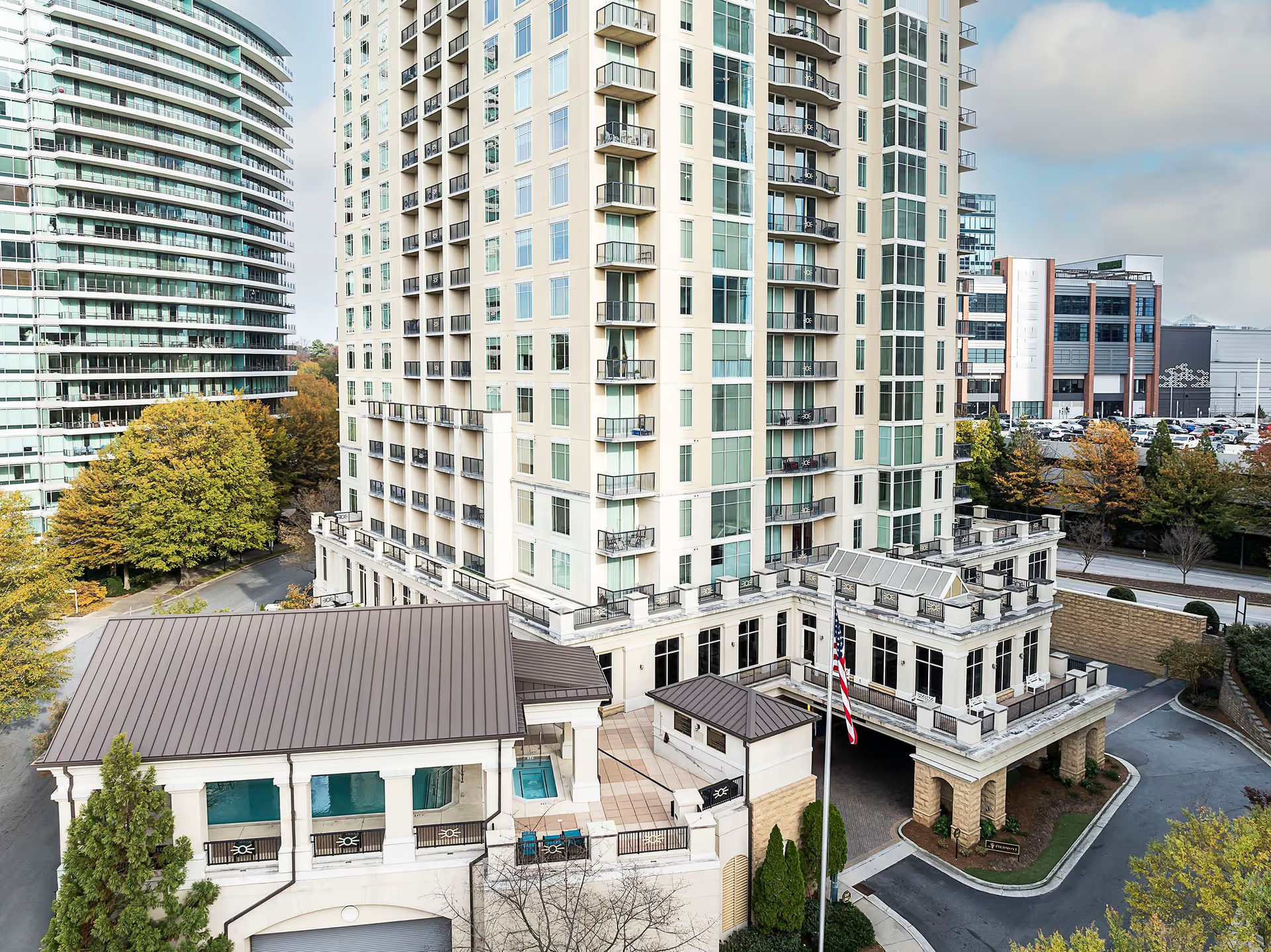
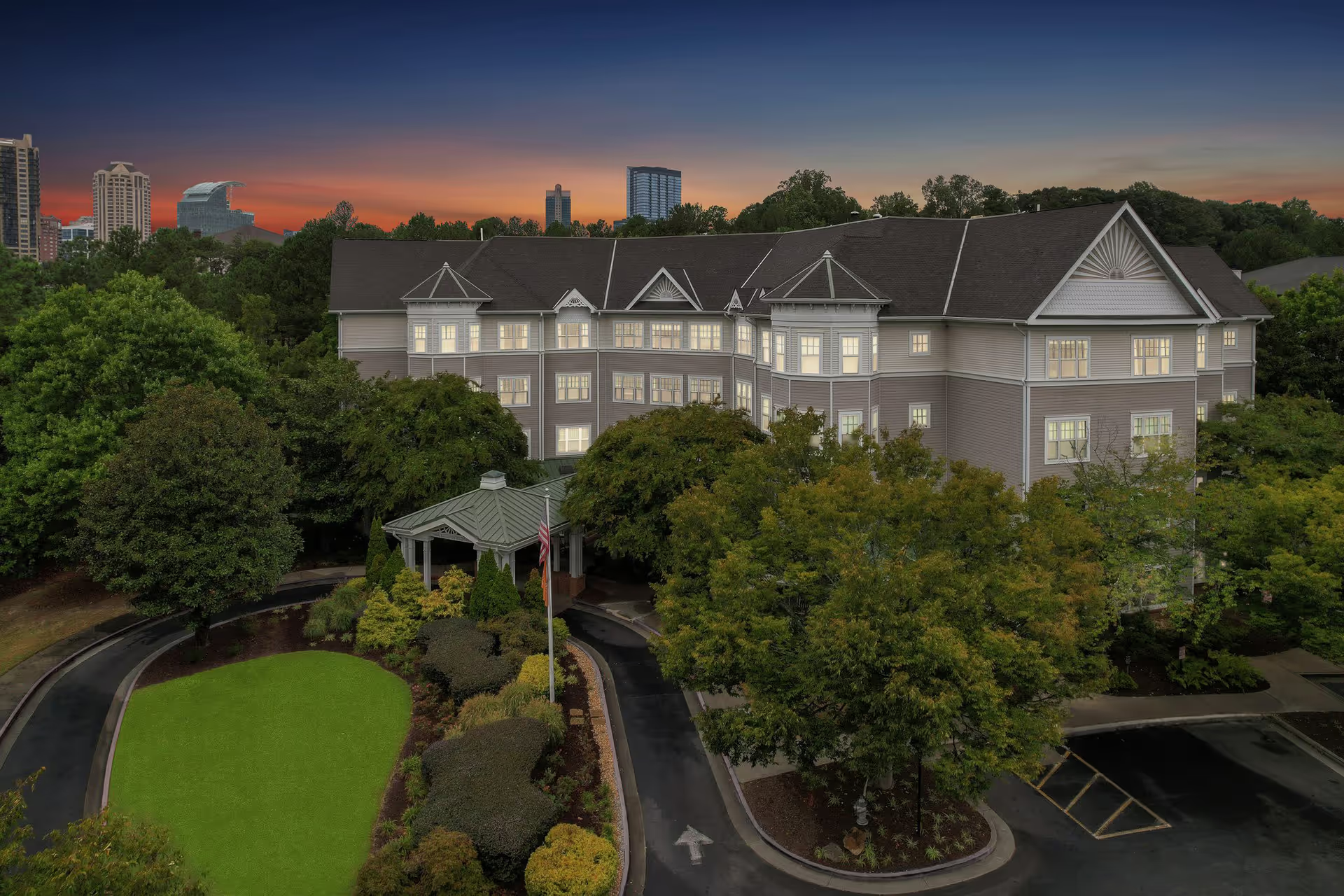
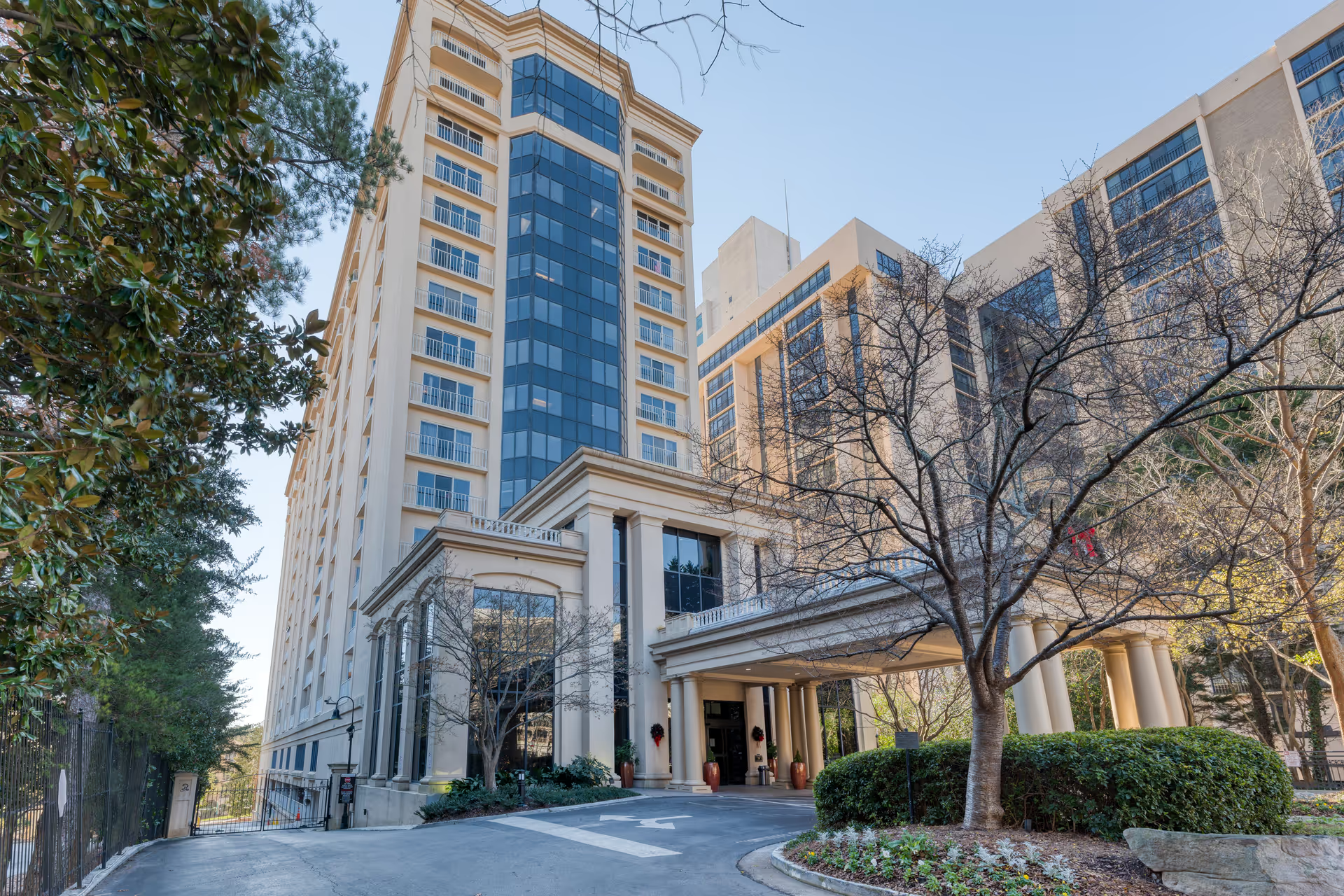
Heartis Buckhead presents as a modern, high-rise senior community with many attributes that appeal to families seeking a first-class, apartment-style environment. The facility's built environment and amenities—rooftop pool and sky lounge, fitness center with trainers, multiple dining venues, lounges, theatres, library, and outdoor pet areas—are consistently highlighted. The location near major medical centers and cultural venues is frequently noted as a convenience for medical appointments and social engagement. Apartment features such as full kitchens, balconies, in-unit laundry, and spacious floor plans contribute to a residential feel rather than an institutional one.
Care and staff performance elicit broadly positive commentary. Reviewers frequently praise attentive caregiving staff, specific therapists, and front-desk and concierge personnel; positive examples include engaged CNAs, Med Techs, and a supportive Memory Care director. On-site therapy (physical and speech) and a visible fitness program with trainers are cited as concrete care strengths. Many families described empathetic admissions and sales staff who provided helpful guidance during tours and move-in. These strengths support a sense of community and resident-centered interactions for many residents.
Dining and activities are central selling points but show mixed operational consistency. Numerous reviewers complimented the quality, variety, and presentation of meals, including special offerings and accommodating dining staff and room service. At the same time, there are recurring notes about variability in meal quality and service reliability over time, including extended waits or perceived declines in kitchen performance in some accounts. Activity programming is generally described as robust—card games, book clubs, fitness classes, arts and crafts, and cultural outings—but a few accounts indicate variability in frequency or breadth of offerings depending on staffing and scheduling.
Operational and management themes merit attention. Several reviewers pointed to leadership and staffing turnover that has affected continuity of services and created gaps in onboarding, housekeeping, and follow-through on promised services. Specific operational weaknesses raised include inconsistent housekeeping/sanitation delivery, occasional lack of hot-water or interrupted services, breakdowns in move-in logistics, and lapses enforcing facility policies. Billing and pricing transparency issues (deposit handling and price changes) and challenges with parking/valet logistics were also reported; these are pattern-level concerns about administrative processes rather than resident-care quality per se.
Notable patterns: the facility scores highly on design, amenities, clinical therapy availability, and many aspects of staff responsiveness, particularly at the point of tour and in several caregiving teams. Conversely, common operational stressors—leadership turnover, service reliability fluctuations, administrative communication gaps, and logistical issues such as parking and noise—appear repeatedly enough that prospective residents and families should probe them during a visit. For family decision-making, useful due-diligence questions include: current leadership and staff-stability metrics for direct-care roles; examples of recent operational improvements tied to past concerns; specific dining-service schedules and contingency plans; housekeeping and maintenance service-level agreements; parking/guest policies; and clarity in contracts about deposits and pricing.
Overall, Heartis Buckhead offers many of the amenities and clinical supports expected of a premium urban senior community, and many residents and families express strong satisfaction with care, environment, and lifestyle. Prospective residents should balance those strengths against operational variability reported by some families, and verify current management stability and administrative practices during their decision process.