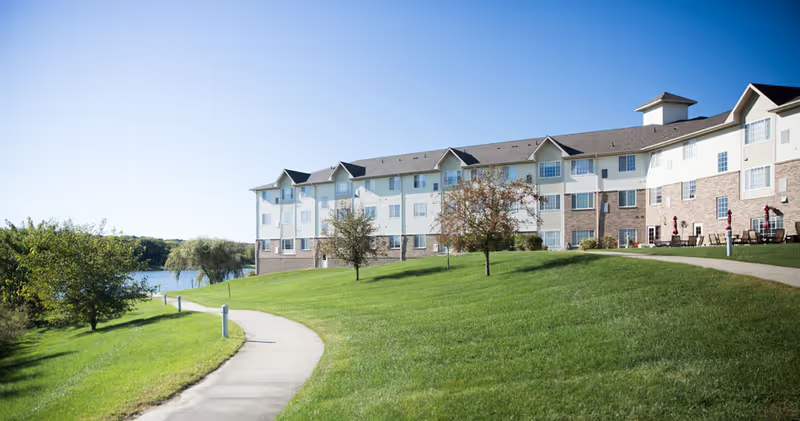
Vintage Hills of Indianola is frequently described as a clean, modern community with a welcoming, home-like atmosphere. Families commonly praise the facility’s appearance, outdoor courtyard and garden areas, and the general upkeep of the grounds and public spaces. Dining is a clear strength in many accounts: reviewers note high-quality meals, active chef oversight, varied menus, and both communal and private dining options. The community offers a broad activities program that includes group exercise, puzzles, live music, outings with transportation, and special events that contribute to resident socialization.
Staff are regularly described as kind, protective, and responsive, with multiple mentions of individual employees and managers who communicate well and go beyond basic expectations. Weekly nursing checks and an on-site salon are cited as positive clinical and personal-care touchpoints. The community’s pet-friendly stance — specifically allowing cats in memory care — is notable for families who value pet companionship. Room options are described as spacious and well-maintained, with size-based pricing available for memory-care suites.
Despite these strengths, there are consistent operational concerns families should weigh. Several accounts indicate that Vintage Hills has limitations when caring for residents who require higher-acuity nursing or more advanced dementia care; assessments of clinical “fit” have been characterized by some families as optimistic and, in a few cases, misleading. Reviewers also report variability in staff training and competence, and occasional staffing shortages that affect responsiveness. Related patterns include gaps in incident documentation and family communication following events, and reports of delays in attending to personal-care needs; these point to inconsistent clinical processes rather than uniformly poor care.
Management and policy issues also appear as recurring themes. Families describe a relocation practice that can result in short-notice moves when a resident’s needs exceed the facility’s scope, a policy that reviewers found particularly disruptive for residents with cognitive impairment. Financial transparency is another area of concern: there are mentions of higher final pricing than initial quotes, added fees for services such as laundry, and uncertainty about Medicaid acceptance. Some families also noted variation in cleanliness standards between units and that certain activities are not always tailored to memory-care residents.
In summary, Vintage Hills of Indianola presents as a well-kept, socially active community with strong dining, engaging programming, and many staff who are attentive and communicative. At the same time, prospective residents and families should specifically verify clinical capacity for higher-acuity needs, clarify the facility’s relocation policies and emergency/incident reporting procedures, confirm fee structures and payer acceptance, and ask about staffing levels and staff training for memory care. These targeted questions will help determine whether the community’s strengths align with an individual resident’s clinical and practical needs.