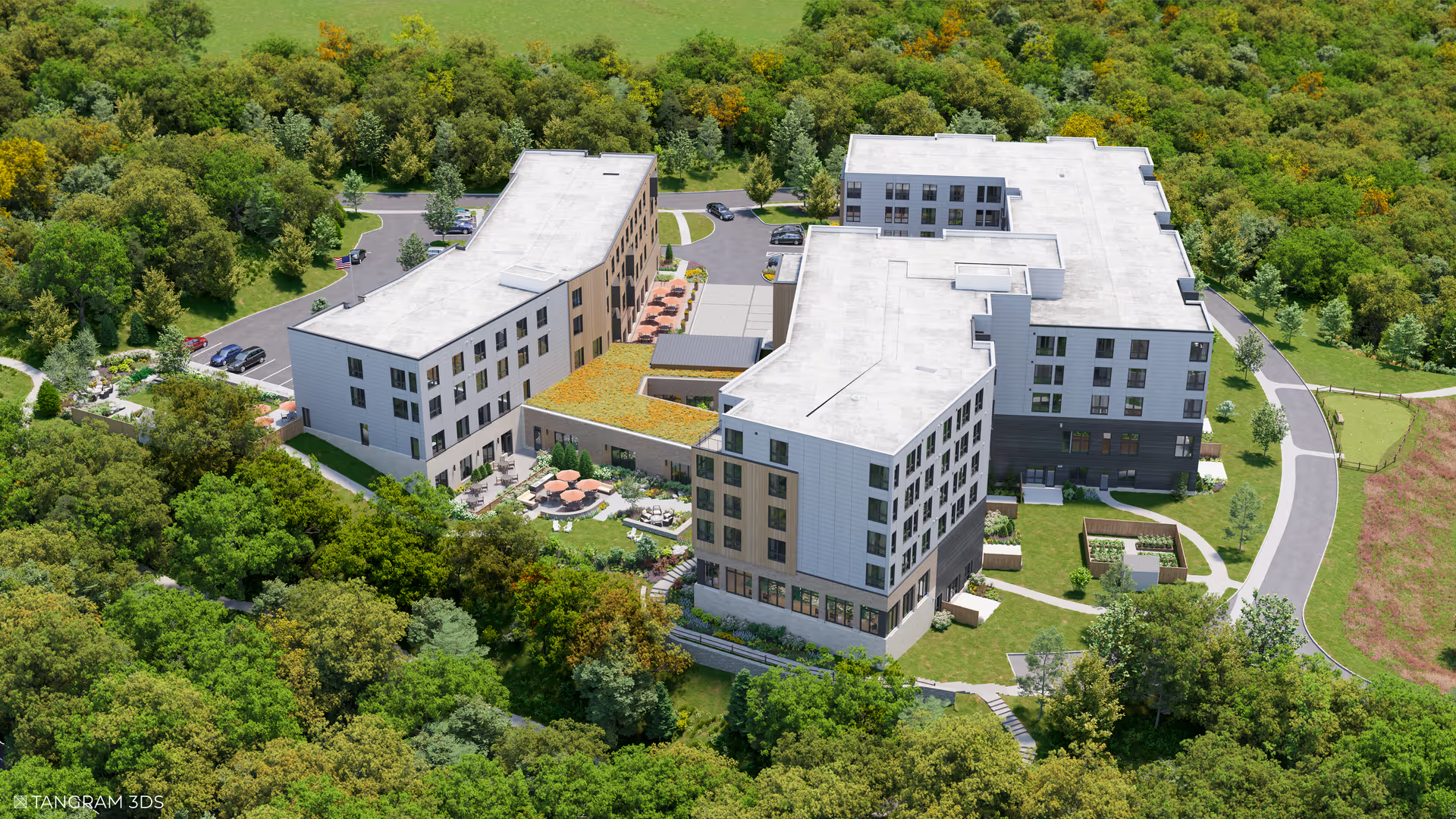
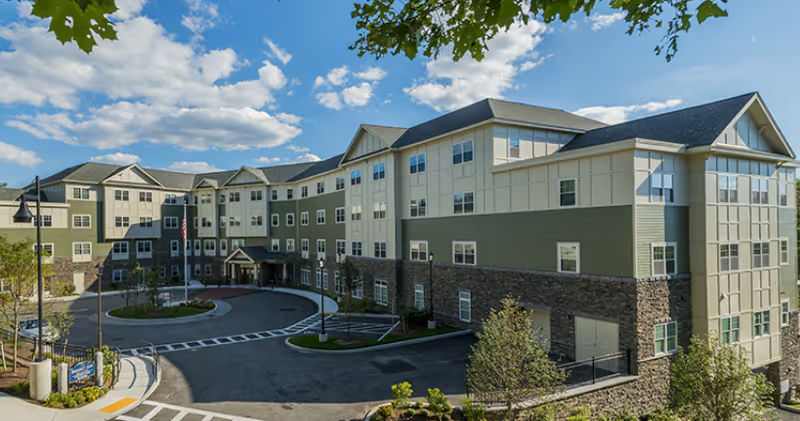
Belmont Manor draws a substantial amount of positive feedback for its caring staff, family ownership, and homelike environment. Many families and residents praise the facility’s long‑tenured caregivers, attentive nurses, and clinical therapists; reviewers commonly highlight individualized dietary accommodations, hot table service meals, and a range of ancillary services (salon, dental, religious services). The facility’s amenities — bright common areas, outdoor patios and a terrace, and spaces for events — contribute to a home‑like feel that reviewers associate with compassionate day‑to‑day care. Activities programming, including crafts, entertainment and organized outings, is frequently described as engaging and supportive of resident socialization.
At the same time, reviews reveal notable variability in operational consistency. While some families describe frequent, clear updates and hands‑on management, others experienced difficulty obtaining timely medical updates — especially during off shifts — and expressed concern about inconsistent staffing levels at nights and weekends. Therapy and rehabilitation intensity is uneven across accounts: several reviewers reported robust PT/OT services and good progress, whereas others described limited therapy frequency and slower functional gains. These patterns point to variability in care continuity rather than uniformly poor or uniformly excellent clinical performance.
Some operational risks emerge as recurring themes. A subset of reviews raises serious concerns about personal‑property controls and billing or documentation practices; there are also accounts indicating sanitation and infection‑control inconsistencies and restrictive visitation during infection‑control events. Privacy can be limited in rooms that house multiple residents, which may affect families for whom private accommodations are important. Reception and family‑facing communication tone are described as variable — many administrators and admissions staff receive praise for responsiveness, but some families found the front desk or night/weekend staff less welcoming.
Management strengths are prominent: family ownership, visible leadership, and a culture of low turnover among critical staff are repeatedly cited as assets that ease transitions into the facility. Prospective residents and families should weigh these strengths against the operational weaknesses noted above. When considering Belmont Manor, it is advisable to ask specific questions about staffing ratios across all shifts, security procedures for personal items, rehabilitation schedules and frequency, visitation flexibility during infection events, and procedures for billing and documentation. An in‑person tour that includes a conversation with nursing leadership and a review of care‑team communication processes will help clarify whether the facility’s strengths align with a prospective resident’s priorities.