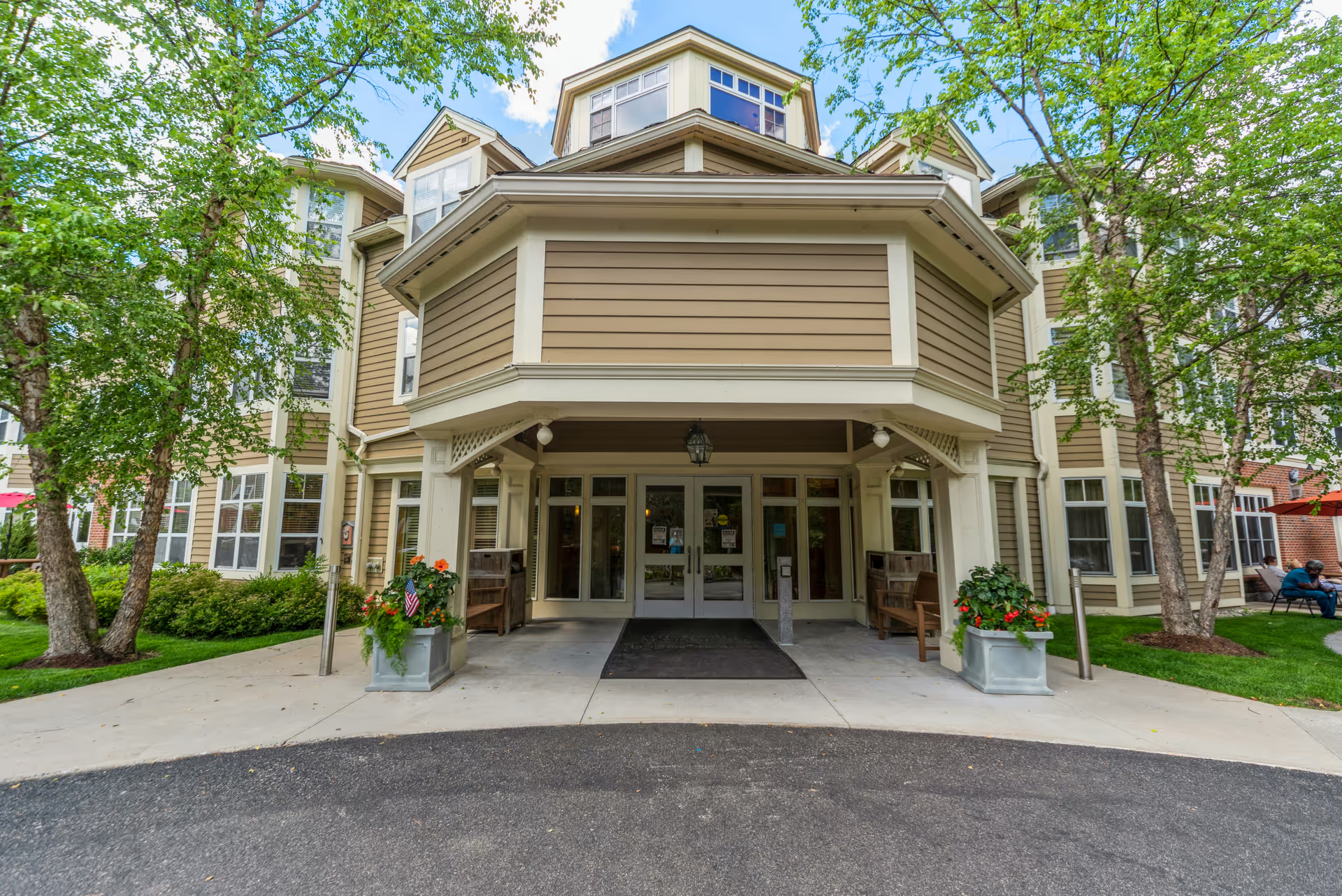
Artis Senior Living of Lexington elicits a mixed but fairly distinct pattern of responses. Many families praise the facility's compassionate caregiving, 24-hour on-site nursing, memory-care orientation, and well-maintained campus with a single-floor circular layout and enclosed walking garden. Reviewers commonly describe engaging life-enrichment programming, a dedicated activities team, and a chef-driven dining program that includes special events such as outdoor barbecues. The physical environment—landscaped grounds, comfortable common areas, and homelike resident rooms—receives frequent positive mention.
Care quality is described in two contrasting ways. Numerous comments highlight professional, attentive nursing and caregiving staff who get to know residents and communicate with families; several reviews single out specific staff members and nursing leadership for responsiveness. At the same time, other accounts raise concerns about inconsistent care coverage: high staff turnover, periodic reliance on agency or temporary staff, language barriers, and delays in attending to residents. Memory-care strengths (layout, secure walking paths) are tempered by concerns about staffing levels and supervision during some shifts.
Dining and activities are similarly polarized. Positive reports emphasize healthy, flavorful meals from a capable kitchen staff and a broad slate of social and recreational options led by an active life-enrichment team. Conversely, some families describe inconsistent meal quality, a lack of adherence to specified diets, and occasions when food was served cold or repetitive. Activity offerings are generally described as varied and engaging, but there are also reports of understaffed or infrequent programming that left some residents with limited engagement.
Operational and facility-management themes recur across reviews. The community’s grounds, design, and in-house services (medical, beauty, reception) are consistently seen as strengths. However, reviewers note uneven operational practices: laundry and sanitation processes that require clearer oversight, delayed maintenance response times, and occasional lapses in daily personal-care routines. Administrative experiences also vary—some families praise a quick-to-respond executive director and clear family communication, while others describe difficulty reaching administrative staff, leadership turnover, and slow follow-up after incidents.
Notable patterns for prospective families: many residents flourish in the community’s environment, benefiting from engaged staff, secure outdoor spaces, and robust programming. At the same time, there are repeated operational concerns—staffing consistency, laundry/sanitation procedures, dietary adherence, and incident-follow-up—that merit direct inquiry during a tour. Families considering placement should observe staffing levels at different times of day, ask about the use of agency staff and language support, review incident-response and communication protocols, and confirm dietary and laundry processes to ensure they align with the resident’s needs.