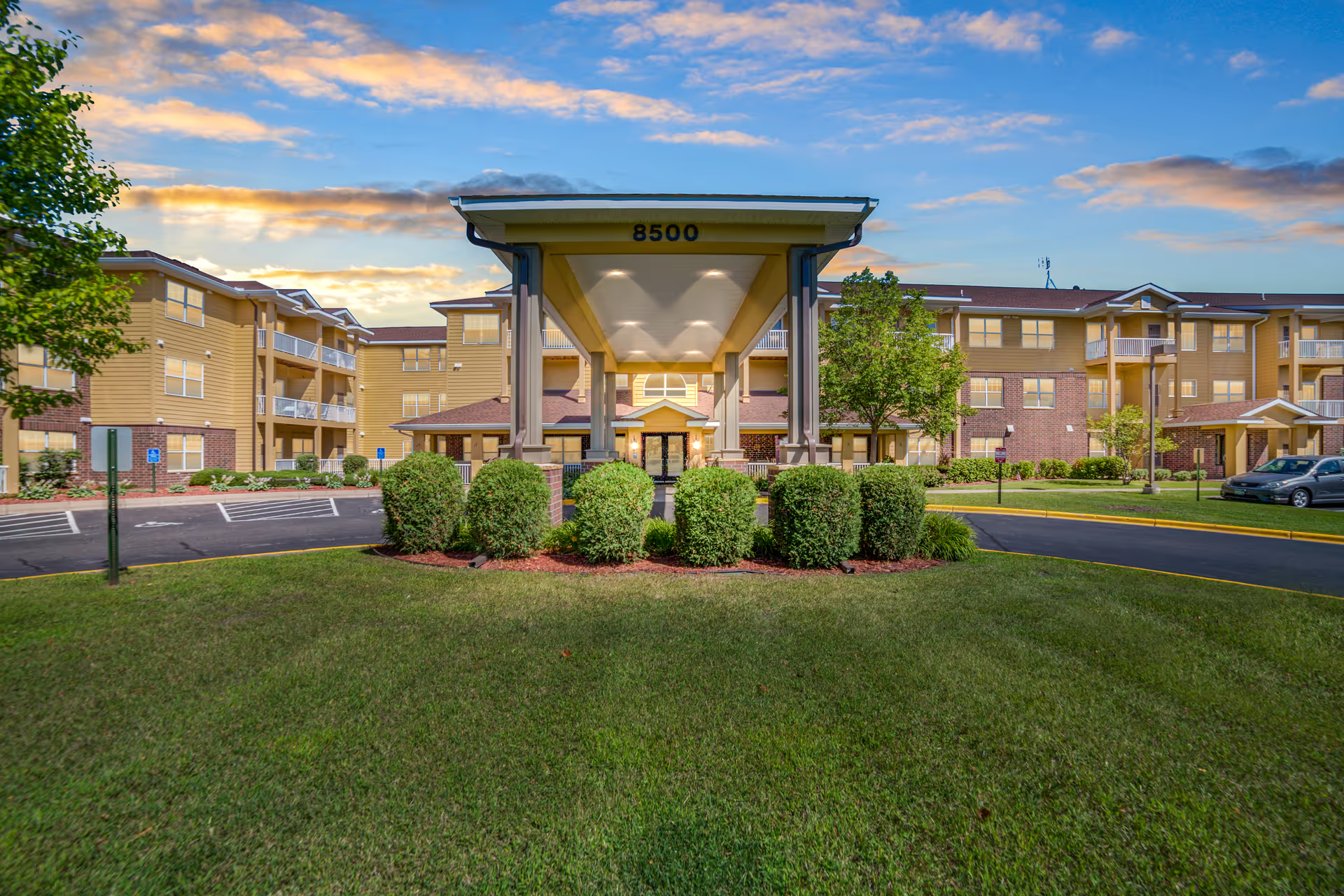
Reviews of Epiphany Assisted Living are markedly polarized: many families praise direct-care staff, programming, and the facility’s physical environment, while a significant number express operational and clinical concerns. The facility’s strengths include a caring front-line team that many reviewers describe as respectful, attentive, and willing to provide individualized attention. Memory-care units and one-on-one support receive positive comments from some families, and on-site clinical services such as physical and occupational therapy are noted as effective for short-term rehabilitation. The campus, grounds, and communal amenities—outdoor courtyards, a gazebo by a pond, an on-site chapel, libraries, and activity spaces—are consistently cited as pleasant and supportive of resident well-being. Dining is frequently described as home-style with variety and healthy snack options, though opinions on meal quality vary.
At the same time, reviewers describe persistent operational problems that have affected care consistency. Staffing instability and high turnover recur as central issues, producing gaps in coverage (including nighttime and third-floor staffing concerns) and uneven caregiver skill mix. Several accounts point to deficiencies in dementia-care protocols and staff training specific to cognitive impairment; these gaps manifest as uneven supervision and inconsistent implementation of care plans. Families report communication shortfalls between clinical staff and relatives, which compounds frustration when care concerns arise. Sanitation and housekeeping inconsistencies, including odor concerns in certain areas, are mentioned alongside broader cleanliness observations.
Management and governance are a frequent source of concern. Reviews indicate leadership instability, absence of a consistently licensed director, and perceived governance problems at the board level; reviewers also reference licensing lapses and, in a few cases, allegations of financial misconduct. These governance and regulatory issues are described as contributing to inconsistent policy enforcement, staff discipline practices, and variability in clinical oversight. Where leadership and nurses are described as accessible and communicative, reviewers note better outcomes; where leadership is perceived as unqualified or absent, families report declines in care quality.
Activity programming and social engagement are generally viewed positively. Monthly calendars, outings, puzzles, crafts, and opportunities for worship are highlighted as valuable to resident quality of life. The physical environment—private apartments, communal dining rooms, and large campus layout—is attractive to many families and supports visitation. However, reviewers caution that the resident experience appears unit-dependent: some wings are described as welcoming and well-managed while others are characterized by staffing shortages and cleanliness issues.
For prospective residents and families, the pattern is clear: the facility offers many tangible strengths—compassionate caregivers, engaging programs, therapy services, and pleasant grounds—but these are counterbalanced by operational and leadership weaknesses that can materially affect daily care consistency. If considering Epiphany Assisted Living, families should ask for current staffing ratios (including night and memory-care coverage), evidence of staff training in dementia care, the status of licensure and any recent regulatory actions, and written examples of family communication protocols. A focused, on-site visit that reviews specific units, observes meal service and activities, and verifies clinical leadership presence will help determine whether the facility’s positive attributes are consistently delivered in the desired unit and at the needed level of care.