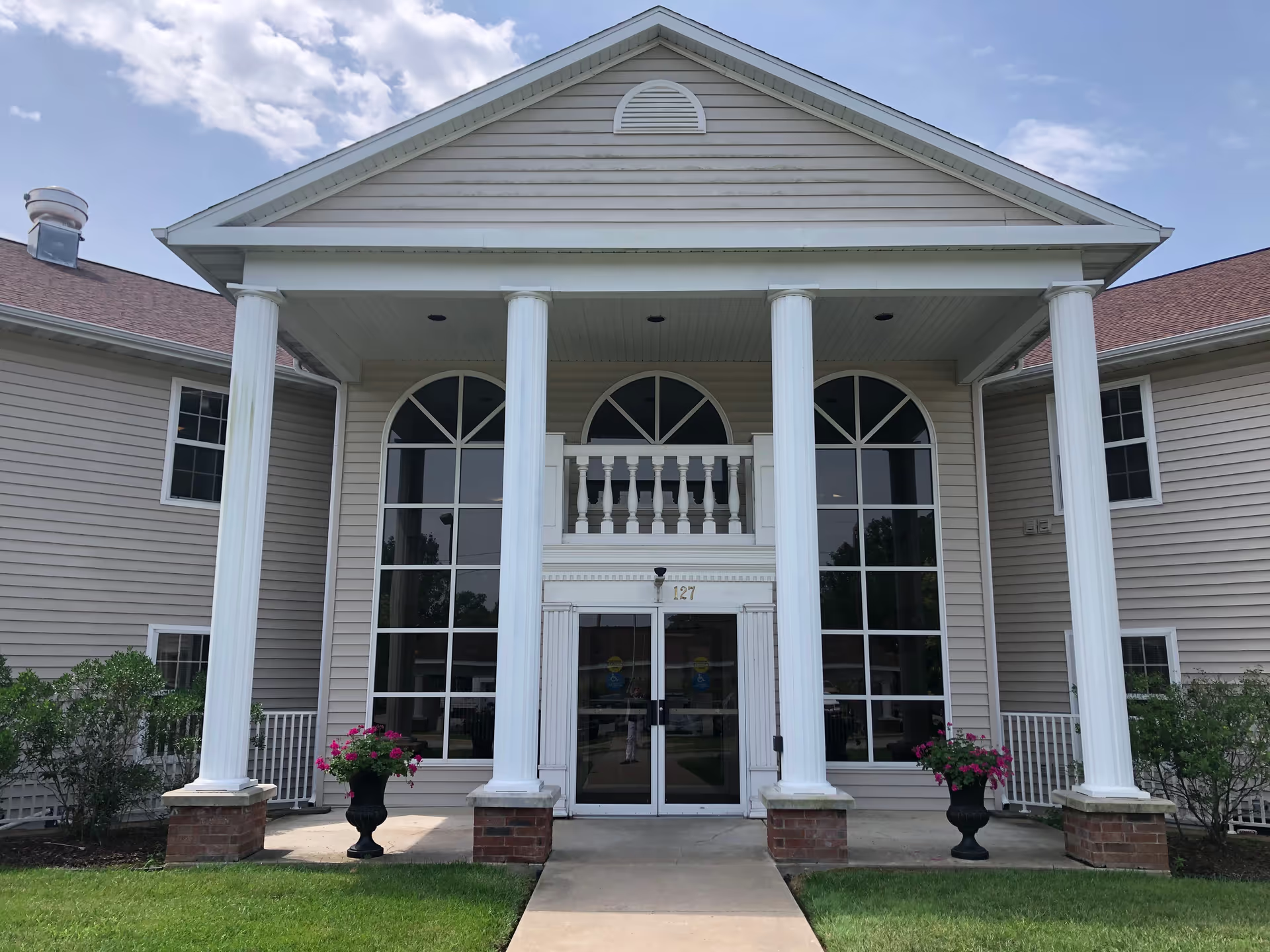
Reviewer feedback for Heart of the Ozarks Health Center is mixed and suggests substantial variability in resident experience. Positive comments focus on front-line caregivers and some members of the rehabilitation team, who are described as friendly, attentive, and encouraging around discharge goals. Several family members also described pleasant interactions with nurses and caregivers and appreciated staff members who created a supportive atmosphere for short stays or transitions home.
At the same time, a number of operational and clinical concerns recur across reviews. Safety and clinical-monitoring issues are described, including insufficient oversight of oxygen and other vital signs and weaknesses in transfer and fall-prevention practices. These accounts point to gaps in staff competency or training and create a perception of increased patient-safety risk. Physician availability and responsiveness are also cited as problematic, which exacerbates clinical continuity concerns.
Staffing and communication patterns appear uneven. Reviewers report variable responsiveness — particularly on night shifts — and problems with unanswered phones and delays in attending to residents. There are also multiple references to problematic staff conduct and communication tone; while many individual caregivers receive praise, the pattern suggests inconsistent standards for behavior and family communication. Leadership and incident-management processes are questioned in several accounts, with suggestions that administration did not consistently address issues when they arose.
Dining and rehabilitative services are areas of mixed performance. Several reviewers reported poor food quality and instances of missed or delayed meals, indicating unreliable meal-service continuity. Rehabilitation receives both praise (supportive therapists, motivating discharge goals) and criticism (rehab goals misrepresented or not delivered as expected), suggesting variability between the therapy plan presented and the care actually provided.
Facility-level concerns include sanitation and privacy. Reviewers described cleanliness and sanitation issues in bathrooms and some common areas, and at least one mention raised privacy and quarantine-protocol lapses. There is also an allegation of discriminatory treatment related to religious practice, which underscores the importance of clear equity and access policies.
In summary, prospective residents and families should weigh the facility’s strengths — notably several caring and motivated direct-care staff and positive therapy interactions — against recurring operational weaknesses: inconsistent clinical oversight, uneven staffing and responsiveness (especially at night), food-service reliability problems, sanitation and privacy concerns, and perceived lapses in management response. These patterns suggest that experiences at this facility may vary significantly depending on unit, shift, or individual staff assignment; a recommended next step for families is to visit in person, ask about staffing ratios and night coverage, review recent inspection or quality reports, and clarify the rehabilitation plan and meal-service practices before admission.