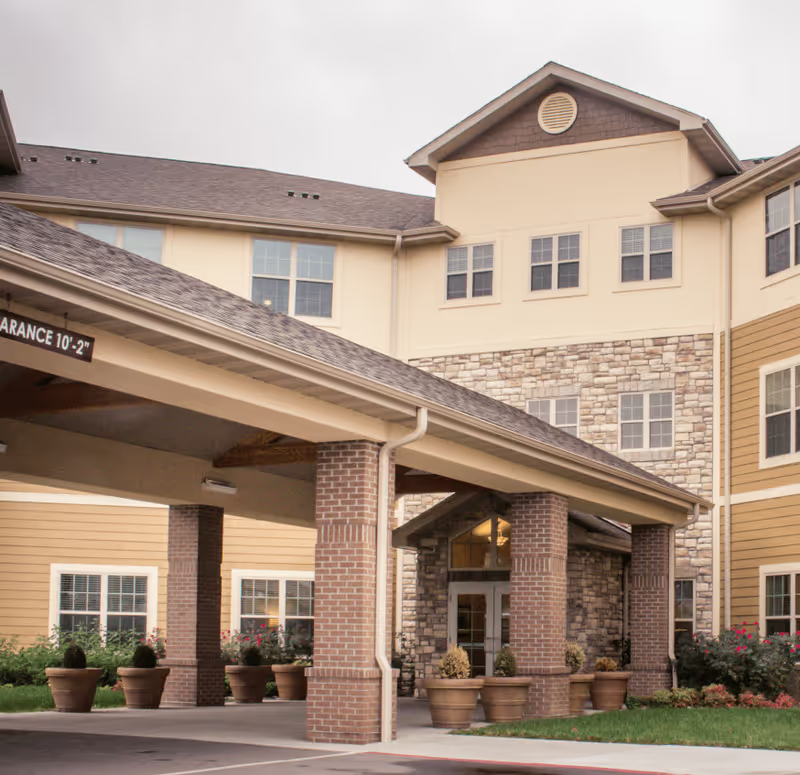
Reviews of Bristol Manor present a mixed picture, with clear patterns of both operational strengths and recurring weaknesses. Several families and residents praised direct-care staff and certain administrative members for being responsive and supportive, and some visitors highlighted clean common areas, a professional admissions experience, and a community-style atmosphere. At the same time, a number of patterns emerge that warrant careful consideration for prospective residents and their families.
Care quality and staffing appear uneven. Positive interactions with individual caregivers are noted, but there are frequent comments about chronic understaffing, high staff turnover, and gaps in training or experience. Those operational factors are linked to delays in routine care tasks (housekeeping, laundry, maintenance) and to variability in how staff communicate with residents and families. Reviewers expressed concerns about staff conduct and tonal communication in some situations, and some families indicated they had to intervene to ensure expected levels of personal care and room upkeep.
Dining and nutrition are notable areas of concern. Multiple accounts describe meals that are limited in variety, with an emphasis on inexpensive, starch-heavy options and insufficient vegetable and fruit choices. Diabetic-appropriate or individualized meal options were described as limited. At the same time, other reviewers described satisfactory meals and occasional positive dining experiences, which suggests inconsistency in menu planning and meal preparation rather than a uniform standard.
Activity programming and social engagement are described as minimal in several accounts. While there are occasional events (for example, bingo is mentioned), many reviewers stated that organized activities are sparse and that communal spaces or programmed offerings are underused. Some families also described restrictions on access to parts of the facility and policies that felt inconsistently applied; these governance issues contributed to perceptions of limited resident voice and transparency.
Facilities, housekeeping, and maintenance outcomes are variable. Some visitors found public areas well maintained, while others described sanitation and cleanliness issues in bathrooms and resident rooms and slow turnaround on maintenance requests. Those operational inconsistencies often intersect with the staffing pattern and with reported management instability.
Management and governance are recurring focal points. Reviewers repeatedly mentioned leadership turnover, inconsistent enforcement of rules, and limited responsiveness from regional or corporate representatives when problems are raised. A number of families expressed concerns about cost/value alignment, questioning whether the level of service matched the facility's fees. Conversely, several reviewers praised specific administrative staff and the admissions process, indicating that management quality may depend heavily on who is in place at a given time.
Taken together, the pattern is one of a facility that can provide attentive, compassionate care under favorable staffing and leadership conditions, but one whose performance appears susceptible to variation when staffing levels, management continuity, or program oversight decline. Prospective residents and families would be well served to assess current staffing ratios, recent turnover, dining menus (including accommodations for special diets), activity schedules, cleaning and maintenance protocols, and the facility’s process for handling family concerns before making a placement decision.