Reviews portray Fairmont Senior Living on Clayton as a facility with many hospitality and programming strengths alongside notable operational variability. Strengths consistently mentioned include a caring, personable frontline staff and a restaurant-style dining program led by an on-site chef who will accommodate special meals. Families and tours frequently highlight the active calendar — baking, arts and crafts, outings, religious services and exercise classes — and the presence of on-site rehabilitation (physical and occupational therapy), salon services, and a continuum of care that includes memory care and hospice.
Care quality is described in mixed terms. Numerous reviewers praise attentive caregivers, personalized relationships between staff and residents, timely responses to routine needs, and good clinical oversight in many cases. At the same time, a pattern of inconsistent staffing levels, weekend nursing coverage gaps, and medication-administration continuity problems emerged across reviews. These operational weaknesses manifest as delays in assistance, longer waits during dining, and variable nurse availability; they raise concerns about the facility’s ability to reliably meet higher-acuity needs. A small number of reviewers raised serious allegations about safety and end-of-life care and recounted significant breakdowns in clinical oversight and communication — prospective families should ask the provider about any investigations or regulatory actions and request recent staffing and incident records.
Dining and activities are clear relative strengths. The dining program is frequently described as restaurant-like, with fresh baking and chef-prepared options; several reviewers reported excellent meals and social dining experiences. However, others noted inconsistent meal timing, occasional delivery delays, and variability in quality on some days. The activity program is broad and well-supported, with both on-site and community outings, and reviewers commonly cited meaningful engagement for residents, especially in memory-care programming.
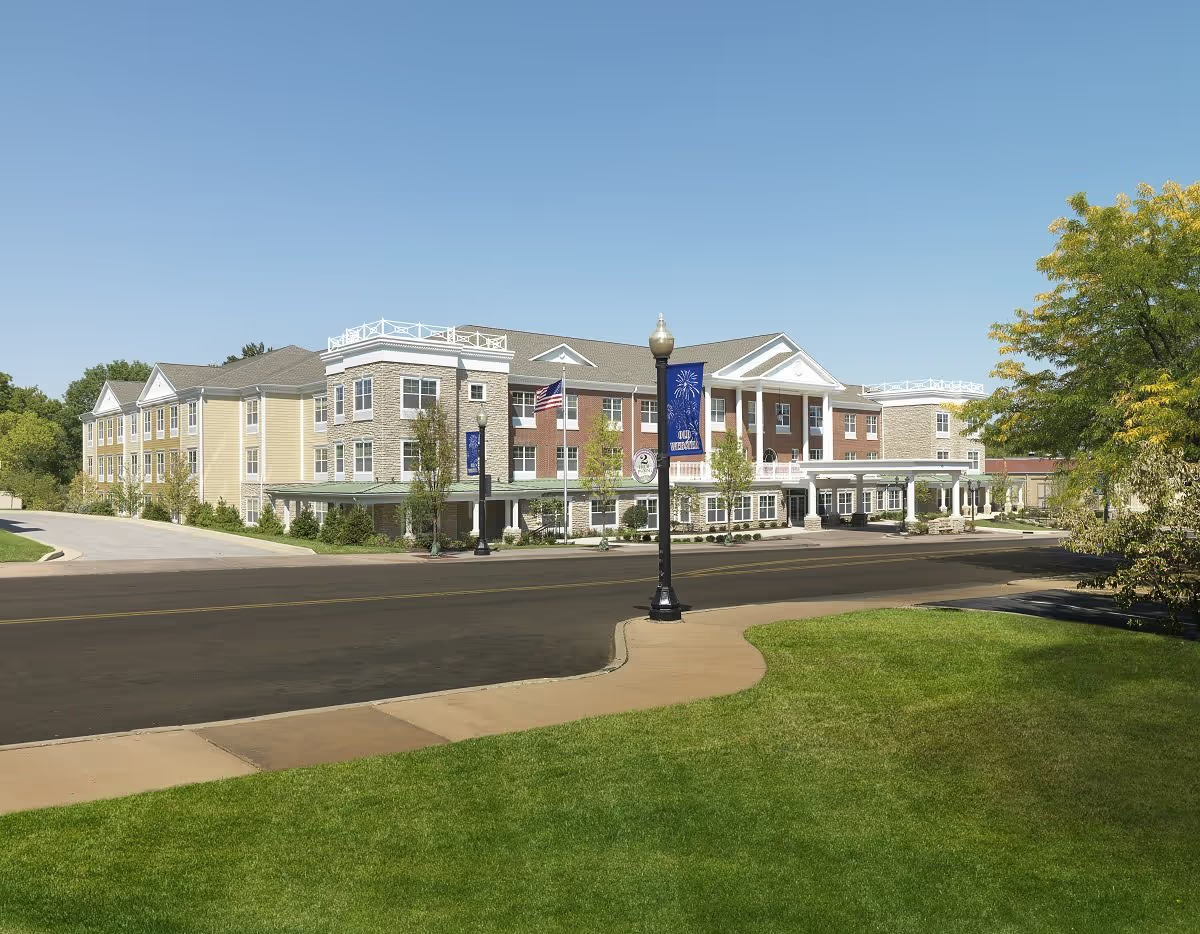
Facility and environment descriptions are largely positive: spacious rooms (including bay windows), accessible showers, pet-friendly areas, and generally well-kept common spaces. Some reviews, however, point to uneven housekeeping and maintenance — stained carpeting, delayed repairs, and localized sanitation concerns — that coexist with ongoing remodeling efforts. These maintenance variances appear to be operational rather than structural, but they affect perceived value for families paying premium rates.
Management and administration attract mixed feedback. Many families find leadership accessible, empathetic, and proactive; others describe inconsistent communication, billing or paperwork friction, and administrative errors. Pricing and transparency around memory-care cost increases were a recurring concern. Overall, the dominant themes are strong hospitality, engaging programming, and a generally homelike atmosphere, tempered by operational variability in staffing, clinical coverage, housekeeping, and administrative consistency. Prospective residents and families should weigh the facility’s programmatic strengths against these operational risks, verify current staffing and clinical protocols, and request documentation of recent incident resolution and regulatory status during their decision process.