Reviews present a highly mixed picture of Athene Nursing and Rehabilitation, with clear strengths alongside substantive operational weaknesses. Many families and visitors highlight compassionate, person-centered interactions from bedside staff, med techs, therapy teams, and social workers; rehabilitation outcomes, therapy availability, and active recreation programming are described positively in multiple accounts. The facility also offers upgraded private-pay accommodations, on-site therapy and transportation for medical appointments, and some effective administrative processes (admissions/check-in, select unit managers), which are meaningful assets for prospective residents who prioritize rehabilitation services and enriched activities.
At the same time, a consistent theme across reviews is variability in daily care and operational consistency. Staffing instability and high turnover are frequently cited and are linked to delayed responses to call buttons, inconsistent assistance with personal-care tasks, and variable supervision. Several accounts indicate gaps in clinical coordination — for example, missed or delayed follow-up appointments, medication-administration problems, and inconsistent documentation — which families experienced as lapses in continuity of care. There are specific concerns about nutrition and skin/pressure-injury management raised in some narratives; these have prompted heightened family anxiety and requests for administrative remedies.
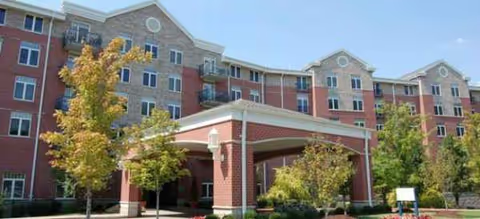
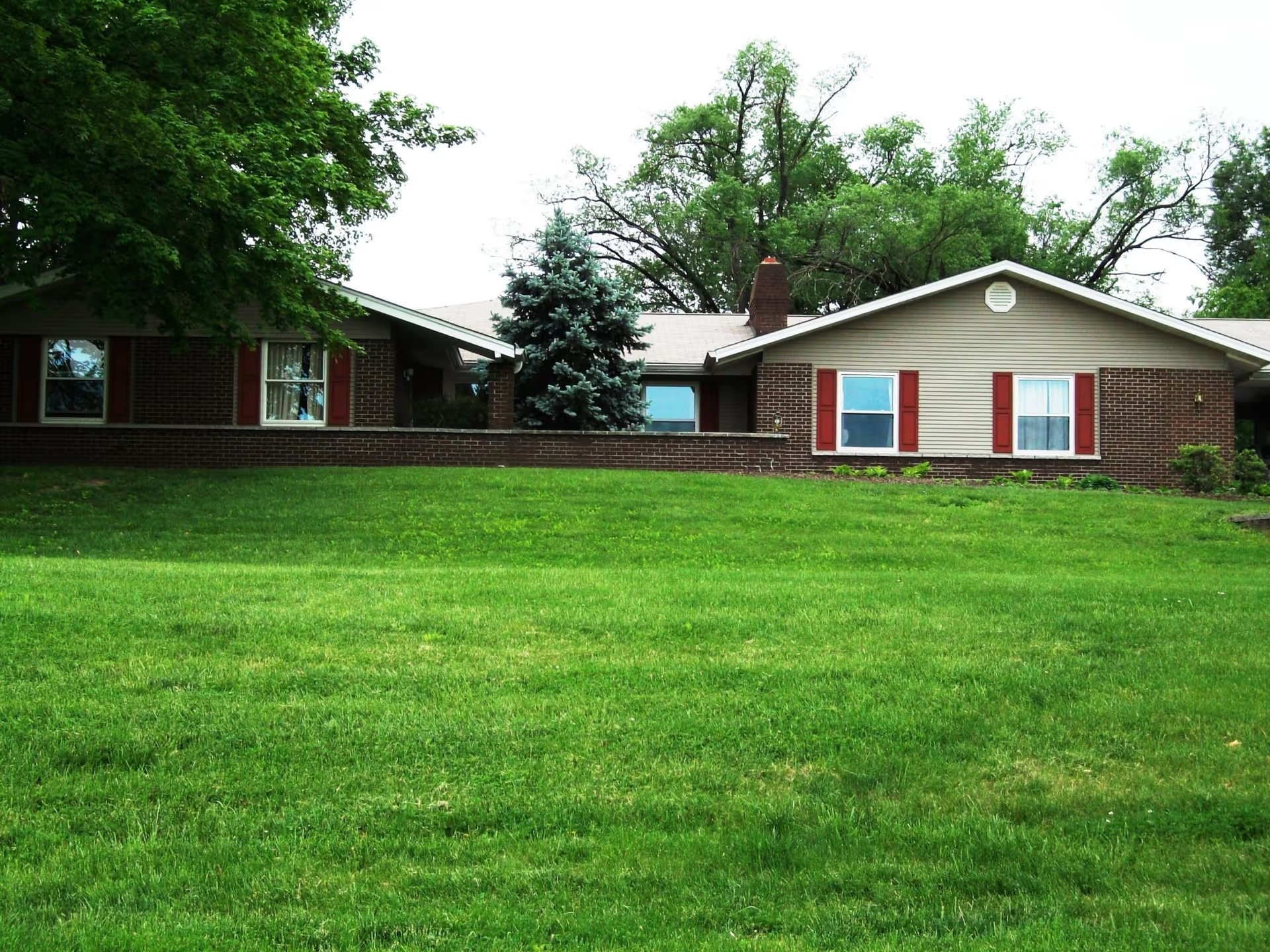
Dining and housekeeping portray a split experience. Some reviewers praise the food, flexibility to order meals, and attentive dining support for residents who need help; others describe uneven food quality, weight-loss concerns, and sanitation issues. Cleanliness and odor concerns are reported in particular units, and inspectors’ or families’ comments about pest-control and infection-control practices have contributed to perceptions of inconsistent environmental standards. Private-pay areas are frequently described as renovated and more comfortable, while public-pay or Medicaid-designated wings are characterized as older and less well maintained, reflecting a perceived disparity in accommodations.
Management and communication are recurrent focal points. Positive notes about responsive managers and staff are balanced by multiple descriptions of leadership turnover, slow complaint resolution, and difficulty reaching billing or administrative personnel. Families describe variable notification practices following clinical events and inconsistent engagement when escalating concerns. A small number of serious allegations — including mishandling of personal property and concerns raised after a resident death — have been made; these items increase scrutiny and underscore the importance of transparent incident investigation and improved family communication.
For prospective residents and families, the pattern is one of potential: the facility offers strong therapy, engaged social-work support, and an active activities program, with some well-maintained private-pay areas. However, visitors should carefully evaluate current staffing ratios, cleanliness and infection-control measures on specific units, meal plans and monitoring for weight changes, and the facility’s processes for clinical follow-up and family notification. When considering placement, ask for recent staffing metrics, quality-improvement documentation, the facility’s plan for addressing cited deficiencies, and examples of how management resolves family concerns and tracks personal property. A direct, unit-level tour accompanied by a review of recent inspection outcomes and an explicit conversation about how the facility protects residents with higher nursing needs will help clarify whether the facility’s strengths align with an individual’s care priorities.