Complete Care at Barn Hill elicits a mixture of strong praise and substantive operational concerns. Many families and residents highlight the facility's rehabilitation strengths and the positive impact of physical and occupational therapy on recovery. Rehabilitation staff, activity/recreation personnel, and numerous nursing aides are frequently described as caring, engaged, and effective in helping residents regain function. Social work and placement assistance are also cited as helpful, and the facility maintains options for family contact such as outdoor visits and video calls.
Clinical quality assessments are mixed. On the positive side, several reviewers described attentive nursing, good medication management in many cases, and coordinated therapy plans that supported discharge home. However, there are repeated operational concerns around medication administration controls (including enteral/feeding-tube handling and missed or delayed doses), wound- and drain-care consistency, and limited on-site physician availability. These issues have been associated with serious family concerns in a minority of accounts, including questions about end-of-life care and clinical follow-up.
Staffing and conduct vary across reviews. Understaffing, especially on night shifts and in certain units, is a recurring theme and appears to affect timeliness of assistance and routine care. At the same time, multiple reviewers singled out specific nurses, aides, and administrators for exemplary, compassionate care; this indicates variability in staff performance and unit-level culture. Families described both respectful, communicative staff and instances of poor communication tone or lack of responsiveness.
Dining and activities show a clear contrast: the activity program and recreation leadership receive consistent praise for engagement and resident-centered programming, while meal service and food quality draw frequent criticism. Complaints center on food temperature, flavor, timing of service, and limited options in some units. These dining issues are operational in nature and recur enough to be considered a pattern rather than isolated feedback.
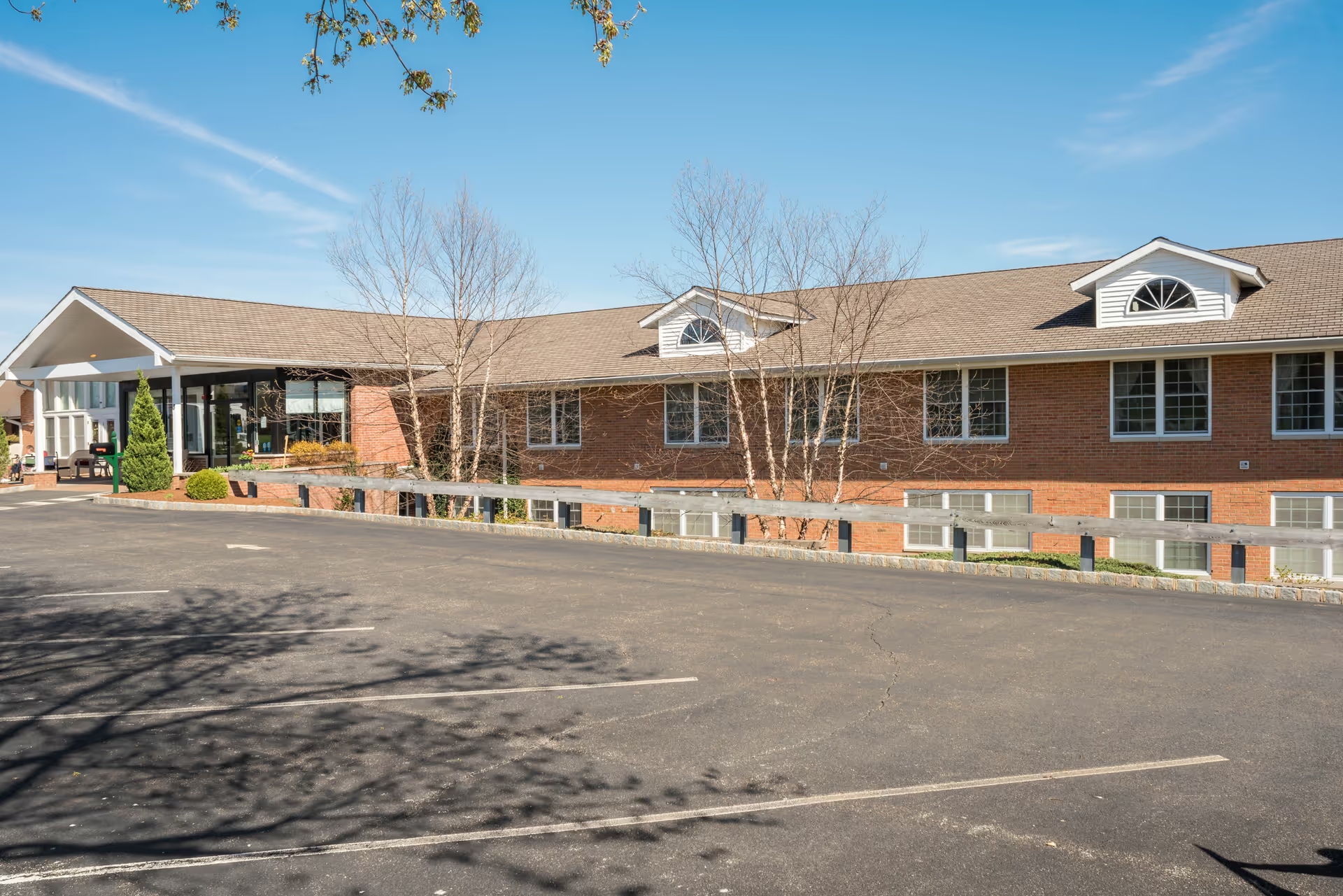
Facility condition and unit-level differences are notable. Some areas—particularly newer or recently updated units—are described as clean, comfortable, and well maintained. Other units are characterized by dated furnishings, constrained dining/recreation space, and sanitation or odor concerns. Memory-care programming is present and secured, but reviewers describe uneven implementation of dementia-care practices between units.
Management and administrative performance present a mixed picture. Several reviewers commend proactive administrators and specific staff members who assist with billing, insurance coordination, and family communication. Conversely, others describe difficulties obtaining timely callbacks, inconsistent billing resolution, and variability in responsiveness from social work or nursing leadership. These patterns suggest that administrative processes are effective in some instances but inconsistent overall.
For prospective residents and families: the facility demonstrates clear strengths in rehabilitation, activity programming, and in many cases compassionate caregiving. At the same time, persistent operational weaknesses—staffing variability, medication and clinical oversight gaps, inconsistent food service, and uneven unit maintenance—warrant careful inquiry. Recommended topics for an in-person tour and discussion include staffing ratios by shift and unit, medication-administration protocols (including enteral medication handling), physician coverage and clinical escalation procedures, unit-by-unit condition and housekeeping practices, dementia-care routines, and meal-service menus and schedules. Asking for recent survey results and examples of how the facility addressed past issues may help clarify how consistently the positive aspects are applied across the campus.