The reviews for Echelon Care and Rehab Center present a polarized picture: many families and patients describe strong, compassionate caregiving and highly effective short-term rehabilitation, while others raise persistent operational and environmental concerns. Positive accounts consistently highlight attentive nurses, aides, and therapists who supported rapid functional improvement and safe discharge home. Several reviewers specifically praised the physical-therapy teams for measurable gains, and many noted that social workers and admission staff provided helpful coordination and frequent status updates. The facility’s Asian/Cantonese-language unit and culturally tailored meal options are repeatedly cited as strengths for patients needing native-language communication and familiar cuisine.
Care quality exhibits a notable split. Numerous reports describe careful medication administration, daily observation, timely problem-solving, and thorough rehabilitation plans that led to improved mobility and independence. At the same time, there are recurring descriptions of lapses in clinical processes: missed or delayed medications, inconsistent wound and incontinence care, and delayed responses to call buttons. A few accounts reference serious clinical outcomes and concerns following a resident’s death; these are presented as isolated but serious issues that warrant direct inquiry during any evaluation of clinical oversight and incident follow-up procedures.
Staff behavior and capacity are also mixed. Many reviewers praise individual staff members by name for kindness, professionalism, and going beyond expectations. Activity staff receive frequent positive mention for engaging programming, birthday/holiday events, and multicultural activities. Conversely, reports indicate variability by shift and unit: weekend or temporary agency aides are perceived as less reliable, and families describe instances of curt front‑desk interactions or inattentive nursing-station behavior. The pattern suggests a base of skilled, dedicated employees combined with uneven staffing coverage and inconsistent conduct standards across shifts.
Dining and nutrition show similar variability. Strengths include willingness to provide culturally specific meals and to accommodate dietary requests. Weaknesses include inconsistent meal temperature/quality, occasional diet non-adherence for restricted diets, and uneven meal assistance for residents who require feeding support. Prospective families should clarify dietary-management protocols and special-diet safeguards during intake.
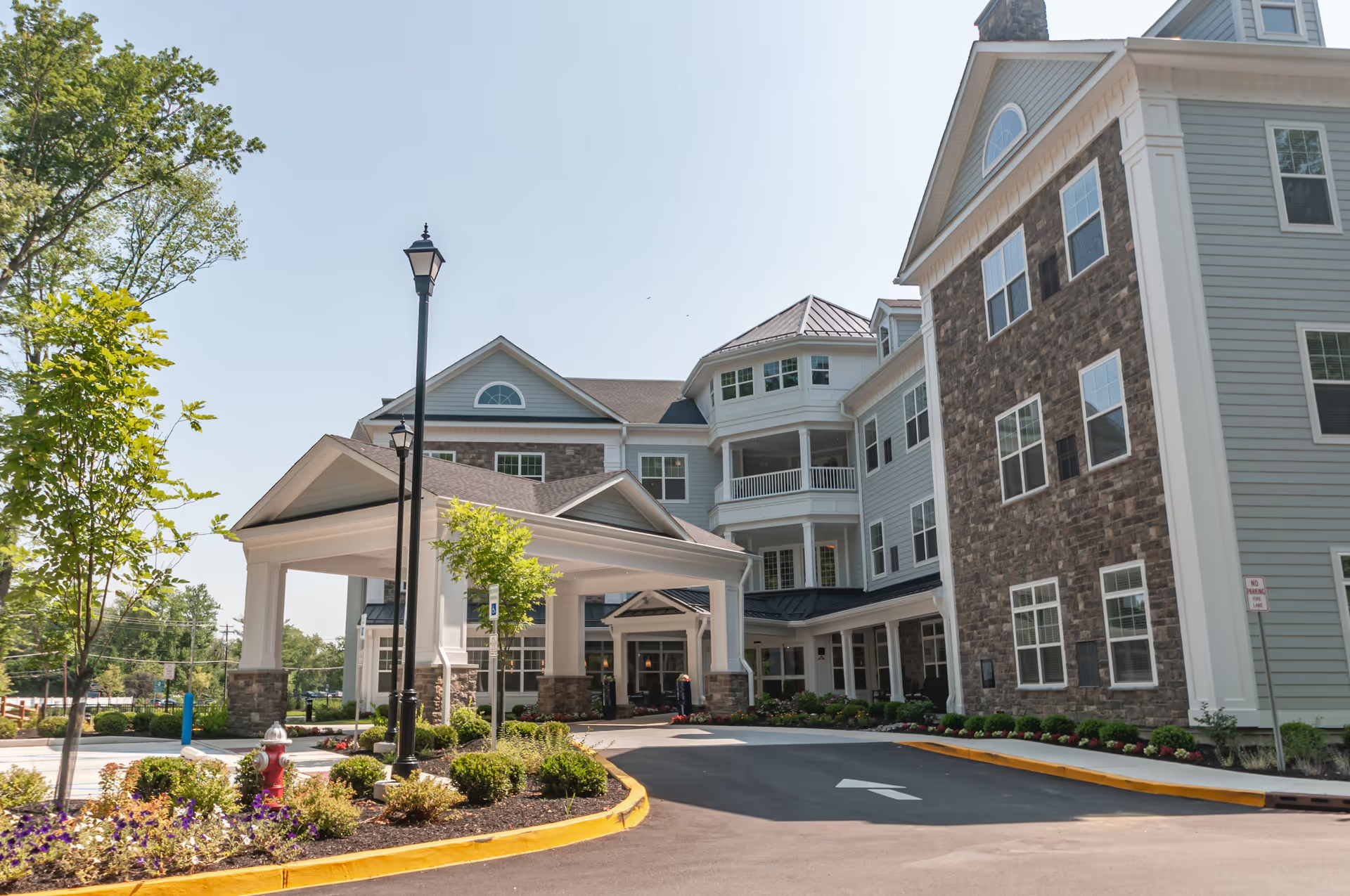
Facility condition and safety were frequent concerns. Reviewers describe an older building with visible wear: peeling paint, small and cramped rooms, limited bathroom space, and maintenance issues such as nonfunctional elevators, exposed cords, or temporary repair measures. These infrastructure problems have direct consequences for accessibility, timeliness of care (e.g., elevator waits), and perceived safety. Sanitation concerns and odor issues in some areas were also reported and are an important operational area to evaluate on-site.
Management and communication show both strengths and weaknesses. Several families commended administrators for proactive problem-solving, improved housekeeping, and hands-on leadership that led to measurable improvements. Other accounts describe delayed or inadequate administrative follow-up, difficulty reaching clinicians or social workers, and frustration with discharge or transfer handling. This variability indicates recent or ongoing managerial turnover and pockets of improvement alongside legacy operational gaps.
Notable patterns for prospective residents and families: the facility appears to deliver strong short-term rehabilitative care and has meaningful language/cultural supports for Chinese-speaking residents. However, long-term care experiences are more variable, tied closely to staffing consistency, maintenance of the physical plant, and unit-level supervision. Before placement, families should request a tour of the specific unit, observe cleanliness and elevator reliability, ask about weekend and agency staffing ratios, review medication-management protocols, confirm diet‑restriction procedures, and meet the therapy and nursing leads. Clarify incident‑reporting practices and how the facility follows up on clinical events. These steps will help determine whether Echelon’s demonstrable strengths align with the needs and risk profile of an individual resident.