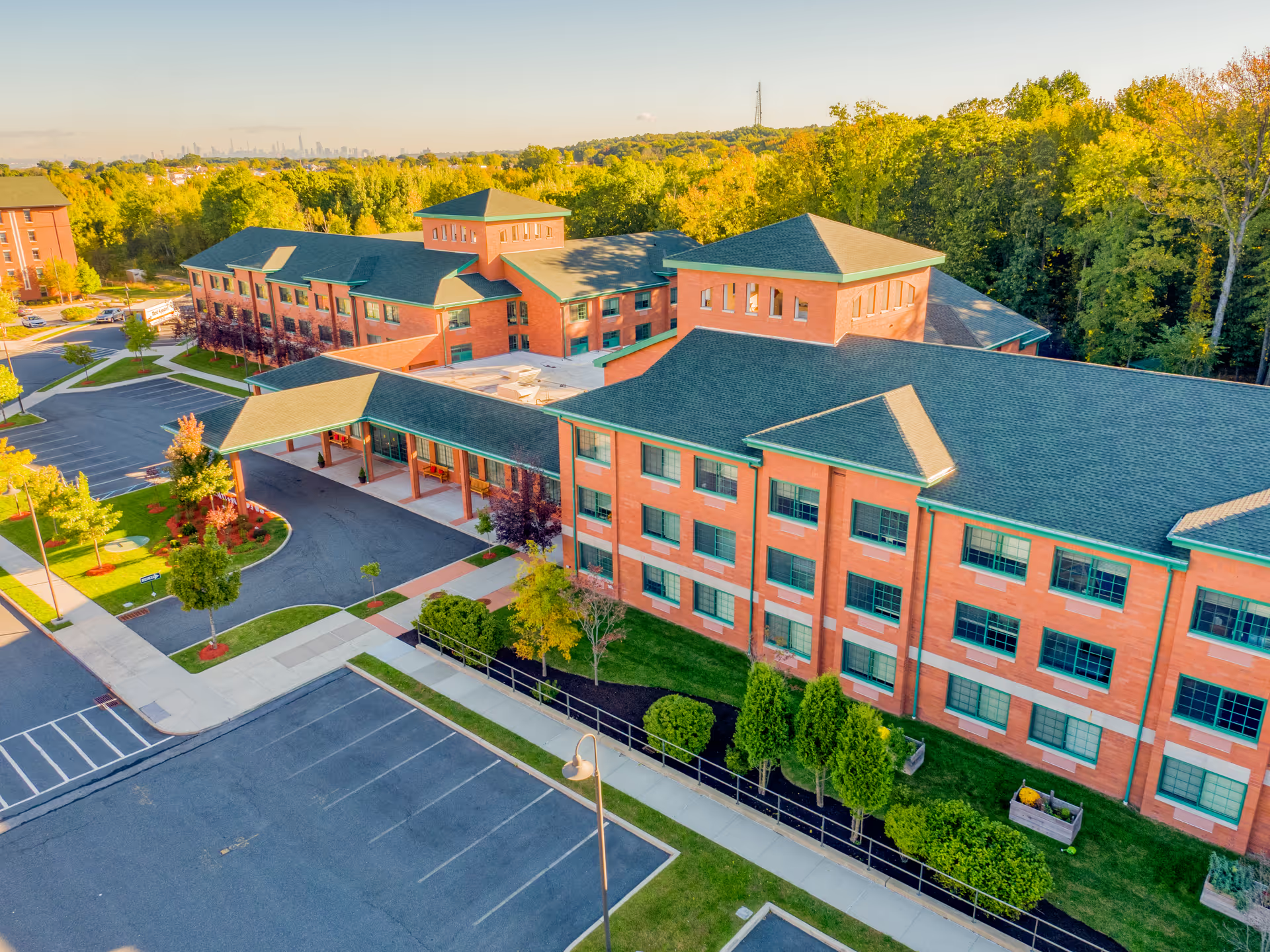
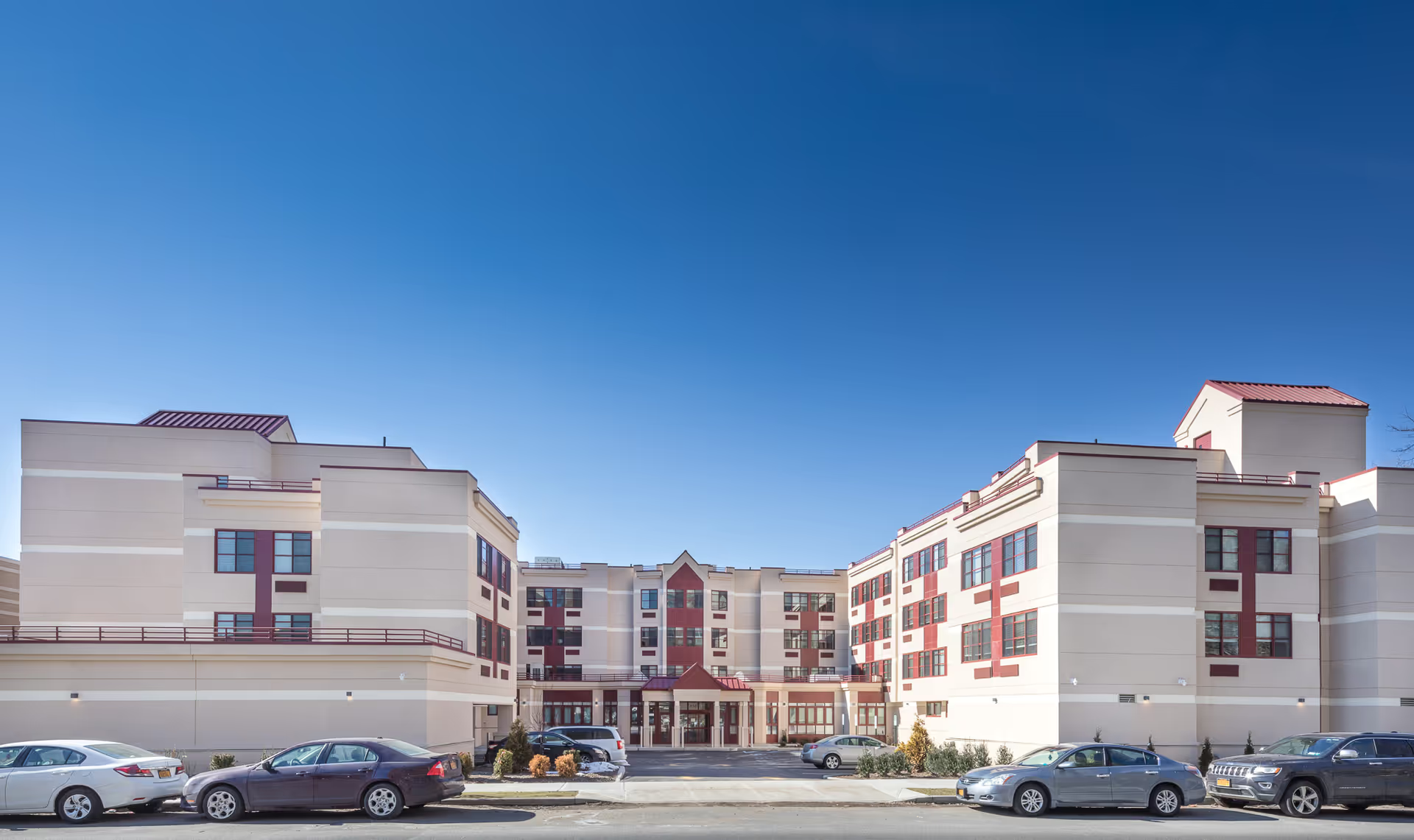
Saints Joachim & Anne presents a polarized profile: reviewers consistently praise its rehabilitation services, activity programming, and many front-facing staff, while a substantial set of concerns centers on clinical oversight, staffing consistency, and operational controls. The facility's therapy program (PT/OT/speech and memory services) is repeatedly described as skilled, patient-focused, and effective; several families credited the rehab team and director with measurable functional improvements. The campus benefits from recent renovations, bright common areas, a courtyard and oceanfront location, an on-site chapel, and an active recreation calendar that includes social events and educational sessions.
Care quality descriptions vary by reviewer. Positive accounts emphasize attentive aides, compassionate nursing interactions, useful social-work support, and a recovery-oriented environment. Conversely, many reviews identify inconsistent nursing performance and limited physician availability as ongoing issues. These accounts point to gaps in clinical supervision, uneven monitoring of medically fragile residents, and concerns about the facility's ability to escalate care promptly when clinical deterioration occurs. There are also repeated references to weaknesses in medication-administration controls and documentation practices that families should evaluate during a tour.
Staff and management impressions are mixed. Numerous reviewers commend individual staff members, admissions personnel, and certain administrators for responsiveness, advocacy, and clear communication. At the same time, recurring themes include variable staff conduct and tone, periods of understaffing, and perceived defensive or slow responses to complaints. Several reviews describe unsatisfactory outcomes from internal incident investigations and a perceived lack of consistent disciplinary follow-through. There are also allegations concerning staff theft and misconduct; these are serious claims that prospective families should explicitly ask management about and verify through oversight documentation.
Dining and housekeeping receive both praise and criticism. Multiple accounts describe well-presented, tasty meals and attentive dining service, while others note inconsistent food quality and lapses in housekeeping or sanitation in specific areas. Environmental and maintenance issues appear intermittently in reviews (for example, elevator or repair delays and concerns about ventilation), and parking/public-transit access is noted as limited given the beachfront location.
Activities and family experience are generally strong highlights: active programming, a friendly admissions process, and welcoming visitor procedures are commonly reported. The facility's faith-based resources and community atmosphere are frequently cited as positive contributors to residents' quality of life. That said, variability across units and shifts seems pronounced in the reviews—positive experiences on some floors coexist with operational and clinical concerns on others.
Notable patterns and guidance: the review set suggests operational inconsistency rather than a uniformly positive or negative picture. Strengths are concentrated in rehabilitation, recreation, and several compassionate staff members; persistent weaknesses relate to clinical oversight, staffing levels, communication with families, and control systems (medication, investigations, asset security). Prospective residents and families should tour the facility, ask for current staffing ratios, review recent inspection or investigation summaries, inquire about incident-reporting and disciplinary procedures, clarify admissions/contracts up front, and request to meet therapy and clinical leadership. These steps will help determine whether the facility’s strong rehabilitation and activity offerings align with the level of consistent clinical oversight and operational reliability you require.