Brookside Multicare presents a mixed overall picture: many reviewers praised the facility’s rehabilitation-oriented services, while others raised substantive operational concerns that affect long-term and some short‑term stays. The facility's strengths cluster around clinical rehabilitation, bedside caregiving by many nurses and nursing assistants, and certain administrative roles (admissions, concierge, and social work) that families found helpful. Multiple accounts describe strong, effective physical, occupational and speech therapy programs, capable wound care, an extensive therapy gym, and good short‑term recovery outcomes for patients who require concentrated rehab.
Care quality shows variability. Several families described compassionate, professional nursing and aide interactions and timely escalation for acute needs in some instances; conversely, a number of accounts indicate delays in responding to call bells, missed medication timings, and inconsistent monitoring of deteriorating conditions. There is a clear pattern of uneven staff performance: while some RNs, therapists and aides were singled out as excellent, other shifts and units—particularly day shifts, weekends, or long‑term wings—were characterized as understaffed or slow to respond. Reviewers also reported concerns about incontinence-care delays and hygiene-management gaps, which appear to be concentrated in older units and during lower‑staffed periods.
Dining and daily living experiences were similarly inconsistent. Many patients and families described adequate or better-than-expected meals and helpful dietary staff; others reported cold meals, limited menu variety at times, and unreliable hot-plate service. Activities and recreation were often cited as engaging and beneficial, with positive feedback on the recreation department and social programming. The rehabilitation gym and therapy spaces are repeatedly highlighted as well-equipped and conducive to recovery.
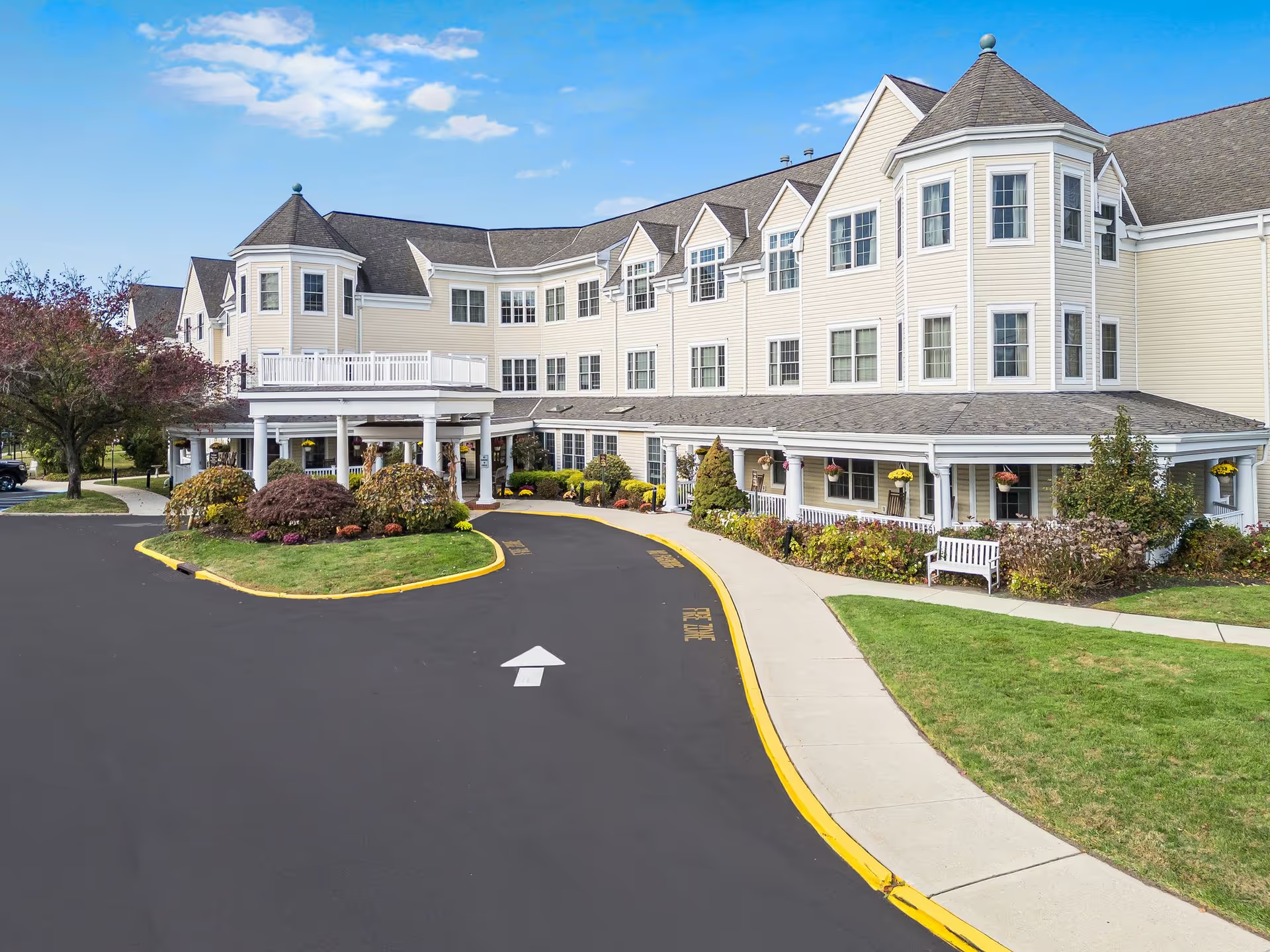
Facility condition is uneven between wings. The short-term and private-pay areas are frequently described as recently renovated, bright, and well maintained; in contrast, the older long-term units were described as needing maintenance, with worn finishes, outdated equipment, and concerns about odors and sanitation in some common areas. Reviewers raised pest-control concerns and general maintenance deficits (including nonfunctional elevators and cluttered emergency routes) that suggest infrastructure attention is needed in parts of the campus. Privacy is also a recurring issue where multibed rooms are used, and roommate management was noted as a point of dissatisfaction.
Management and communication present recurring themes. Positive accounts point to attentive admissions staff and helpful social workers who facilitate transitions; negative accounts emphasize weak administrative follow-through, poor family communication about clinical changes, and slow responses to formal complaints. There are isolated, severe allegations—including concerns about resident-to-resident theft and breakdowns in clinical incident response—that merit investigation by families and regulators. Infection-control and clinical monitoring practices were called into question in some reports, including delayed diagnostic communication and outbreak-related problems.
Overall recommendation for prospective residents and families is to weigh Brookside’s strong rehabilitation capabilities and several highly regarded clinical staff against the facility’s operational inconsistencies. For short-term, therapy-focused stays the facility’s renovated wings, therapy resources, and some standout staff often deliver positive outcomes. For long-term placement, families should perform targeted due diligence: tour both newer and older units, ask directly about staffing ratios by shift, inquire about medication-administration protocols and incident escalation practices, review housekeeping and pest-control procedures, and request specifics on privacy and roommate policies. Visiting unannounced and speaking with current families or the facility’s ombudsman can help clarify whether the operational weaknesses noted in some reports have been addressed.