Overall sentiment: The reviews for The Canterbury House are uniformly positive. Reviewers consistently highlight high-quality, compassionate care and strong staff performance, and they express general satisfaction and willingness to recommend the community. There are no explicit complaints or negative themes in the provided summaries; the dominant impression is of a well-run facility with engaged, professional employees and a comfortable, clean environment.
Care quality and staff behavior: Care quality is a standout theme. Words such as kindness, patience, respect, compassion, dedication, and "go above and beyond" recur across the summaries, indicating that residents and families perceive caregivers as attentive and genuinely caring. Descriptions like "top-notch staff," "caring," and "professional" suggest consistently high standards in day-to-day caregiving and interactions. The reviews also cite specific positive staff-resident interactions and general happiness and safety among residents, reinforcing the impression of strong, person-centered care.
Staff development, training, and leadership: Mentorship and training are explicitly praised. Geraldine Yancey is mentioned as an "exceptional mentor," and an "positive AIT (advanced/intern/training) experience" is reported, implying effective staff development and onboarding. This highlights organizational attention to training and leadership within the care team, which likely contributes to the consistently positive staff performance noted by reviewers.
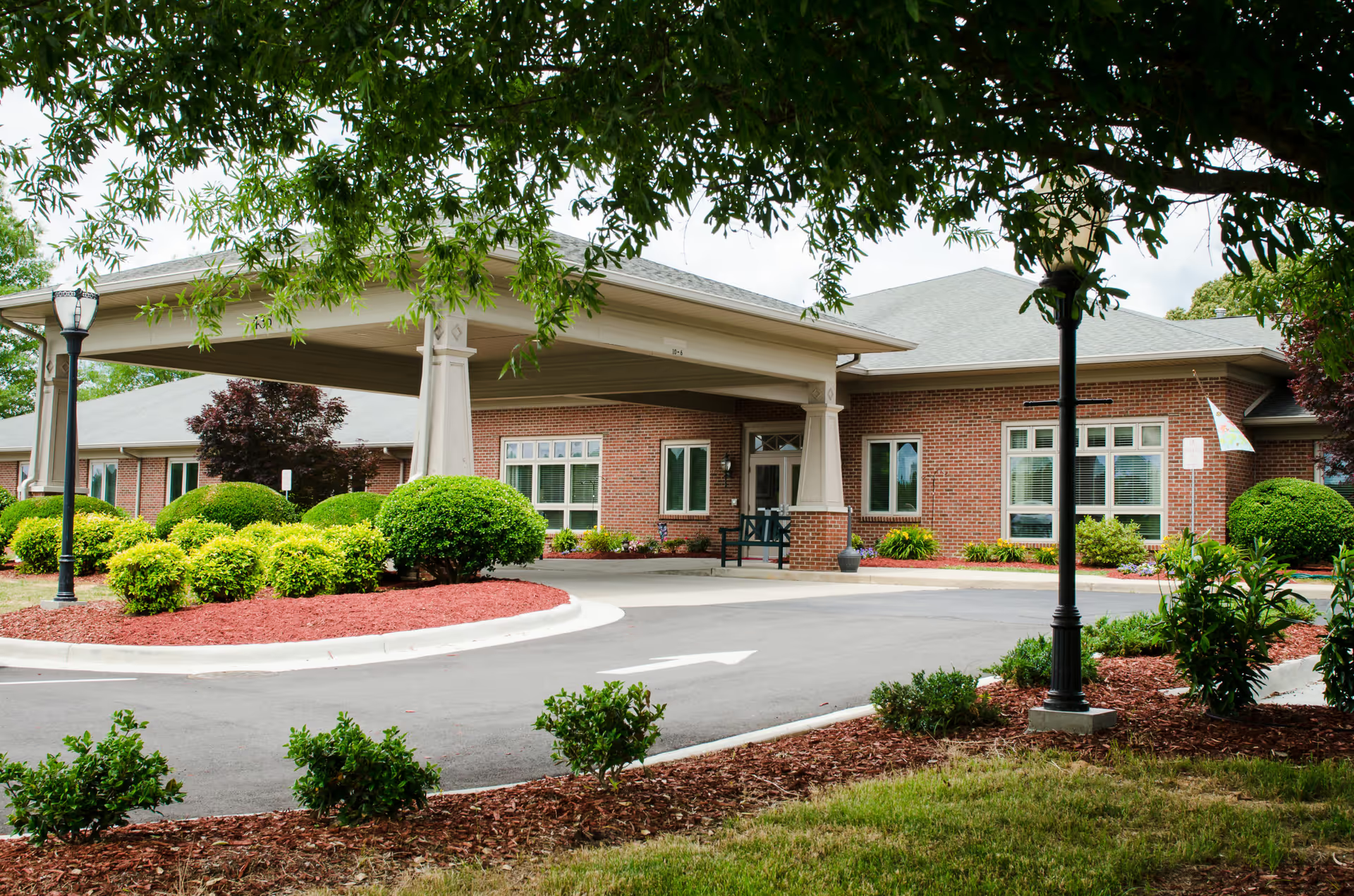
Facility, cleanliness, and safety: Facility-related comments are consistently favorable. Reviewers call the environment comfortable, safe, and clean. Cleanliness is explicitly mentioned multiple times, and the facility is described as comfortable and safe—important indicators for families evaluating living conditions and infection control. The overall facility impression aligns with the positive reports about staff and care.
Family involvement and activities: Strong family involvement and engagement is another recurring theme. Reviewers mention informative family night events and describe family interaction with staff as positive. This suggests The Canterbury House places emphasis on family communication and inclusion, offering opportunities for families to learn about care practices and to be involved in residents' lives. Such events and openness to family participation are likely important contributors to the high satisfaction reflected in the reviews.
Comparisons and recommendations: Several reviewers explicitly recommend The Canterbury House to others and indicate it is "better than other rest homes." These comparative remarks emphasize that some families view this community as exceeding the quality or standards they experienced elsewhere, which enhances the facility's perceived reputation.
Notable patterns and limitations: The dataset presented is small and uniformly positive; no negative or neutral reviews were included. Because of that, while the consistent praise points to real strengths (compassionate staff, cleanliness, family involvement, good training), the absence of critical feedback means potential weaknesses are not visible here. Topics not addressed in these summaries—which could be important for decision-making—include specifics about dining quality, medical and nursing staffing ratios, cost and contract terms, specialized memory-care programming, recreation schedules beyond family nights, and long-term outcomes. The positive emphasis on mentorship and AIT suggests good internal training, but objective data on staff turnover or certifications is not provided.
Actionable takeaways: Based on the reviews, The Canterbury House's chief strengths are its compassionate, professional staff, clean and comfortable environment, and active family engagement. Prospective residents and families should consider visiting to observe daily routines, ask about staff-to-resident ratios and clinical capabilities, sample dining if that matters, and talk with current family members about long-term experiences. Given the uniformly positive nature of these summaries, seeking additional, more varied feedback (including any areas of concern) would provide a more complete picture before making a placement decision.