Overall sentiment in the reviews is largely positive with strong praise for direct care, staff engagement, and facility upkeep, but there is a clear and recurring concern about resident autonomy and some punitive or overly restrictive management practices.
Care quality and staff: Multiple reviewers emphasize attentive, detail-oriented staff who "go above and beyond." Families report that residents are well taken care of, made to feel at home, and that staff provided a smooth transition even for an uncooperative mother — a specific example of adaptability and competence. The administrator is repeatedly described as helpful and personally involved; reviewers note the administrator knows residents by name and is engaged in resident care. These points combined indicate a high level of personal attention and a staff culture oriented toward resident well-being.
Social life and activities: Reviewers report that residents are socially connected and have many friends, suggesting an environment that supports social interaction and community-building. That social connectivity is an important positive signal for assisted living, indicating activities, common spaces, or staff facilitation that promote peer relationships.
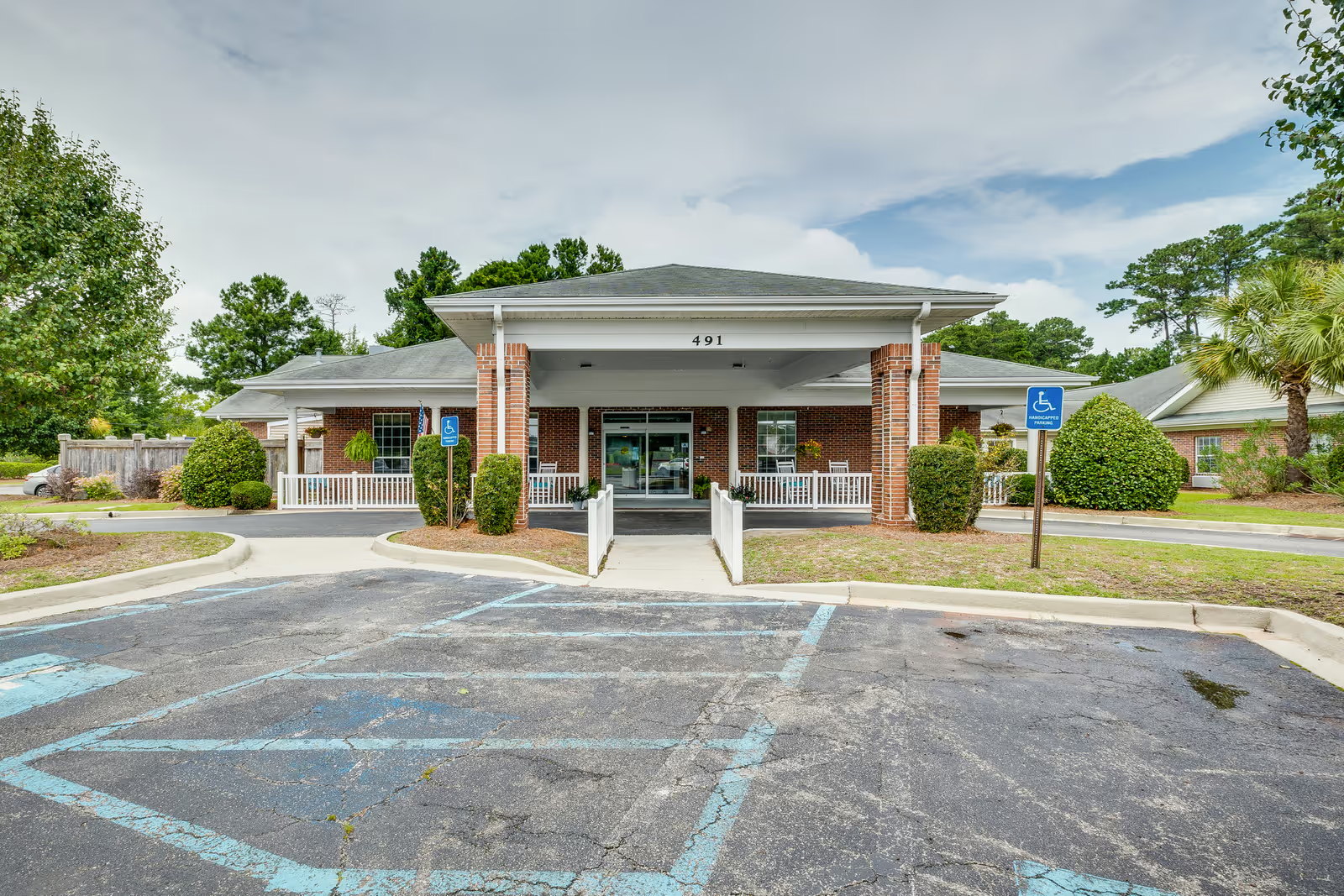
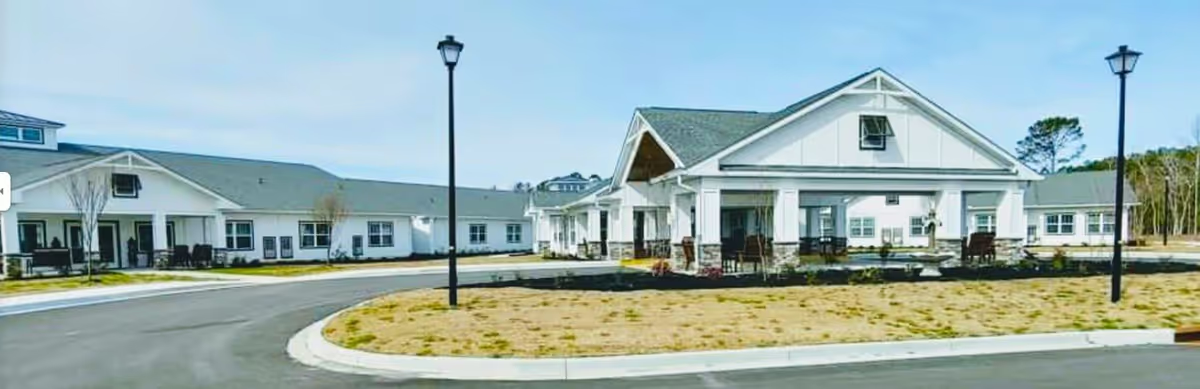
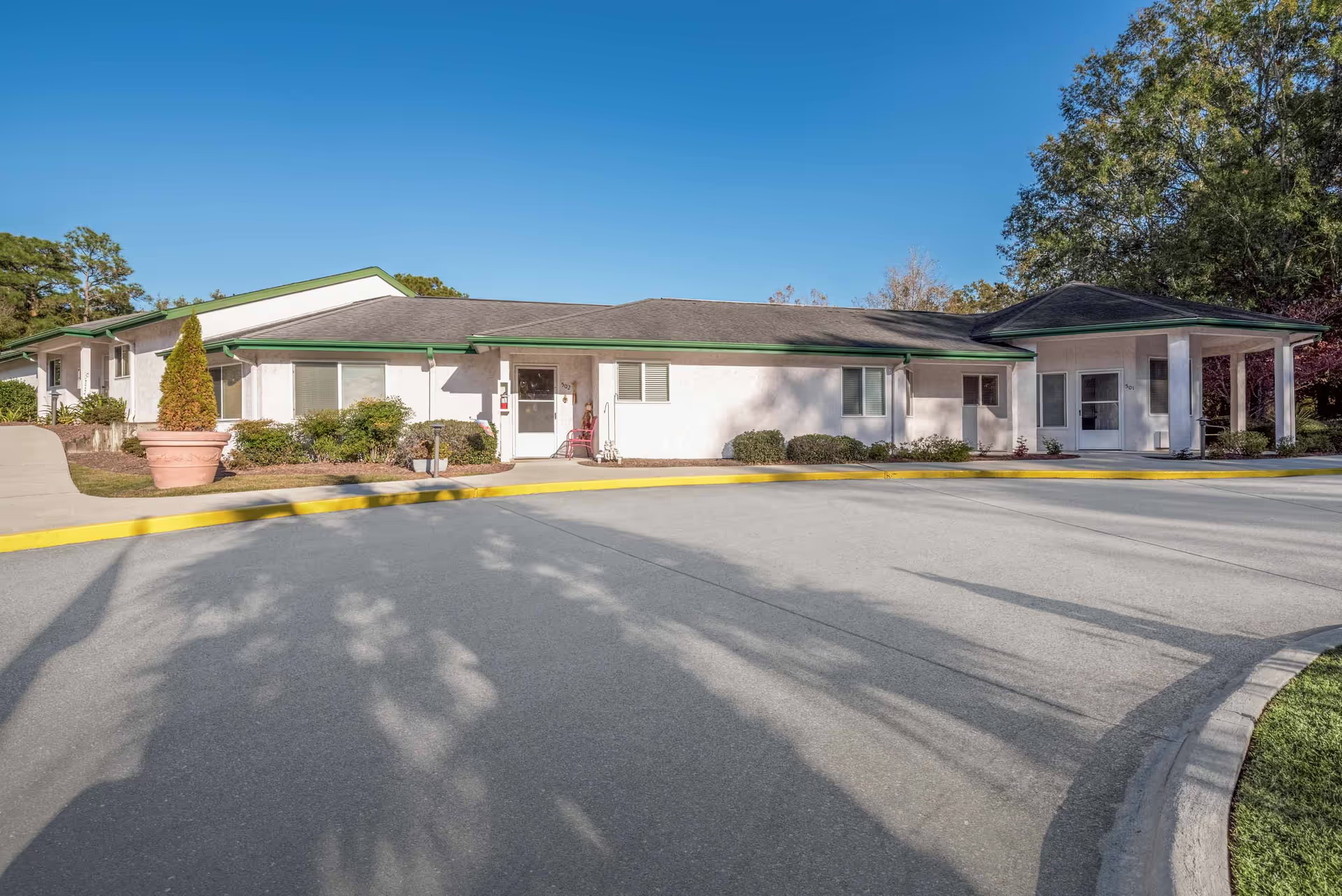
Facilities and accommodations: The building is described as older but nicely maintained, with upgrades and recent remodeling noted by multiple reviewers. Private rooms are available and characterized as adequate, and one reviewer specifically mentioned proximity to home as a deciding factor. Taken together, the facility appears comfortable and suitably renovated without being brand-new, meeting residents' basic expectations for cleanliness and livability.
Dining: Dining receives explicit praise in at least one review — "extremely satisfied with the food" — which supports an overall positive impression of meal quality and resident satisfaction in that area.
Management and leadership: Leadership gets mixed but generally positive marks. The administrator is singled out as helpful and attentive, knowing residents by name and assisting families through transitions. That hands-on management style contributes to the strong care-oriented impressions. However, there is tension between the caring behavior of staff/leadership and some of the facility policies or culture described below.
Concerns and patterns: A consistent negative theme is restriction of resident choice and independence. Several reviews state that the facility "stifles choice," "ignores residents' wishes and suggestions," and "discourages independence and initiative." Another distinct and serious concern is that management reportedly "punishes all residents for one resident's misdeeds," implying collective penalties or overly broad enforcement of rules. These comments point to a pattern in which policies or staff responses may be overly paternalistic or organizationally punitive, undermining resident autonomy despite otherwise good day-to-day care.
Net assessment: The dominant strengths of Shallotte Assisted Living are high-touch, personalized caregiving; an engaged and recognizable administrator; maintained and upgraded facilities; private rooms; good food (per reviewers); and an active social environment. The key weakness is a recurring perception that resident preferences and independence are not sufficiently respected and that responses to behavioral or rule issues may be applied too broadly, affecting the whole community. This juxtaposition — strong hands-on care paired with restrictive or punitive policies — is the most notable pattern across the reviews and should be the focus for anyone weighing trade-offs when considering the facility.
Implications: For prospective residents and families, these reviews suggest a trustworthy, caring environment with strong staff relationships and reasonable accommodations, especially attractive if proximity, socialization, and supportive transition are priorities. However, if resident autonomy, individualized decision-making, and transparent, proportionate disciplinary practices are high priorities, families should specifically ask management how resident input is solicited, how policies are applied when one resident causes issues, and what mechanisms exist to protect individual choice and independence.