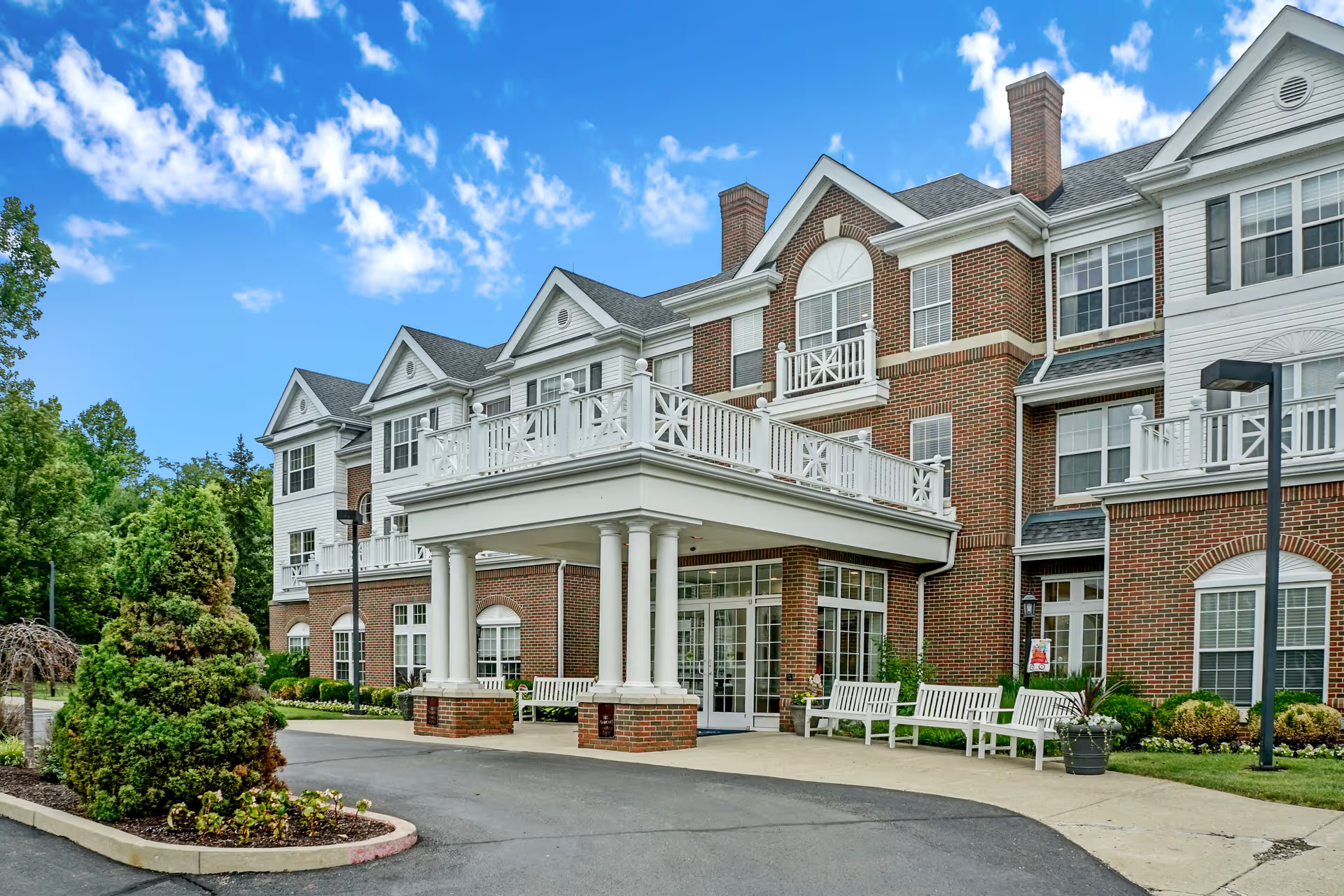
Astoria Health & Rehab Center elicits strongly polarized impressions. On the positive side, many families and former residents highlight a very capable rehabilitation program and a team of therapy professionals who produce measurable functional gains. Nursing aides, therapists, activities staff, kitchen personnel, and several long‑tenured employees are commonly described as compassionate, attentive, and relationship-oriented. The facility’s smaller scale is frequently cited as a benefit: reviewers note a personable atmosphere, active daily programming, regular care conferences, responsive social work involvement, and leadership that some families find engaged and communicative. For short-term rehabilitation stays many accounts indicate timely therapy, supportive staff, and successful discharges home.
At the same time, a number of operational concerns recur across reviews. The most consistent negative themes relate to staffing and responsiveness: delayed call-light responses, slow assistance with toileting and repositioning, and medication-timing issues are described. Reviewers tie these problems to variable staffing levels and inconsistent availability of licensed clinical staff. Several reviews allege gaps in wound care, pressure-injury prevention, and follow-up for post‑operative needs; these point to weaknesses in clinical protocols and monitoring rather than a single isolated event. There are also multiple comments about rotating physician coverage and limited continuity with an attending doctor, which can complicate care coordination for residents with complex medical needs.
Dining, housekeeping, and the physical plant receive mixed feedback. Some reviewers praise the food, accommodating kitchen staff, and clean common areas; others describe inconsistent meal quality and food preparation concerns. The building and rooms are described as smaller and more home‑like by some, but others note an older appearance and cosmetic discrepancies compared with online materials. Limited availability of private rooms and the realities of semi‑private accommodations — including constrained personal storage and roommate compatibility issues — are persistent themes. A few reviewers also raised pest‑control and sanitation concerns in specific areas; those comments suggest the need for routine environmental monitoring.
Communication and management responsiveness appear inconsistent across families. Many reviews commend a responsive social worker and managers who hold care conferences, but other families describe difficulty reaching staff, unreturned phone calls, and variability in professional tone. Financial considerations also surface: several reviewers describe the facility as more expensive than nearby alternatives. Finally, a small number of reviewers made an allegation of serious clinical harm; given the gravity of such claims, prospective residents and families should verify clinical oversight, wound‑care protocols, and emergency-transfer procedures directly with the facility and through state regulatory resources.
Bottom line: Astoria offers clear strengths in rehabilitation services, a caring frontline team, and a small, activity-rich environment that many families find appropriate for short-term therapy or long-term placement. However, recurring operational issues — most notably inconsistent nursing responsiveness, staffing variability, clinical follow-through for wounds and medications, limited private-room options, and mixed food/physical‑plant experiences — warrant careful inquiry. Prospective residents and families would be well served to tour the unit, ask specific questions about staffing ratios and clinical coverage, review wound‑care and skin‑prevention protocols, confirm private-room availability and costs, and seek recent state inspection or complaint records before making placement decisions.