Overall impression is mixed: reviewers consistently describe a core of compassionate, hardworking clinical staff and a strong therapy program, while also identifying a set of operational weaknesses that affect day-to-day safety, comfort, and communication. Strengths most commonly cited include attentive CNAs and nurses, a skilled and engaged therapy team that produced measurable mobility gains for some patients, on-site medical coverage, and availability of private rooms and diet accommodations. Several accounts highlighted intensive therapy schedules and tangible rehabilitation outcomes.
Care quality shows a bifurcated pattern. Clinical and rehabilitative services are often praised for competence and effectiveness; however, operational gaps undermine consistency. Common clinical concerns include delayed medication administration, inconsistent pain and wound-care follow-up, uneven adherence to physician orders, and weak documentation and handoffs. Staffing shortages and variable responsiveness to call lights or assistance requests were frequently linked to these clinical lapses and, in some reports, were associated with hospital transfers or urgent care needs.
Dining and activities are uneven. While some reviewers praised meal quality and special-diet options, others described frequent meal delays, incorrect or cold trays, and limited activity programming. Families seeking a restorative stay should ask about meal-service processes, special-diet handling, and the facility’s current activity calendar to confirm alignment with resident needs.
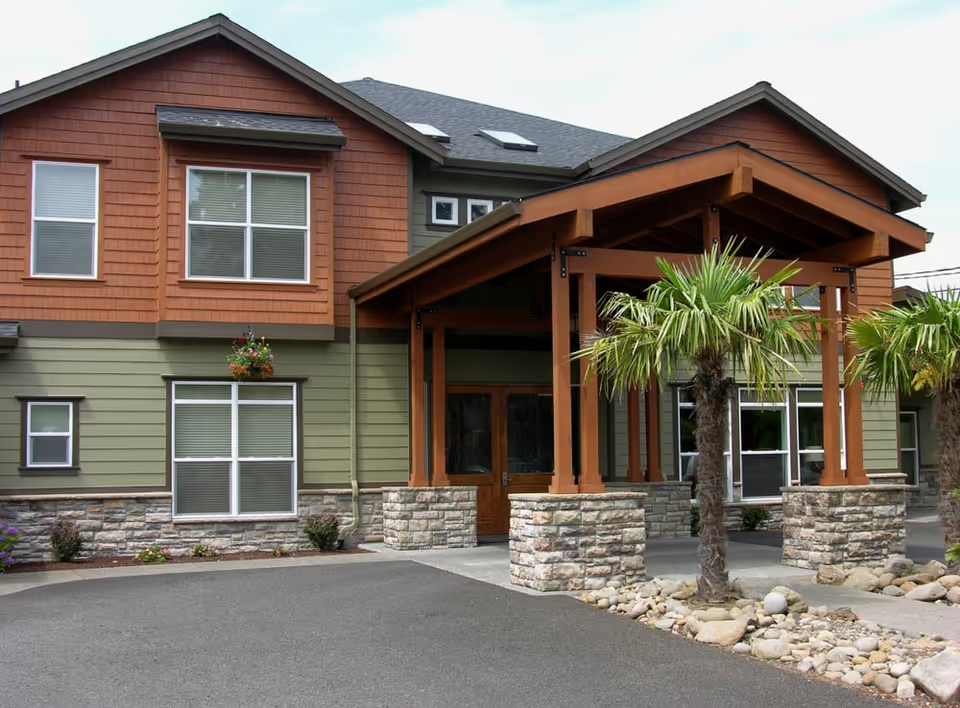
Facility condition and safety warrant careful review. Multiple accounts raised maintenance and safety issues — uneven flooring, missing tiles, ceiling leaks, nonfunctional call buttons, and older equipment — as well as sanitation and odor concerns in rooms and common areas. Reported gaps in fall-prevention measures (bedrails, bed alarms, and transfer safeguards) and problems with room amenities (telephones, TVs) suggest variability in environmental upkeep that can affect resident safety and comfort.
Management and administrative practices appear inconsistent. Some reviewers noted proactive changes under new management and new rehabilitative programs; others described poor recordkeeping, delayed paperwork for equipment, unhelpful administrative responses, and unresolved property-loss concerns. There are also serious allegations concerning missing personal property; families should treat those as issues requiring verification and follow-up. Prospective residents and families are advised to request recent staffing ratios, review state inspection and corrective-action records, and ask about procedures for incident reporting and property security.
Bottom line: Cascade Terrace demonstrates clear strengths in compassionate direct-care staff and rehabilitative capability, but these are offset by operational weaknesses in medication administration, documentation, maintenance, dining consistency, and staffing reliability. A focused, in-person tour that includes questions about current staffing levels, medication and wound-care protocols, therapy scheduling, equipment provisioning, maintenance plans, property safeguards, and recent inspection outcomes will help families assess whether the facility’s current environment and management changes meet their needs.