The reviews for Chapel Manor present a markedly mixed portrait: many families and residents describe genuinely positive experiences around hands-on caregiving, therapy outcomes, and social programming, while others raise substantial operational and safety concerns. Positive comments frequently single out caring CNAs, attentive nurses, effective physical therapy, active events programming (including pet therapy), and a welcoming admissions process. Several accounts emphasize staff members who provided individualized attention and continuity, and some families praised transparent communication mechanisms such as regular virtual updates.
Clinical care quality appears uneven across shifts and residents. Multiple reviewers cite timely wound care, competent therapy interventions, and improvement in mobility for some patients; however, there are repeated concerns about inconsistent monitoring, delayed responses to call lights, and lapses in medication administration controls. These concerns extend to clinical follow-up and physician communication in certain cases, with families describing rehospitalizations and significant clinical decline that they felt were not promptly escalated. Infection-control practices were described as inconsistent during outbreak periods, and isolation measures reportedly affected access to rehabilitation for some residents.
Staff performance and communication show considerable variability. Many reviewers praised compassionate, patient-centered caregivers and supportive social-work or admissions staff. At the same time, others reported slow response times, perceived inattentiveness on particular shifts, and unprofessional interactions at the front desk or business office. Families frequently noted confusion around billing, co-pays, and insurance coverage, and some reviewers described confrontational or nontransparent interactions with administrative staff. A pattern of inconsistent family communication and limited transparency around incidents or care-plan changes emerges across reviews.
Dining and activities also drew mixed feedback. Several residents and families appreciated engaging programming, special events, and individualized activities that supported socialization. Conversely, dining received criticism for inconsistent food temperature, preparation, and adherence to prescribed dietary restrictions for residents with medical needs. Meal continuity was reported as disrupted during certain operational periods, and some staff responsiveness to dietary concerns was described as inadequate.
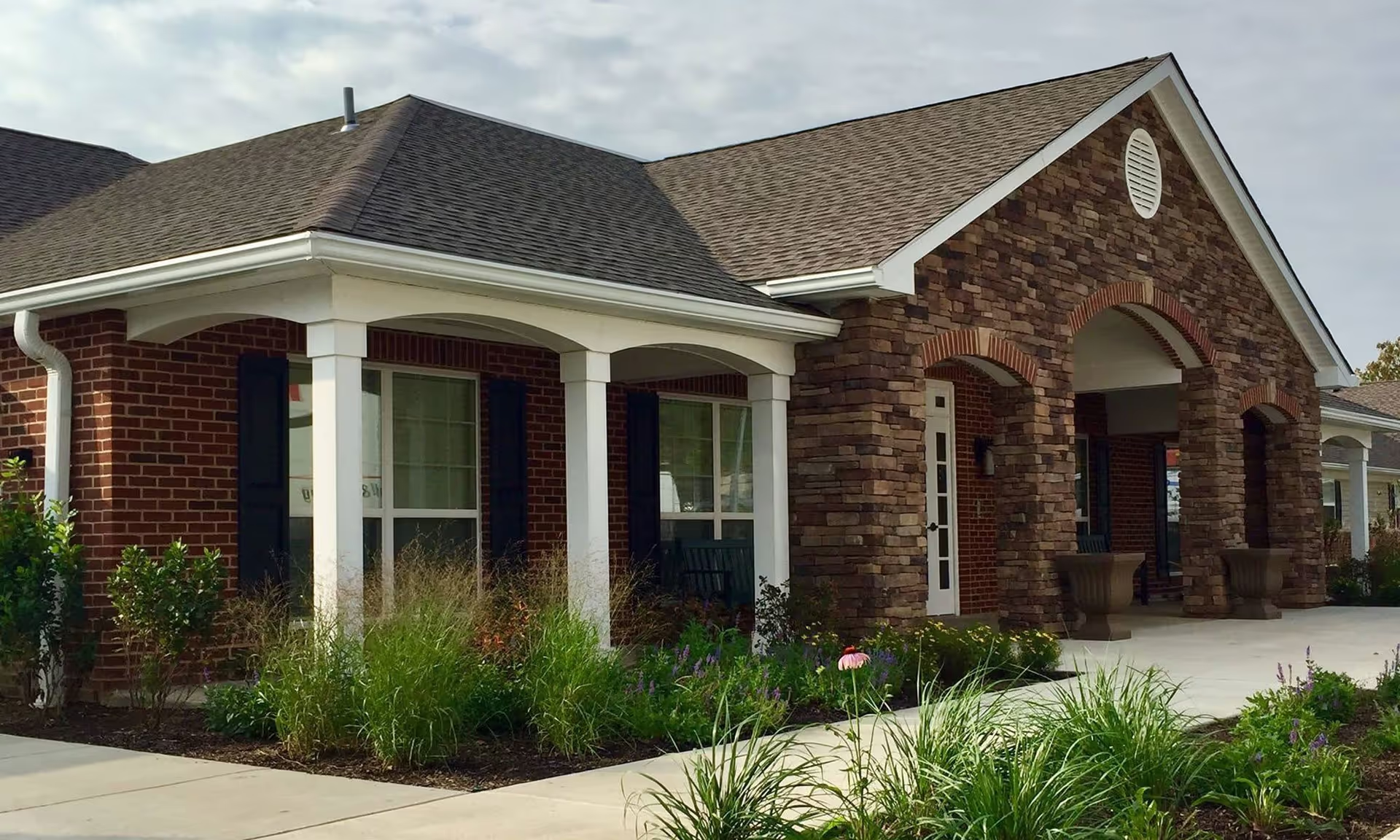
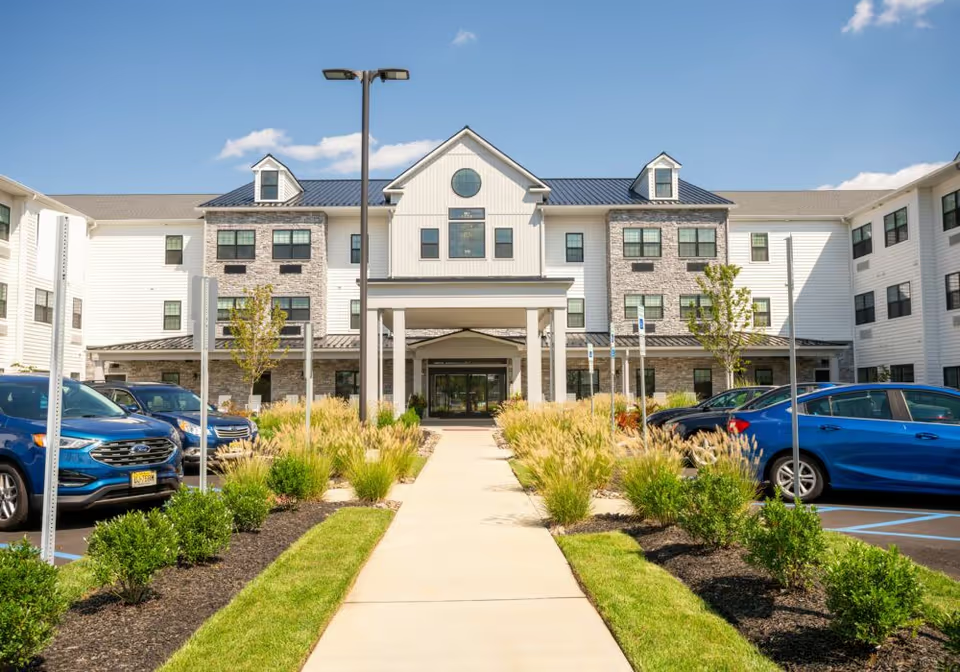
Facility and safety issues are described unevenly. Many accounts describe clean, bright rooms and attentive maintenance, while others raise sanitation and pest-control concerns in certain areas, odor concerns, and slow response to maintenance requests. Safety oversight and incident reporting were cited as weaknesses by some reviewers who recommended clearer documentation and family notification processes. There are also serious allegations in a subset of reviews concerning missing personal items and possible financial impropriety; these allegations suggest a need for transparent investigation and stronger controls.
Taken together, the pattern is one of variability: Chapel Manor demonstrates clear strengths in compassionate bedside care, therapy outcomes, and community programming, but those strengths are not uniformly experienced. Key operational gaps include inconsistent clinical monitoring, medication and infection-control practices, administrative transparency, and dining consistency. Prospective residents and families would be well served to ask specific questions about staffing ratios and on-call coverage, medication-safety protocols, infection-control policies (and how rehab is managed during isolations), incident-reporting and family-notification procedures, and billing/financial practices. Where possible, visiting during multiple shifts and requesting documentation of clinical and administrative policies may help clarify how consistently the facility delivers its stronger practices.