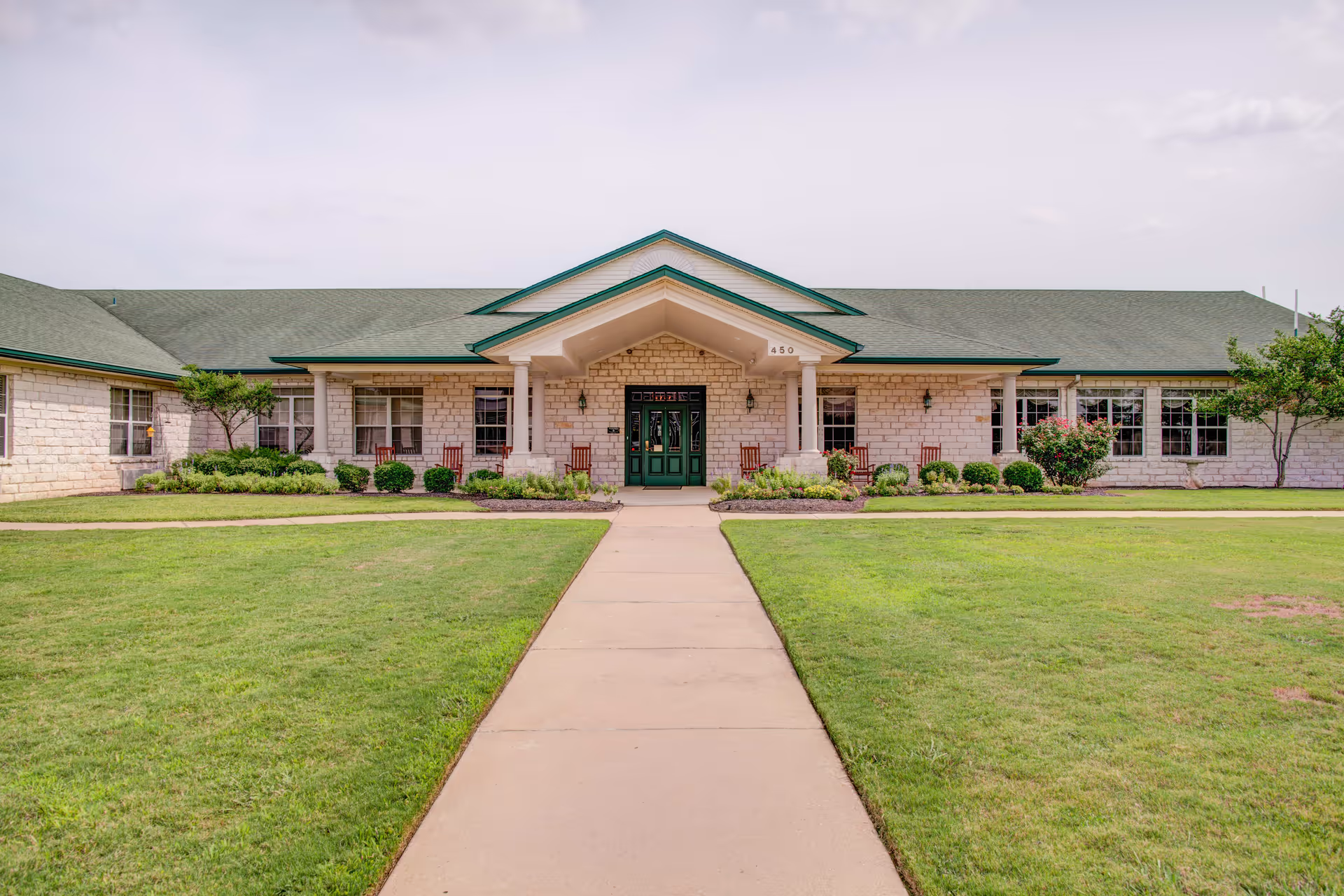
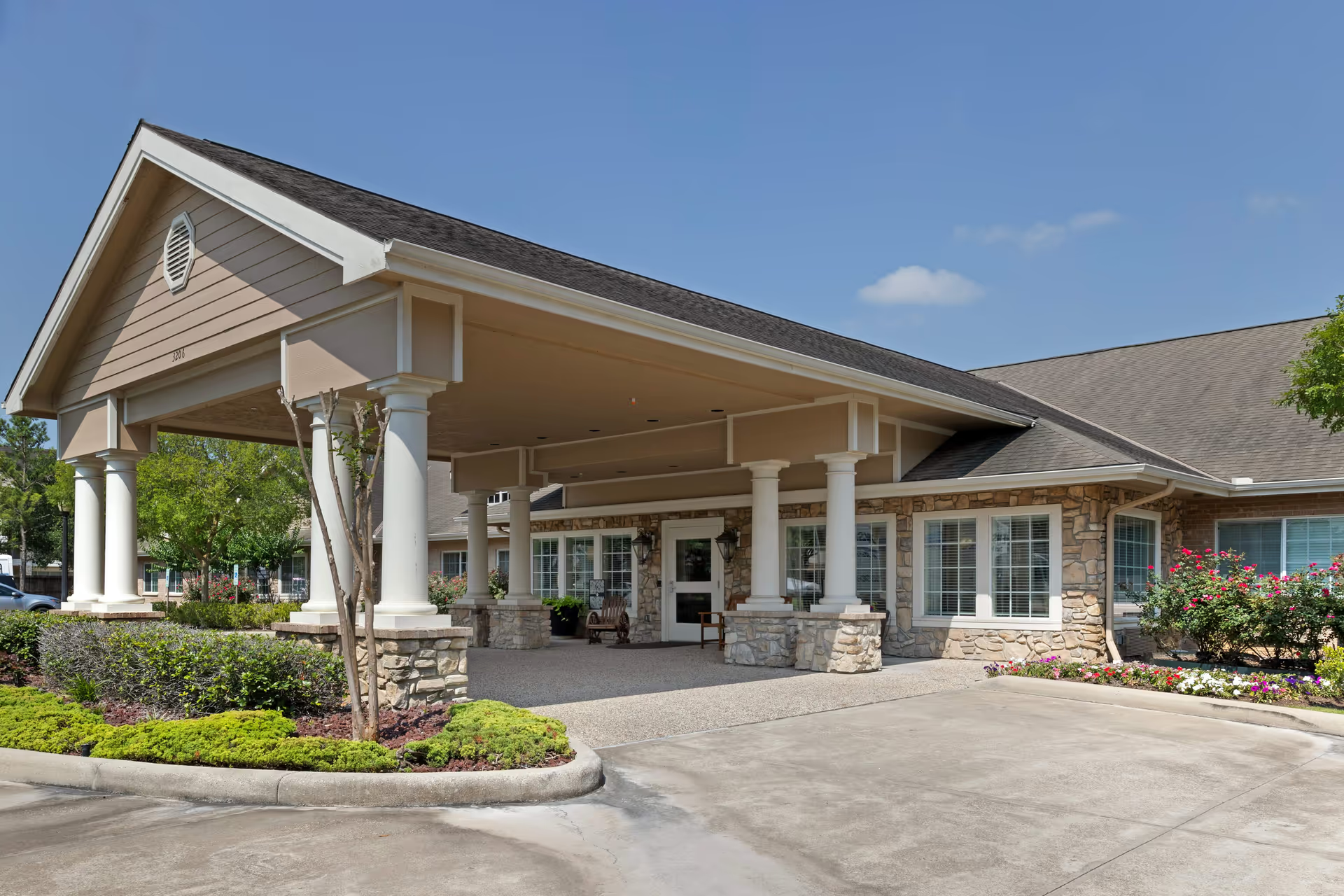
Reviews of Serenity at Cedar Park describe a small, house‑style assisted living that many families experience as clean, comfortable and staffed with caring caregivers. Positive comments emphasize a residential atmosphere rather than an institutional one, with spacious common areas, family‑style dining, private roomy rooms (including walk‑in showers) and an outdoor patio. Several families highlighted a high caregiver‑to‑resident ratio, on‑site ownership/leadership presence, 24‑hour availability, and individualized, home‑cooked meals as strengths that support resident comfort and daily engagement.
Care and staff quality elicit mixed but specific themes. Numerous families reported compassionate, attentive caregivers who know residents personally and provide meaningful one‑to‑one time; in those cases residents appeared content, engaged in activities, and benefited from personalized attention and spiritual or social support. Conversely, other accounts cited inconsistent clinical coordination (including home health and hospice interfaces), periodic staff turnover, and episodes of inadequate responsiveness. These operational inconsistencies appear to drive the most significant family concerns about continuity and reliability of care.
Dining and activities are similarly variable. Many reviewers praise home‑style meals prepared to individual needs and communal mealtimes that encourage socialization. At the same time, there are reports describing uneven meal quality and limited menu planning. Recreational programming (bingo, coloring, flashcards and similar) is offered and appreciated by some residents; however, other families said social and activity options did not sufficiently match certain residents’ cognitive or engagement levels, leaving limited peer interaction for those with higher needs.
Facility condition and management impressions are split. Positive observations include a spotless, odor‑free environment and a warm, lived‑in feel. Negative observations reference a darker, less cheerful ambiance in parts of the house and concerns about front‑desk or phone interactions. More serious operational concerns include unclear communication about memory‑care or aging‑in‑place capabilities, contract and billing disputes (including deposit/refund disagreements), and at least one mention of an investigation and financial/contractual allegation. These indicate potential gaps in administrative transparency and in how transitions or resident relocations are handled.
For prospective families, the pattern suggests Serenity at Cedar Park may offer a strong, personalized experience in cases where staffing is stable and expectations for memory‑care are limited. Prospective residents and families should verify, in writing, the facility’s stated memory‑care and transfer policies, review contract cancellation and refund terms, ask about recent staff turnover and clinical coordination with outside providers, and observe daily meal service and activities during a visit. Doing so will help align expectations with the facility’s operational strengths and the areas flagged for caution.