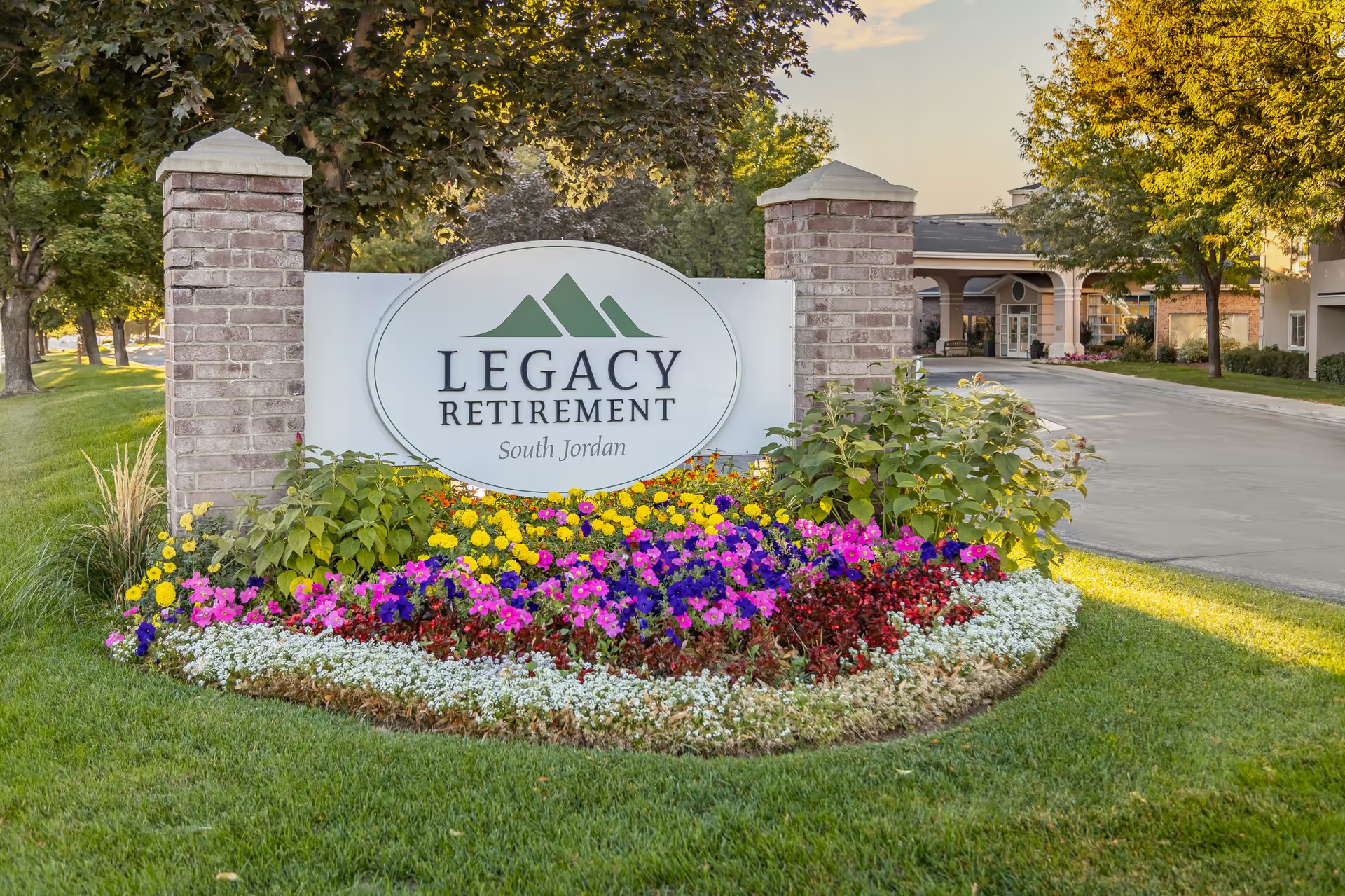
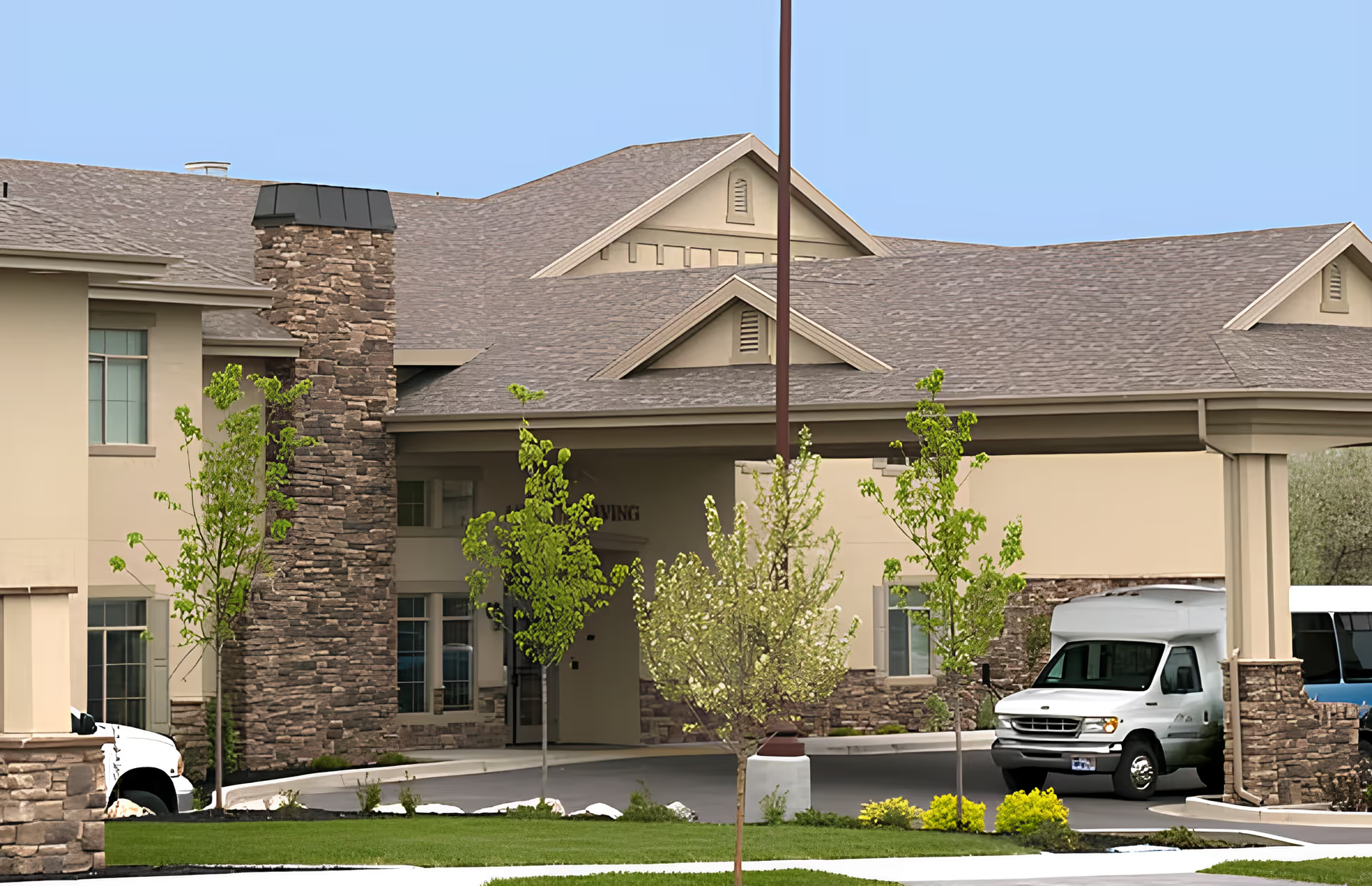
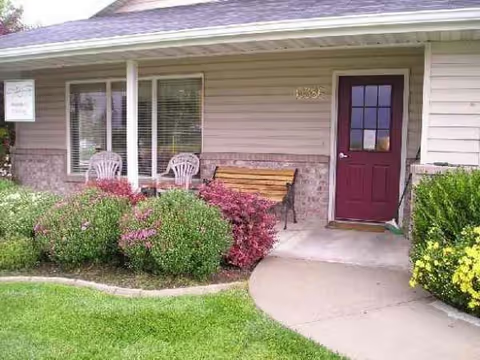
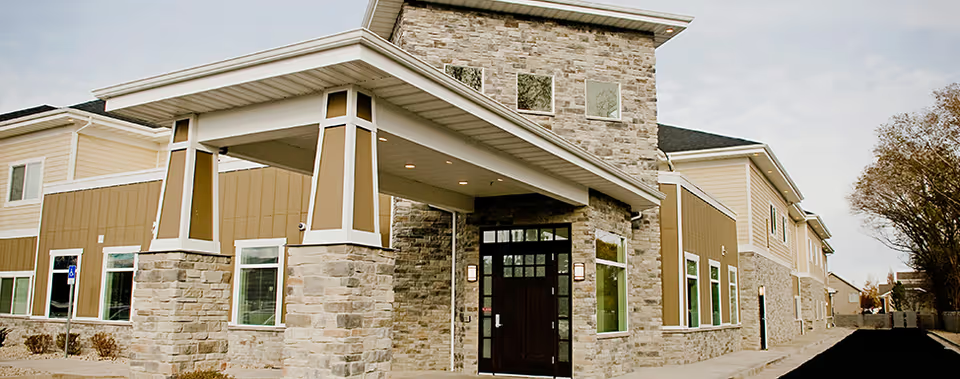
Legacy House of South Jordan elicits a strongly mixed but overall positive response: many families and residents praise the staff’s warmth, individualized attention, and a family-like atmosphere. Reviewers frequently highlight engaged on-site leadership and recent managerial changes that have produced visible operational improvements, including quicker repairs, billing corrections, and food-service upgrades. The community’s renovated public spaces and roomy private apartments, paired with in-house services (podiatry, salon, hospice coordination), contribute to a comfortable, hotel-like environment for many residents.
Care quality is a prominent theme with two clear strands. A substantial number of accounts describe compassionate, attentive frontline staff who provide personalized care, support family involvement, and coordinate well with hospice or outside clinicians. At the same time, there are repeated concerns about clinical oversight consistency: delayed medical evaluations following falls, variability in medication timing and rounding, and uneven emergency-response practices. These items suggest that while day-to-day caregiving is often strong, clinical supervision and escalation protocols can be inconsistent and merit closer review.
Staffing and training emerge as operational pressure points. Reviewers commonly note that CNAs and med techs are caring and hardworking but stretched thin; this contributes to longer wait times for assistance, slower dining support, and variable showering/bathing schedules. In addition, several comments point to uneven clinical training—particularly in geriatric nursing and dementia care—which aligns with concerns about supervision and memory-care program performance in parts of the community.
Dining and activities are both major strengths and notable sources of dissatisfaction. Many reviewers describe an improved, restaurant-style dining experience with diverse menus, accommodating diet modifications, and enthusiastic dining staff. Conversely, other accounts cite inconsistent meal quality, cold or starch-heavy entrées, and occasional shortages that have negatively affected appetite and weight for some residents. Activity programming is consistently praised: the community offers a wide range of daily groups, outings, holiday and intergenerational events, and individualized engagement that many families describe as a key benefit.
Facility condition and maintenance show a generally positive picture with important exceptions. Numerous reviewers note clean, remodeled interiors, attentive housekeeping, and quick remediation of issues. However, there are also repeated cleanliness and maintenance concerns in specific units (bathroom cleanliness, dusty vents, isolated odor issues), plus intermittent infrastructure failures (air conditioning outages, laundry or plumbing problems). Families report that leadership often addresses these issues quickly when escalated, but the unevenness across units is a pattern to monitor.
Management and administrative matters are similarly mixed. Several accounts praise responsive leadership that has enacted meaningful changes and good communication with families. Other experiences describe delayed or unclear communication from upper management, billing irregularities, and one or two serious allegations of financial misconduct that families characterized as warranting investigation. Those divergence points suggest that operational consistency at the corporate level varies over time and between units.
Bottom line: Legacy House of South Jordan offers many hallmarks of a high-quality assisted living community—compassionate bedside staff, robust activities and outings, attractive facilities, and in-house services that support resident comfort. Prospective residents and families should weigh these strengths against operational caveats documented in reviews: inconsistent meal quality and service continuity, staffing pressures that affect response times, variability in clinical oversight (especially around memory care and emergency escalation), and occasional billing or maintenance lapses. A recommended approach is to tour the specific unit of interest, ask about current staffing ratios and training programs, review recent incident-response protocols, and verify billing practices before committing.