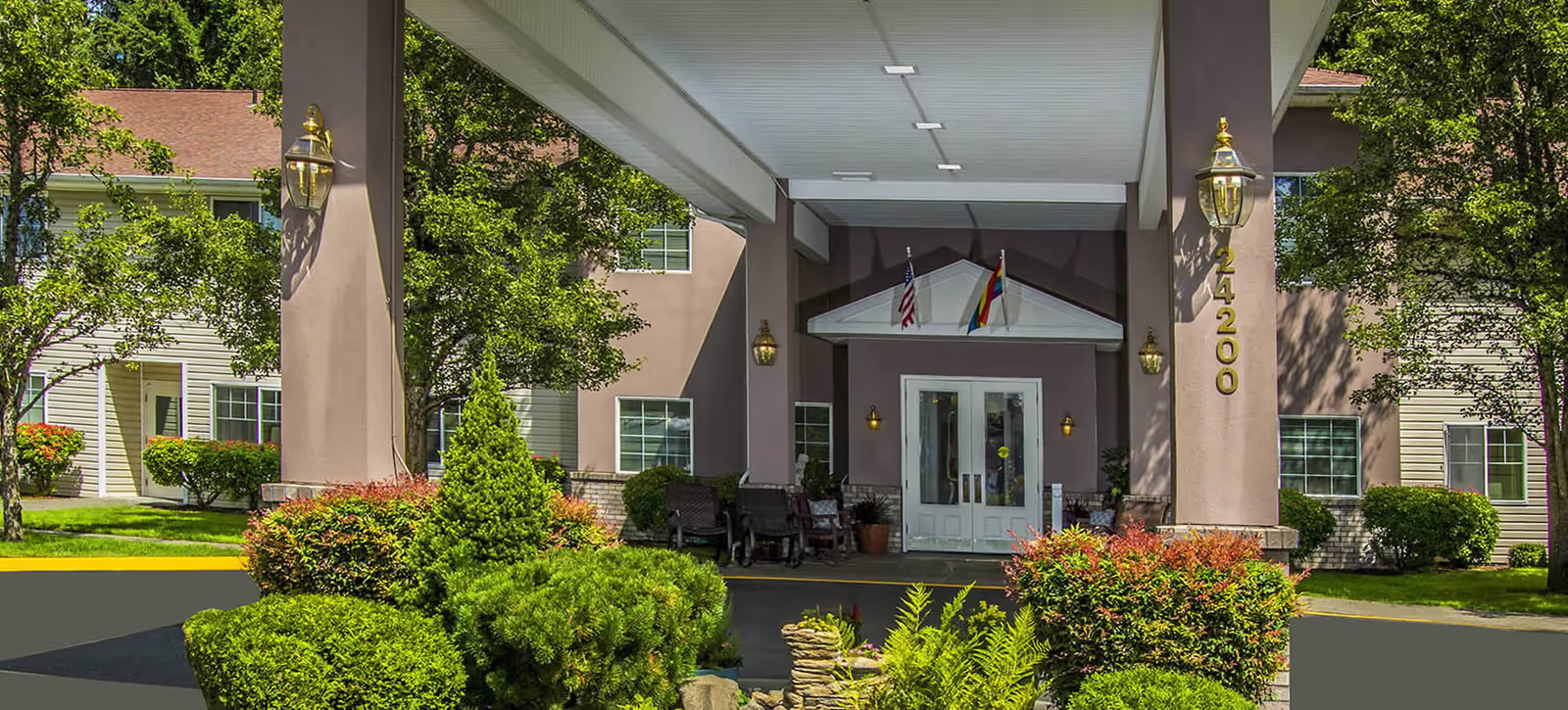
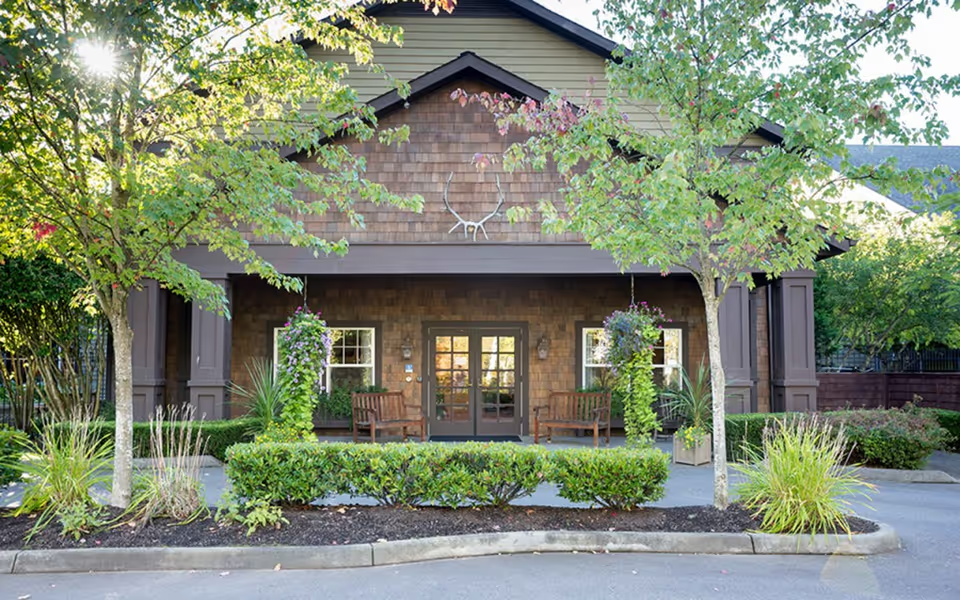
The reviews for Enumclaw Health and Rehabilitation Center present a strongly mixed picture. Many families and residents praise individual staff members and specific programs, describing compassionate caregiving, effective therapy teams, and an active social calendar. At the same time, other reviewers cite recurring operational and safety concerns that materially affect the resident experience. The overall impression is of a facility with clear strengths in programming and some clinical services, coupled with systemic operational inconsistency.
Care and staff: Numerous comments emphasize caring, attentive nurses and aides, timely pain control, and rehabilitation staff who helped residents regain function. Skilled PT/OT was repeatedly identified as a positive influence on recovery for some patients. Counterbalancing these reports are sustained concerns about understaffing, high personnel turnover, delayed responses to call lights, and uneven staff conduct. Several families described problems with medication administration and monitoring, with outcomes that required escalation of care. There are also repeated notes about inconsistent scheduling for personal care (for example, missed or irregular showers) and broader incontinence-care concerns. These patterns suggest that while individual caregivers often perform well, facility-level staffing and clinical-process gaps have led to variable quality of care.
Dining, housekeeping, and property management: Reviews describe inconsistent meal delivery, temperature issues, incorrect orders, and challenges meeting special-diet needs for some residents. Housekeeping and sanitation assessments are mixed: some visitors found the environment clean and well-maintained, while others raised concerns about cleanliness and odor in common areas and about laundry processes. Personal-property management problems were frequently noted, including lost or damaged clothing and prosthetics. These operational weaknesses around food-service consistency and laundry/property handling are recurring themes that families should evaluate during a visit.
Activities and community life: One of the facility's clearer strengths is its activity programming. Reviewers commonly mention an extensive and varied schedule that includes group and one-on-one activities, outings, concerts, gardening partnerships, shows, and religious services. Staff in activities are frequently described as energetic and creative, and many residents report strong social engagement and a family-like atmosphere. This area appears to be a consistent positive even among otherwise critical reviews.
Management and operational patterns: Multiple reviews describe frequent leadership and management turnover, inconsistent family communication, and lapses in discharge coordination and billing follow-through. A subset of reviewers referenced regulatory citations and safety incidents; these items, combined with examples of missed appointments and documentation inconsistencies, point to areas of concern in oversight and quality assurance. A few reviewers also noted that recent management changes led to improved communication and care, indicating that outcomes may be sensitive to current leadership and staffing levels.
Notable patterns and guidance for families: The most consistent pattern is variability — the experience appears highly dependent on unit staffing, shift, and current management. Prospective residents and families would be well served to tour the facility during different times of day, ask about current staffing ratios, medication-administration safeguards, laundry/property procedures, infection-control practices, and recent regulatory findings. Review the care plan, observe mealtime, and inquire specifically about therapy schedules and the activity calendar. Given the mix of strong interpersonal care and operational weaknesses, evaluating those facility-level safeguards and processes will give the clearest indication of whether this facility can meet an individual resident's needs.