Reviews for Complete Care at Harrington Court are sharply mixed, with clear strengths in rehabilitation services and direct-care staff juxtaposed against recurring operational and management concerns. Many families and patients praise the facility's therapy departments (occupational, physical, and speech therapy) for producing measurable functional gains, and numerous accounts highlight compassionate CNAs and attentive night nursing. The campus and rooms are frequently described as larger-than-average with pleasant grounds and secure visitor screening, and the activities program is often cited as engaging and socially supportive.
At the same time, a consistent theme is uneven care quality tied to staffing and management. Reviewers describe variable staffing levels, frequent turnover, and demoralized daytime teams; these staffing patterns are linked to delays responding to call bells, inconsistent medication and pain-management timing, and uneven completion of routine care tasks. While some clinicians and aides are singled out as highly dedicated, those positive experiences sit alongside accounts of lapses in responsiveness and timeliness that can affect patient comfort and clinical outcomes.
Infection-control and sanitation are other recurrent concerns. Several accounts mention inconsistent quarantine practices, gown-use and PPE gaps, and sanitation or odor issues in particular units or common areas. These items suggest variability in infection-prevention practice adherence rather than uniform facility-wide protocols. The dining experience is similarly mixed: some reviewers praise responsive dining staff and timely meals, while others describe declining or inconsistent food quality.
Administrative and leadership issues appear repeatedly. Families report communication gaps, delayed admission paperwork, difficulty reaching staff after hours, and problematic billing practices including charges during end-of-life transitions. There are also critiques of leadership being hands-off and a perceived corporate emphasis on financial metrics, which reviewers tie to operational declines in staffing and morale. A separate concern raised is the credibility of online praise in some listings; prospective families may wish to view reviews alongside direct observation.
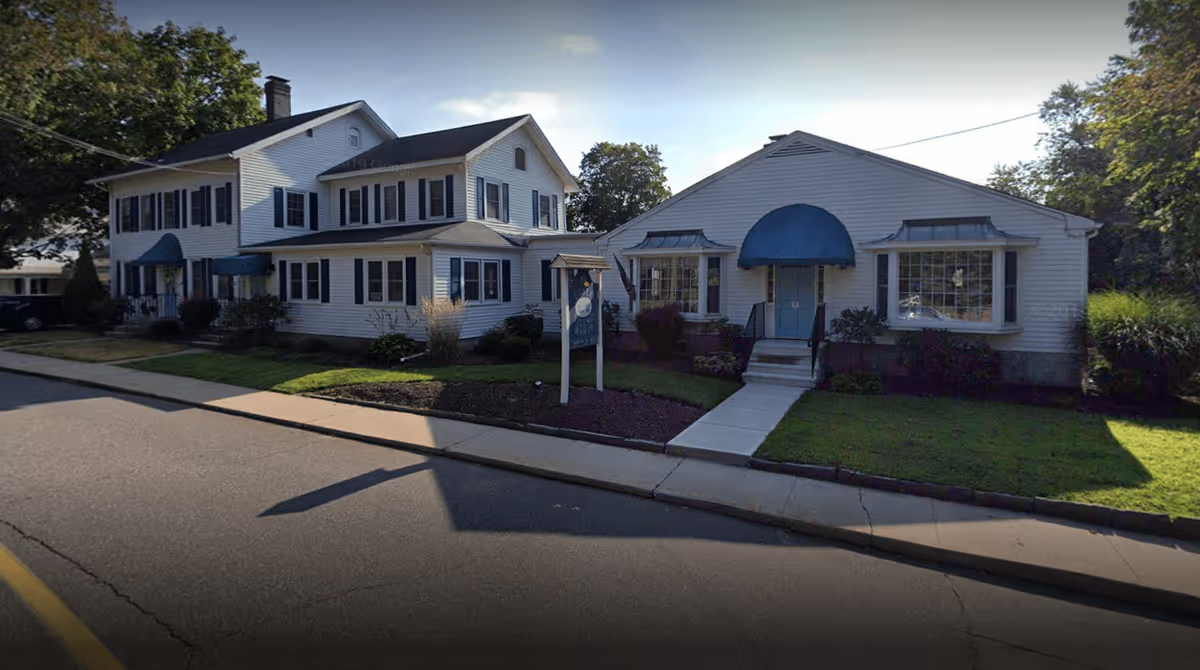
Facilities and programming receive largely positive note: clean, well-kept common spaces, secure entry procedures, frequent activities, and a welcoming front desk are strengths. The strongest and most consistent positive pattern is short-term rehabilitation success and therapists who help patients regain independence. The most consistent negative patterns are operational: staffing instability, inconsistent clinical responsiveness, gaps in infection-control practice and sanitation in certain areas, and failures in administrative communication and billing.
For prospective residents and families: verify current staffing ratios for the unit you are considering; ask to meet the therapy team and observe a therapy session; review infection-control protocols and recent outbreak management practices; request clarification on billing policies for hospice or end-of-life transitions; and check typical call-bell response times and after-hours contact procedures. An in-person visit during a mealtime and an opportunity to speak with nurses on the unit will help confirm whether the unit-level experience aligns with the aspects you prioritize.